Support

Vietnam National Fine Arts Museum

About

The Vietnam National Museum of Fine Arts is the country's premier art museum, located in the capital city of Hanoi. The museum is an impressive complex of two beautiful buildings designed in a French architectural style, separated by small, cozy gardens. The museum building itself, constructed in 1930 as a three-story mansion, is an architectural landmark in its own right, drawing attention with its elegance.
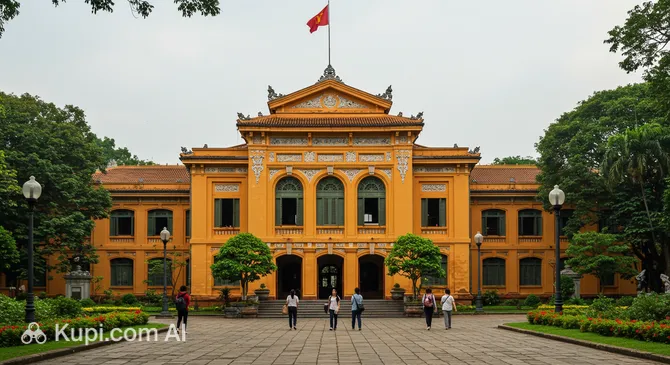
Vietnam National Fine Arts Museum. Illustration.
Source: Kupi.com AI

Traveler photos:

As a repository for a vast collection of Vietnamese fine arts, the museum houses over 20,000 exhibits. The permanent collection includes about 2,000 works, allowing visitors to trace the development of Vietnamese art from antiquity to the present day. Here, you can see everything from traditional silk and wood paintings to contemporary installations.

Thanks to its unique, poetic, and beautiful architecture reminiscent of a former French villa, the museum attracts a large number of both domestic and foreign tourists. Spanning a total area of 4,737 square meters, it provides plenty of space to explore diverse exhibitions and enjoy the artistic atmosphere of Hanoi.

Contacts

To find current contact information for the Vietnam National Museum of Fine Arts, such as a phone number or email address, we recommend visiting the museum's official website. You can also find useful information in Hanoi travel guides or inquire directly on-site.

How to contactContact
Address66 P. Nguyễn Thái Học, Điện Biên, Ba Đình, Hà Nội, Vietnam
Phone number+84 24 3823 3084
Websitevnfam.vn

What to Do

A visit to the Vietnam National Museum of Fine Arts is a fascinating journey through centuries of Vietnamese art. Here, you can trace its evolution from ancient times to contemporary works. The museum's exhibition is carefully structured by historical periods, allowing guests to get a clear picture of each era and the country's multifaceted culture.

The museum's exhibits are spread across several floors, each dedicated to a specific stage. On the first floor, you'll find artifacts dating from prehistoric times to the 19th century, revealing the roots of Vietnamese creativity. The second floor will delight art lovers with a unique collection of 20th-century lacquer paintings—one of Vietnam's signature art forms. The third floor continues the narrative, showcasing pieces from various historical periods. A highlight is the collection of national treasures, featuring the most valuable examples of Vietnamese heritage.

Beyond the artworks, the museum offers a deep dive into the country's culture, ethnography, and history. The exhibition halls tell the story of the formation of the Vietnamese state, introducing visitors to the lifestyles of ethnic minorities, unique archaeological finds from the Neolithic, Paleolithic, and Bronze Ages, as well as the characteristics of the feudal period. It's a wonderful opportunity to learn many interesting facts and captivating stories about the rich past and present of Hanoi and all of Vietnam.

Getting There

The Vietnam National Museum of Fine Arts is conveniently located in Hanoi's central Ba Dinh district, at 66 Nguyen Thai Hoc Street. Thanks to its prime location, getting there is quite easy, especially if you are already in the city center.

One of the simplest ways is to take a taxi. The trip from most parts of Hanoi to the museum will be quick and relatively inexpensive. You can also use popular ride-hailing apps in Vietnam to call a motorbike taxi (xe om) or a car.

While specific bus route numbers leading directly to the museum may require local verification or checking through transport apps, the Ba Dinh area is well-served by public transportation. Several bus routes likely pass close to the museum. This can be an economical option if you are willing to take a short walk from the nearest stop.

If you are staying nearby or just enjoying a stroll through central Hanoi, the museum is well within walking distance. It is a great opportunity to get to know the city's architecture and atmosphere better. The Ba Dinh district is known for its wide streets and green spaces, making for a pleasant walk.

Nearest city: Hanoi

History & Facts

The building housing the Vietnam National Museum of Fine Arts is a witness to history in its own right. Built in 1930, it originally reflected the French colonial architectural style typical of that era in Hanoi. After Vietnam gained independence, this elegant structure stood empty for a while before finding its new, culturally significant role. The Fine Arts Museum officially opened here in 1963, marking the beginning of its rich exhibition history.

Since its founding, the museum has quickly evolved into one of the most important cultural centers not only in Hanoi but in all of Vietnam. Its primary mission is not just to preserve, but to actively showcase representative fine art works that serve as visual proof of the dynamic and unique development of the Vietnamese artistic tradition. The museum's exhibitions aim to deeply reveal the national character and wealth of the country's creative heritage, spanning various periods and styles.

Today, the Vietnam National Museum of Fine Arts continues to play a key role in preserving and promoting both historical masterpieces and contemporary works by Vietnamese artists. It is consistently ranked among the capital's most visited cultural sites, attracting both locals and international tourists. Visitors are drawn not only by the high quality and diversity of the collections but also by the artistic value of the historic museum building itself, which creates a unique atmosphere for immersing oneself in the world of art.

Time Needed

When planning a visit to the Vietnam National Museum of Fine Arts in Hanoi, you should allow about 2-3 hours for a fairly thorough look at its rich collection. This time is usually enough to explore the main halls, get a general idea of the development of Vietnamese art from ancient times to the present, and appreciate key masterpieces without feeling rushed.

Of course, the length of your visit may vary. If you are a dedicated art lover or wish to delve deeper into specific periods—such as the famous Vietnamese lacquer paintings or ancient artifacts—you might need 3-4 hours or even half a day. Keep in mind that the collection is housed across several floors and two buildings, so some time will be spent moving between exhibitions.

For those on a tight schedule, an express tour of 1.5-2 hours focusing on the most famous exhibits is possible. However, to truly soak in the museum's atmosphere and cover a significant portion of its cultural treasures, it is recommended to set aside at least two to three hours for this fascinating journey into Vietnam's world of art.

Working Hours

The Vietnam National Museum of Fine Arts is generally open to visitors throughout the year, though exact working hours may vary, especially during holidays. Typically, major museums in Hanoi operate during the daytime, often with a lunch break, and may have a closing day (such as Monday).

As specific information regarding opening hours and the need for advance ticket booking was not provided, it is highly recommended to check the official site of the museum or inquire at local tourist information centers before your visit. This will help you plan your trip and avoid any potential inconvenience, while also keeping you informed about any temporary exhibitions or schedule changes.

DayOpening hours
MondayClosed
Tuesday8:30 – 17:00
Wednesday8:30 – 17:00
Thursday8:30 – 17:00
Friday8:30 – 17:00
Saturday8:30 – 17:00
Sunday8:30 – 17:00

Nearby

After immersing yourself in the world of art at the Vietnam National Museum of Fine Arts, don't rush to leave this fascinating area of Hanoi. Exploring the surroundings can significantly enrich your travel experience and reveal new facets of the Vietnamese capital. There are many other iconic landmarks in the immediate vicinity of the museum that deserve your attention.

A stroll through the neighboring streets will allow you to better feel the city's atmosphere, see the contrast between historical architecture and modern life, and discover cozy cafes or souvenir shops. Many of the nearby attractions are within walking distance, making them especially easy to visit.

NameDistance
Temple of Literature0.3 km
AIRA Night Club0.5 km
Imperial Citadel of Thang Long0.6 km
Ho Chi Minh Mausoleum0.7 km
Hanoi Train Street0.7 km
Acoustic Hotel & Spa Bar0.8 km
Hoa Lo Prison1.1 km

Have you reached the end of the page?

So the route has been studied inside and out