Support

Ninh Binh

About

Ninh Binh is a charming city in northern Vietnam, often called "Halong Bay on land" thanks to its incredible karst landscapes, emerald rice fields, and winding rivers. It is a place where nature and history intertwine, offering travelers a unique atmosphere of tranquility and authenticity.

Ninh Binh. Illustration.
Source: Kupi.com AI

Located in the province of the same name, about 90 kilometers south of Hanoi, the city serves as a gateway to numerous natural and cultural treasures. The population of Ninh Binh is approximately 160,000 people. The climate here is typical for northern Vietnam—tropical monsoonal, with distinct wet and dry seasons, making it an attractive destination year-round, as each season reveals the region's beauty in its own way.

Ninh Binh is famous for its stunning attractions that draw tourists from all over the world. Among the most famous is Tam Coc, where you can take an unforgettable boat trip past majestic limestone cliffs and through mysterious caves while admiring picturesque views. Equally impressive is the Trang An landscape complex, recognized as a UNESCO World Heritage site, which offers breathtaking water routes through rocks and ancient temples. It is also worth visiting the ancient capital of Hoa Lu to touch the country's rich history, and climbing to the top of Mua Mountain at the Mua Caves (Hang Mua), which offers a spectacular panoramic view of all this natural beauty.

If you are looking for a place to enjoy breathtaking landscapes, get acquainted with rich culture and history, or simply escape the city bustle, Ninh Binh will be a true discovery for you and provide many unforgettable experiences.

You can find more interesting facts on the Ninh Binh city history page.

Weather Overview

The weather in Ninh Binh is strongly seasonal. In general, expect warm and humid summers with occasional rain, and cooler, dry winters. Summer months, especially from May to September, bring heat with average temperatures often exceeding 28°C (for example, in June the average temperature is 30.4°C, with maximums reaching up to 33.6°C). This is also the wettest period, with the peak number of rainy days in August (24 days). Winter months, such as December and January, are characterized by lower temperatures, averaging around 17-18°C (minimums can drop to 14-15°C), and significantly less precipitation. To find out more details, visit the Ninh Binh climate page.

Average monthly temperature

Average monthly precipitation

Interesting Facts

In addition to its world-famous landscapes, Ninh Binh holds many curious details and stories that make it even more attractive to explorers. Here are just a few lesser-known facts about this amazing corner of Vietnam:

  • The incredible landscapes of the Trang An Complex so impressed Hollywood filmmakers that a significant part of the blockbuster "Kong: Skull Island" (2017) was filmed here. This brought immense international interest to the region and allowed millions of viewers to see the unique beauty of these places.

  • Bich Dong Pagoda, sometimes called "the second most beautiful cave in Vietnam" (after Huong Tich Cave), is actually a unique three-tiered complex. Three separate pagodas—Ha (Lower), Trung (Middle), and Thuong (Upper)—are harmoniously built directly into the mountainside, symbolizing the path of spiritual ascent.

  • To reach the spectacular viewpoint of the Mua Caves and see the famous dragon gazing over the valley, you need to climb exactly 500 stone steps. This ascent, which resembles a miniature Great Wall of China with its curves, is rewarded with truly stunning panoramic views.

  • Ninh Binh is rightfully considered the "kingdom of goat meat." Thanks to the special diet of local goats that graze on limestone karsts, their meat acquires a unique, tender flavor. Dishes made from "thit de" (goat meat) are a true culinary signature of the region that every gourmet should try.

Mua Caves. Illustration.
Source: Kupi.com AI

Traveler photos:

How to Get There

There are several ways to get to Ninh Binh, but the most common option for international tourists is to fly into one of the nearest major airports followed by a ground transfer. From the airport to Ninh Binh, you can usually travel by taxi, a pre-booked transfer, or by bus.

The main international hub serving northern Vietnam and, consequently, Ninh Binh, is Noi Bai International Airport (HAN), located in Hanoi. This very large airport is approximately 112 km from Ninh Binh. A trip by taxi or bus from Noi Bai Airport to Ninh Binh will take roughly 2.5-3.5 hours, depending on traffic and the chosen mode of transport.

The closest airport to Ninh Binh is Bai Thuong Airport (THD), located in the city of Thanh Hoa, about 59 km away. This is a small regional airport that can be convenient if you find a suitable domestic flight. The drive from Bai Thuong Airport to Ninh Binh takes about 1.5-2 hours by car.

Another option is Cat Bi International Airport (HPH) in Hai Phong city. This major airport is located approximately 107 km from Ninh Binh. Traveling from here to Ninh Binh by car or bus will take about 2.5-3 hours.

For convenience, here is a summary of the main airports from which you can reach Ninh Binh:

AirportPassenger trafficDistance
Bai Thuong Airport1.2 mln59 km
Cat Bi International Airport2.7 mln107 km
Noi Bai International Airport32.5 mln112 km
Vinh Airport2.6 mln165 km
Van Don260 000185 km

Main Attractions

Ninh Binh and its surroundings are literally dotted with natural, historical, and cultural treasures. Here are just a few of the gems of this region that are definitely worth including in your itinerary:

One of the main attractions is the Trang An Landscape Complex, a UNESCO World Heritage site. It is a stunning landscape of karst peaks, emerald rivers, and mysterious caves. Tourists can enjoy a fascinating boat trip, floating through caves and visiting ancient temples and pagodas hidden among the rocks. This place amazes with its pristine beauty and peaceful atmosphere, allowing you to feel at one with nature.

Tràng An Landscape Complex. Illustration.
Source: Kupi.com AI

Traveler photos:

Equally famous is Tam Coc - Bich Dong, which is often referred to as "Halong Bay on land." Here, an unforgettable journey awaits you on a traditional sampan boat along the Ngo Dong River, which winds among majestic limestone cliffs and picturesque rice fields. The route passes through three natural caves (Hang Ca, Hang Hai, and Hang Ba). Nearby is the Bich Dong Pagoda—a picturesque three-tiered temple complex partially built into the mountain, adding a cultural note to this natural splendor.

Tam Coc - Bich Dong. Illustration.
Source: Kupi.com AI

Traveler photos:

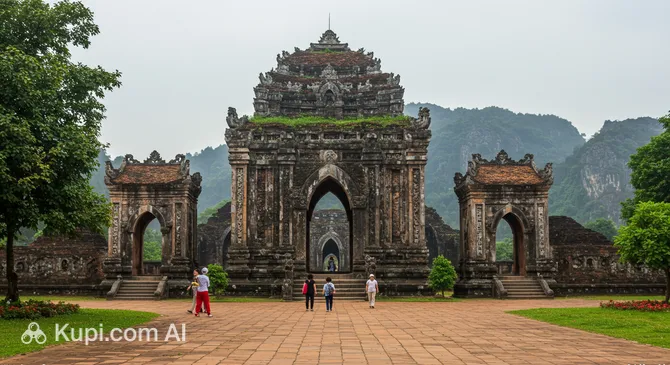
For those interested in Vietnamese history, a visit to the Hoa Lu Ancient Capital is a must. This site was the political center of the country in the 10th and 11th centuries under the Dinh and Early Le dynasties. Today, you can see well-preserved temples dedicated to the founding emperors, such as the Temple of Emperor Dinh Tien Hoang. The complex is surrounded by scenic mountains that once served as natural fortifications, allowing visitors to connect with Vietnam's rich past.

Hoa Lu Ancient Capital. Illustration.
Source: Kupi.com AI

Traveler photos:

And, of course, the Mua Caves (Hang Mua) cannot be overlooked. This location is famous for its viewpoint at the top of the mountain, reached by nearly 500 stone steps. The climb may seem challenging, but the reward is a breathtaking panoramic view of the Tam Coc valley, the winding river, and the surrounding karst peaks. At the summit, there is also a dragon statue that has become a symbol of this place. Mua Caves is the perfect spot for those who want a bird's-eye view of Ninh Binh's beauty and to take stunning photographs.

Mua Caves. Illustration.
Source: Kupi.com AI

Traveler photos:

Local Cuisine

The gastronomic scene of Ninh Binh is a true reflection of its unique nature and rich culture. The main culinary highlight of the region is undoubtedly goat meat (thịt dê). The meat of local goats grazing on limestone slopes has a special, delicate flavor. It is prepared in many ways: fried, stewed, made into skewers, or served in soups. Another iconic specialty is "com chay" (cơm cháy), crispy scorched rice cakes often served with a goat meat or pork sauce. These two dishes are a must for any foodie wishing to experience the authentic cuisine of Vietnam.

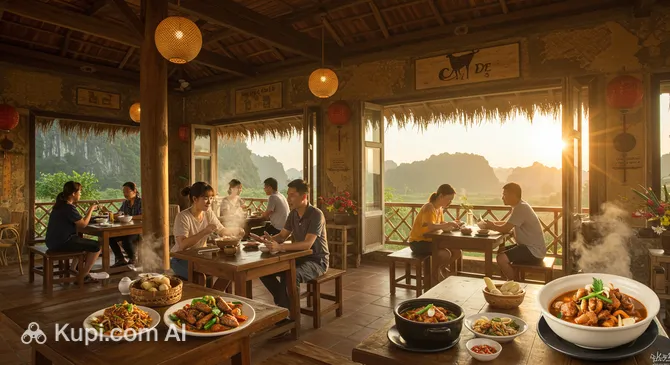
In addition to goat meat and "com chay," other local delicacies in Ninh Binh are worth trying. Lovers of the exotic will enjoy mountain snails (ốc núi), which are grilled, boiled, or stewed with various herbs and spices. Due to the abundance of rivers and lakes, dishes featuring fresh freshwater fish are often found on local menus. You can try these and other traditional dishes in small family-run restaurants as well as in establishments oriented towards tourists, such as Cuong De Restaurant, known for its local cuisine.

Cuong De Restaurant. Illustration.
Source: Kupi.com AI

Traveler photos:

Regarding drinks, the local rice wine "Kim Son" (rượu Kim Sơn) is popular in Ninh Binh, named after the district of the same name known for its distilling traditions. This strong spirit is often infused with herbs or snakes. For those who prefer non-alcoholic options, there is always fresh sugarcane juice (nước mía), various fruit juices, traditional Vietnamese green tea (trà), or aromatic coffee (cà phê), which is prepared here in a special way using a phin filter.

The food culture in Ninh Binh combines simplicity and authenticity. Locals often prefer to dine in small cafes and street food stalls where you can grab a quick and inexpensive bite. Tourists will find many restaurants offering both local specialties and more familiar dishes. A special atmosphere is created by establishments located in scenic spots, such as those overlooking the river or rice fields. The city's gastronomic scene attracts visitors with its fresh products, unique recipes passed down through generations, and the opportunity to touch real Vietnamese cuisine away from the noise of large metropolises.

Travel Tips

Planning a trip to amazing Ninh Binh? To ensure your journey through this picturesque corner of Vietnam goes smoothly and leaves only the most pleasant impressions, we have prepared some practical tips for you. They will help you navigate the area better and enjoy the beauty of "Halong Bay on land" to the fullest!

  1. Clothing and Essentials: The climate in Ninh Binh is tropical monsoonal. In summer (May-September), bring light, breathable clothing made of natural fabrics, sunscreen, a hat, and repellent. In the cooler dry season (November-April), a light jacket or sweater will be useful for the evenings. Make sure to bring comfortable shoes for walking and exploring caves. For visiting pagodas and temples (such as Bich Dong Pagoda or temples in Hoa Lu), choose modest clothing that covers shoulders and knees. Don't forget a universal adapter (type A, C, and F sockets are used in Vietnam).

  2. Regional Transport: The city of Ninh Binh itself is small, but the main attractions like Tam Coc, Trang An, or Mua Caves are located outside of it. The most popular and convenient way to get around is renting a motorbike or scooter. This gives you freedom and allows you to explore the surroundings at your own pace. You can also rent a bicycle for short trips. Taxis and apps like Grab are available but can be more expensive for long trips to attractions. Public buses exist, but their routes may be inconvenient for tourists.

  3. Finances: The local currency is the Vietnamese Dong (VND). You can exchange currency at banks or authorized exchange offices in the city. Credit cards (Visa, Mastercard) are accepted in large hotels and some restaurants, but for small purchases, at markets, for boat trips, and entrance tickets, it's always better to have cash. ATMs are available in Ninh Binh. Tipping is not mandatory but welcomed for good service (a small amount for guides, boaters, or 5-10% in restaurants).

  4. Health and Safety: Ninh Binh is considered a fairly safe place. There are pharmacies in the city, but the assortment may be limited, so it's better to bring basic medications with you. Drink only bottled water. When choosing street food, prefer busy places. Medical help for tourists is available at local clinics, but for serious cases, it is better to contact hospitals in Hanoi. It is highly recommended to take out travel insurance.

  5. Communication: The official language is Vietnamese. English is understood in tourist areas (hotels, restaurants, popular attractions), but outside of them, communication may be difficult. Learn a few simple phrases: "Xin chào" (sin chow) – hello, "Cảm ơn" (kam on) – thank you, "Bao nhiêu tiền?" (bow nyew tyen?) – how much is it?. A mobile SIM card with internet access is easy to buy at the airport upon arrival or at communication stores in Ninh Binh. Wi-Fi is available in most hotels and cafes.

  6. Local Etiquette: Vietnamese people are friendly and hospitable. Greet people with a smile and a slight nod. When visiting temples and pagodas, behave respectfully and do not make noise. Ask for permission before photographing local residents. It is customary to haggle at markets, but do it politely and with a smile. It is not customary to express anger publicly or speak loudly.

  7. What to Avoid: Do not touch people's heads (especially children), as the head is considered sacred. Do not point at people or objects with your feet. Do not leave chopsticks stuck vertically in a bowl of rice—this is associated with funeral rituals.

  8. Life Hack for the Best Experience: To enjoy boat trips in Tam Coc or Trang An without the crowds of tourists and the exhausting heat, go there early in the morning or closer to the evening. This is also the time with the most beautiful light for photos. And if you want to catch the famous rice fields in their emerald or golden glory, plan your trip for May-June or September-October.

We hope these tips help you plan an unforgettable trip to Ninh Binh! This land of amazing nature and ancient history will surely win your heart. Enjoy every moment of your adventure in Vietnam!

Entertainment & Nightlife

Ninh Binh, known for its mesmerizing natural landscapes, offers a calmer pace of life compared to Vietnam's major metropolises. However, you can still find pleasant options for evening and nighttime leisure to relax after a busy day of exploration.

Nightlife in Ninh Binh is mainly concentrated around restaurants that stay open late and a few bars where you can enjoy drinks in a cozy atmosphere. Do not expect bustling districts with numerous nightclubs like in Hanoi or Ho Chi Minh City. Instead, Ninh Binh offers more relaxed evening relaxation. Most activity is seen in the city center as well as in the Tam Coc tourist area, where many establishments cater to travelers. The atmosphere in bars and restaurants is usually laid-back, with a mixed crowd of locals and tourists. There is generally no specific dress code.

If you are looking for a place with a livelier atmosphere and music, check out T-Pub Restaurant. This establishment, classified as a nightclub, offers guests the chance to dance and spend the evening with friends. You can order a variety of drinks and snacks here. Typically, such places start to liven up closer to late evening and operate until midnight or slightly longer.

T-Pub Restaurant. Illustration.
Source: Kupi.com AI

Traveler photos:

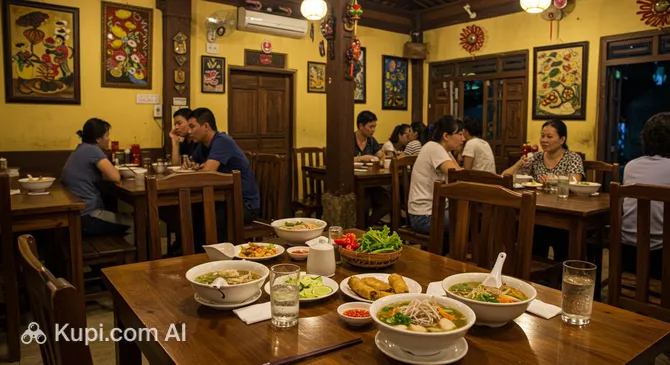
For those who prefer a quiet dinner, Ninh Binh has many restaurants offering both local and international cuisine. Many of them are open until late at night. For example, you can visit Chef Hien Restaurant, known for its delicious dishes, or stop by Cuong De Restaurant, which is also famous for local delicacies. This is a great opportunity to try the famous Ninh Binh goat meat or other Vietnamese specialties in a pleasant setting.

Chef Hien Restaurant. Illustration.
Source: Kupi.com AI

Traveler photos:

When planning an evening out, keep in mind that most establishments in Ninh Binh close earlier than in larger cities. The best time to visit bars is from 8:00 PM to 11:00 PM. Prices in Ninh Binh establishments are generally affordable. For getting around the city at night, it is most convenient to use taxis or services like Grab. Ninh Binh is considered a fairly safe city; however, you should always take standard precautions, especially after dark, and avoid poorly lit, deserted areas.

Regarding daytime entertainment, Ninh Binh is primarily a treasure trove of natural wonders and historical sites. During the day, travelers explore gems like the Trang An Landscape Complex, Tam Coc - Bich Dong, Mua Caves, and the Hoa Lu Ancient Capital. You can also visit Thung Nham Bird Park to observe birds in their natural habitat. There are few museums or large amusement parks in the city itself, as the main focus is on the region's natural and cultural attractions.

Parks & Museums

Ninh Binh and its surroundings are not only home to breathtaking landscapes but also places where you can connect with the rich history and culture of Vietnam. The city offers a unique combination of natural parks, which are themselves living museums, and ancient structures holding centuries-old secrets.

Among the key natural areas that are a must-visit is the Thung Nham Bird Park. This is an amazing place where you can enjoy the tranquility of nature and observe many bird species in their natural habitat, especially at sunset when they return for the night. A boat trip through the park opens up picturesque views of limestone cliffs and flooded valleys. Also, the famous Trang An Landscape Complex, a UNESCO World Heritage site, cannot be ignored, offering unforgettable boat tours along rivers, through caves, and to secluded temples. While it is not a park in the traditional sense, its natural splendor and scale make it a must-visit. Similar experiences are offered by Tam Coc - Bich Dong, where boats glide along the river among rice fields and karst formations.

Thung Nham Bird Park. Illustration.
Source: Kupi.com AI

Traveler photos:

Although there are not many traditional museums with indoor exhibits in Ninh Binh, ancient complexes and pagodas play the role of guardians of history and culture here. The most important of these is the Hoa Lu Ancient Capital. This historical complex from the 10th-11th centuries, formerly the country's political center, can be called an open-air museum. It houses temples dedicated to the first emperors of Vietnam, such as the Temple of Emperor Dinh Tien Hoang, where you can learn about the formation of Vietnamese statehood. Another landmark is the Bich Dong Pagoda, a three-tiered temple complex picturesquely built into the mountain. Visiting the pagoda is not only an introduction to Buddhist culture but also an opportunity to enjoy beautiful views and unique architecture.

Bich Dong Pagoda. Illustration.
Source: Kupi.com AI

Traveler photos:

Historical and architectural sites in the Ninh Binh region are mainly represented by temples, pagodas, and the remains of ancient citadels. Their architecture reflects traditional Vietnamese styles with influences of Chinese motifs, harmoniously integrated into the surrounding natural landscape. For a more authentic experience, try turning off the popular tourist routes and visiting small local pagodas or strolling through the villages around Tam Coc or Trang An—this will allow you to dive deeper into the local flavor and see everyday life.

Getting Around

You can get around Ninh Binh and its picturesque surroundings in several ways; however, keep in mind that the city does not have an extensive public transport system like large metropolises. The main focus here is on more individual means of transport, which are perfect for exploring the region.

The most popular types of transport for tourists are motorbikes (scooters) and bicycles. They can be rented at many hotels, guesthouses, and specialized rental points, especially in tourist areas like Tam Coc. Renting a motorbike provides maximum freedom to visit remote attractions such as the Trang An Complex or the Mua Caves. The cost of renting a motorbike usually ranges from 100,000 to 150,000 VND per day (about 4-6 US dollars); fuel is paid separately. Bicycles are an excellent option for leisurely rides around Tam Coc and nearby villages; their rental is cheaper.

Taxis are also available in Ninh Binh. You can catch a car on the street (in busier areas) or order one through your hotel. The Grab app (similar to Uber) is becoming increasingly popular, allowing you to book both a car and a motorcycle taxi (GrabBike) at a fixed price, which is convenient and eliminates the need to haggle. Payment in Grab is possible both by card through the app and in cash to the driver. Regular motorcycle taxis, known as "xe om" (xe ôm), are also widespread and are a quick way to travel short distances. Always agree on the price with the "xe om" driver in advance, before the trip.

As for public buses, they mainly run between the city of Ninh Binh and district centers or neighboring provinces. For moving directly between tourist sites within the Ninh Binh region, they are less convenient due to the specific routes and schedules. Tickets for such buses are usually purchased from the conductor or driver and are inexpensive; payment is made in cash.

Practical tips for tourists: Always carry enough small cash in Dong to pay for fares, especially if you use "xe om" services or buy tickets for local buses. When renting a motorbike, make sure you have a driver's license of the appropriate category (although it is not always checked, it is important for your safety and insurance). Be sure to wear a helmet—it is a legal requirement and essential for your safety. Before a trip by taxi or "xe om" (if not using an app with a fixed price), clearly state or show the destination address to the driver and agree on the cost to avoid misunderstandings. Most transport services are available during the day. In the evening, the number of "xe om" may decrease, but taxis and Grab usually operate.

In general, Ninh Binh's transport system is geared toward the flexibility and independence of travelers, offering convenient options for exploring all the beauties of this amazing region.

Accommodation

In Ninh Binh and its surroundings, travelers will find a variety of accommodation options to suit different preferences and budgets. The range of housing includes everything from affordable guesthouses and authentic homestays, where you can get closer to local life, to comfortable mid-range hotels and charming boutique resorts harmoniously integrated into the natural landscapes. For those seeking more privacy or planning a long stay, apartment or villa rentals may be available.

Many tourists prefer to stay in the Tam Coc area, as it is famous for its incredible scenery and is in close proximity to the famous boat trips on the river among rice fields and karst cliffs. Staying here makes it easy to explore the surrounding natural beauty. Another popular option is accommodation in the city of Ninh Binh itself, which offers more urban amenities and can serve as a convenient base for trips to attractions like the Hoa Lu Ancient Capital or the Trang An Landscape Complex. Some housing options can also be found near the Trang An complex and Bai Dinh Pagoda.

The region boasts several beautiful resorts that blend perfectly with the surrounding nature. For example, Tam Coc Chic Villa & Resort offers guests high-quality accommodation surrounded by picturesque views. Overall, you will find both small, family-run guesthouses offering an authentic experience and larger hotels with a wide range of services.

Tam Coc Chic Villa & Resort. Illustration.
Source: Kupi.com AI

Traveler photos:

Accommodation options in Ninh Binh cater to various budgets, ranging from budget offerings to more luxurious variants. Prices can vary significantly depending on the season, comfort level, and location. During the peak tourist season, for example, during the rice harvest (usually May-June and September-October) or during national holidays, it is highly recommended to book your accommodation in advance. This will help you secure the best choice and better prices. The most common booking methods are popular international online platforms (such as Booking.com, Agoda) or direct booking through hotel websites, if available. Some small guesthouses can be found and booked upon arrival, but this comes with a certain risk, especially in high season.

Nearby Cities

For those who want to explore the surrounding area, Ninh Binh serves as an excellent base for day trips to several interesting nearby locations:

Among them, Thanh Hoa, located just 47 km away, is worth mentioning. This city is interesting not only as the administrative center of the province of the same name but also for its proximity to the Citadel of the Ho Dynasty, a UNESCO World Heritage site. Hanoi, the capital of Vietnam, is also popular and is about 91 km away. A day trip to Hanoi will allow you to immerse yourself in its rich history, explore the colorful Old Quarter, and visit the Temple of Literature and Hoan Kiem Lake. Another option is the port city of Hai Phong (about 106 km away), attracting visitors with its colonial architecture and the opportunity to head to the islands of Lan Ha Bay.

CityPopulationDistance
Tam Diep104 1757 km
Bim Son100 82016 km
Nam Dinh352 10835 km
Phu Ly136 65435 km
Hang Tram11 50337 km

These nearby destinations allow for a more complete understanding of the diversity of culture, history, and landscapes of northern Vietnam, complementing the impressions of Ninh Binh itself.

Shopping & Souvenirs

Shopping in Ninh Binh is more about the opportunity to purchase authentic souvenirs, local delicacies, and handmade products rather than going to large shopping centers or famous brand boutiques. The city is not famous as a major shopping hub, but it offers unique goods reflecting the culture and nature of this picturesque region of Vietnam.

The main shopping opportunities are concentrated in the central part of Ninh Binh city as well as in tourist zones like Tam Coc. Here you will find many small shops, souvenir stalls, and street vendors. There are no specialized shopping streets similar to those in Hanoi or Ho Chi Minh City, but walking along the city's main streets, you may stumble upon interesting shops.

Large modern shopping centers in the Western sense are not a characteristic feature of Ninh Binh. Instead, you will find small local department stores or supermarkets selling everyday goods, food, and some souvenirs. For more extensive shopping with a wide selection of brands, it is better to head to larger cities like Hanoi.

The most authentic shopping experience in Ninh Binh can be found at local markets (chợ). Ninh Binh's Central Market (Chợ Rồng Ninh Bình, though it may not always be clearly marked for tourists) is a lively place where locals buy fresh produce, fruits, vegetables, meat, fish, as well as clothing, shoes, household goods, and spices. Visiting such a market is a great way to immerse yourself in the local atmosphere, observe daily life, and perhaps find something interesting. Markets usually start operating early in the morning.

Recommended souvenirs to bring from Ninh Binh include:

  • Handmade products: Pay attention to embroidery, especially from Van Lam village near Tam Coc, known for its lace and embroidered items. These can be tablecloths, napkins, paintings, or clothing.
  • Local delicacies: A popular edible souvenir is "com chay" (cơm cháy)—crispy rice cakes sold in packages. You can also find packaged goat meat products, which the region is famous for.
  • Traditional Vietnamese "non la" hats (nón lá)—a classic and practical souvenir.
  • Bamboo and wood products: Various crafts, tableware, and interior items.
  • Small souvenirs: Magnets, postcards, and keychains with images of local attractions like Tam Coc - Bich Dong or the Trang An Complex.

Shop opening hours can vary. Markets typically open early in the morning (around 6:00-7:00 AM) and may work until noon or evening, but the main influx of buyers is in the morning hours. Small private shops often operate from 8:00-9:00 AM until 6:00-8:00 PM, sometimes with a lunch break. Souvenir stalls in tourist areas may stay open longer. Payment methods: The Vietnamese Dong (VND) is the primary currency. Markets and most small shops only accept cash. Credit cards (Visa, Mastercard) may be accepted in some hotels, large restaurants, and selected souvenir shops, but it is always best to have enough cash on hand.

Regarding Tax Free (tax refund), this system in Vietnam is mainly focused on large purchases in specialized stores in big cities and international airports. In Ninh Binh, given the nature of local shopping, finding stores participating in the Tax Free program is unlikely. If you make a large purchase in a reputable store, you can inquire about this, but generally, you should not count on this service for most goods purchased by tourists in this region.

Reached the end of the page?

That means the route is fully explored