Support

Tanners' Bridge

About

Amidst the modern buildings and bustling boulevards that Tirana is famous for, lies a true treasure of the past—an ancient stone bridge. This small but impressive engineering feat is a living reminder of the Ottoman period of history that Albania experienced in the 18th century.
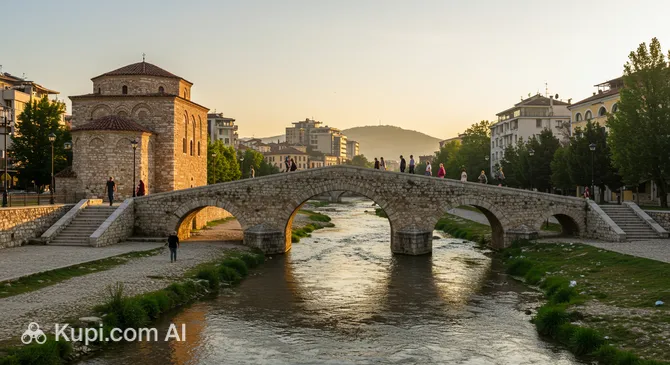
Tanners
Tanners' Bridge. Иллюстрация. Источник: Kupi.com AI

Tanners' Bridge, or Ura e Tabakëve, is a classic example of arched architecture. Its total length is about 8 meters, and its characteristic stone spans once served as an important transport hub. It took its name from the district of leather-working workshops that flourished in this part of the city several centuries ago.

Today, this fully pedestrian site is one of the capital's most significant cultural monuments. Although the Lana River has changed its course over time, the bridge was carefully restored and surrounded by picturesque artificial ponds, turning it into a cozy historical oasis in the heart of a dynamic metropolis.

Contacts

Since the bridge is an open historical monument, it has no separate administration or ticket office. For any questions regarding tourist routes, it is recommended to contact the city's tourist information center.

How to contactContact
AddressBulevardi "Jean D'Arc, Tiranë, Albania

What to Do

The main pleasure here is the opportunity to literally touch history. You can walk across the uneven stones of the paved walkway, imagining how loaded caravans once traveled over it. This spot is perfect for thoughtful contemplation of Ottoman architecture: notice how skillfully the stone blocks of the arches are laid.

Photography enthusiasts will find many interesting angles here. Since the bridge's supports were cleaned and ponds were created around it, the structure looks very picturesque, especially in the rays of the setting sun. From the bridge, there is a pleasant view of the surroundings, including the characteristic silhouette of the Tanners' Mosque.

After visiting the monument itself, it is worth taking a stroll through the surrounding area. Following a major restoration, the district has become very well-maintained. Here you can observe the leisurely pace of life of the local residents and feel the contrast between the ancient stones and the modern rhythm of the city.

Getting There

Finding this historic corner in the modern capital is quite easy. It is located on Jean D'Arc Boulevard (Bulevardi "Jean D'Arc"), just a 20–30 minute leisurely walk from the main Skanderbeg Square. A stroll along the embankment of the Lana River will allow you to smoothly transition from the busy streets to the silence of the ancient quarter.

For those who prefer public transport, city buses running along the boulevard are a good option. You can also use taxi services—the trip from the city center will take no more than 10 minutes and is very affordable. A helpful landmark for the driver is not only the name of the bridge itself but also the mosque of the same name located nearby.

If you are traveling by car, you can usually find parking nearby. However, the best way to feel the atmosphere of the area is to arrive on foot, just as the caravans did hundreds of years ago.

Ближайший город: Tirana

History & Facts

The construction of this elegant structure dates back to the 18th century, when the territory was under Ottoman rule. At that time, the bridge was a key element of the St. George's Road, which brought caravans with goods and food into the city from the eastern highlands. It earned its name from its proximity to the tanners' and butchers' quarter (tabakë), whose workshops were located along the riverbanks.

Interestingly, until the 1930s, the bridge fulfilled its primary function, connecting the banks of the Lana River. However, the river's course was later changed, and the ancient structure ended up "on dry land," gradually falling into disrepair. For a long time, this architectural monument remained forgotten until large-scale urban development projects restored it to its former glory.

During the restoration in the 1990s and 2007, specialists carried out unique underground work: the supports were carefully cleared of years of silt, and decorative artificial ponds were created around the structure. Today, this site is recognized as a vital cultural monument, vividly demonstrating Ottoman engineering and the history of urban infrastructure development.

Time Needed

Travelers usually need about 30 to 45 minutes to leisurely inspect the bridge's construction, take commemorative photos against the backdrop of the stone arches, and walk along the small artificial ponds. This is an ideal location for a short stop during a larger walking tour of the city.

If you decide to visit the nearby Tanners' Mosque or linger in one of the local cafes to soak in the spirit of old Tirana, you should allow about 1–1.5 hours for the visit. This is plenty of time for a full immersion into the atmosphere of the place without any rush.

Working Hours

The attraction is open to visitors at any time of day or night. The bridge is part of an open city space, so there are no gates or time restrictions. You can visit early in the morning or late in the evening.

Opening hours:

  • Monday — Sunday: around the clock (Open 24 hours).
In the evening, the architectural forms are highlighted by city lighting, which gives the place a special charm.

Круглосуточно

Nearby

A visit to the historic bridge can easily be combined with a tour of other iconic spots in the Albanian capital. Since the site is within walking distance of the center, your trip can turn into a rich route through different eras of the city's development.

NameDistance
Tirana Castle0.3 km
Ceren Ismet Shehu0.3 km
Toptani Shopping Center0.3 km
Pyramid of Tirana0.5 km
Bunk'Art 20.5 km
Et'hem Bey Mosque0.6 km
Palace of Culture0.6 km

Reached the end of the page?

That means the route is fully explored