Support

Kastel Fortress

About

On the banks of the emerald Vrbas River, in the heart of the city of Banja Luka, stands the monumental Kastel Fortress. It is the oldest fortification in Bosnia and Herzegovina, having served for centuries as a guardian of trade routes and a witness to the changing of great empires. Today, the fortress is the main historical symbol of the city and a favorite place for walks for both locals and travelers.
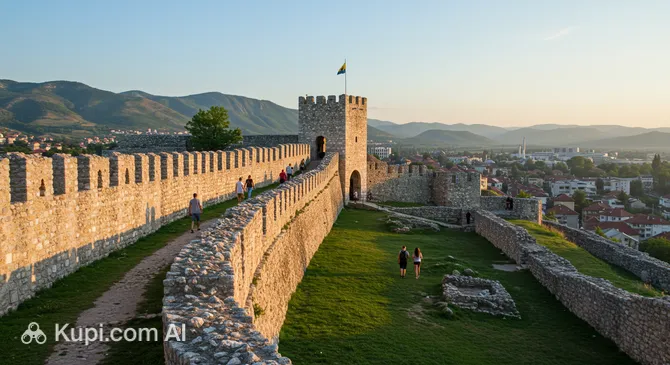
Kastel Fortress
Kastel Fortress. Иллюстрация. Источник: Kupi.com AI

The architectural ensemble of Kastel is impressive in its scale: powerful stone walls up to 6.5 meters thick, polygonal bastions, and watchtowers form an impregnable belt. The fortress harmoniously combines features from different eras—from ancient Roman foundations to Ottoman and Austro-Hungarian reconstructions. Of particular value are the results of archaeological excavations, which have uncovered traces of settlements dating back thousands of years.

In addition to its historical significance, Kastel Fortress today acts as a living cultural center. Music festivals, exhibitions, and open-air concerts are regularly held here. Thanks to the fact that admission to the grounds is free and panoramic views of the river and cityscapes open up from every point on the walls, this place is considered a must-see on any tourist's itinerary.

Contacts

For your convenience, the main contact details and location are listed below. The fortress is situated in the central part of the city, making it easily accessible for all tourists.

How to contactContact
AddressQ58R+J7M, Banja Luka 78000, Bosnia and Herzegovina

What to Do

The main pleasure of visiting Kastel is the opportunity to literally touch history. Be sure to climb the massive fortress walls, which offer the best panoramic views of the Vrbas River. This is an ideal spot for photo sessions, especially during sunset when the soft light falls on the ancient stones. Inside the fortress, you can explore the remains of Roman buildings, bastions, and the old arsenal where cannons were once cast.

For fans of mysteries and legends, the earthen embankments with preserved secret passages will be of interest. While exploring the area, pay attention to the memorial plaques: one of them tells a touching legend of tragic love—local lore says that if you make a wish here, it will surely come true. If you are traveling with family, the spacious green areas inside the walls are perfect for a small picnic or relaxing in the shade of the trees.

During the summer period, Kastel Fortress is transformed: concerts, craft fairs, and international festivals are frequently held here. Even if you don't catch a mass event, a walk along the embankment at the foot of the fortress will bring a sense of peace. Several cafes are located nearby where you can order a cup of Bosnian coffee and watch the slow flow of the river, concluding your visit to this historical oasis.

Getting There

Kastel Fortress is located in the very heart of the city, on the right bank of the Vrbas River, making it very convenient to visit. If you are already in the city center, a walk from the Cathedral of Christ the Saviour will take only about 10–15 minutes. This is a great way to get to know the city's architecture on your way to the historical core.

For those who prefer public transport, buses heading to the "Centar" or "Vrbas" stops are suitable. If you are arriving from Banja Luka Airport (located 15 km away), it is most convenient to take a taxi (the trip takes about 20–30 minutes) or bus No. 1/2. Intercity buses and trains run from other cities, such as Sarajevo; the walk from the station to the fortress is no more than 20 minutes.

Travelers by car will find it useful to know that there are parking zones near the embankment and in the city center. Also, Banja Luka is a fairly flat city, so renting a bicycle or an electric scooter is a pleasant alternative for getting to the main gates of the fortress quickly.

Ближайший город: Banja Luka

History & Facts

The history of this place dates back to ancient times. Archaeological research confirms that the territory of the current fortress was settled as far back as the Neolithic era. However, the first serious fortifications were built here by the Romans in the 2nd–3rd centuries AD, when they established the military camp of Castra. It served as a strategic point for guarding an important trade route connecting the Adriatic coast with the Sava River valley.

The city received its current name much later: the first mention of the name Banja Luka was recorded in a charter from the Hungarian King Vladislaus II dated February 6, 1494. During that period, the fortress served as an important border outpost. In 1528, the region came under the control of the Ottoman Empire, and Kastel became the residence of Ottoman governors. A special contribution to the development of the fortifications was made by Ferhad Pasha Sokolović, who transformed the castle into a powerful defensive hub with its own arsenal.

In the 18th century, the fortress was rebuilt according to the Vauban system, which was modern at the time, allowing it to successfully withstand long sieges. One of the most famous episodes occurred in 1737, when the local garrison managed to repel a massive attack by Austrian troops. Later, during the Austro-Hungarian rule, Kastel retained its structure, continuing to serve military purposes until it eventually transformed into a historical and cultural monument.

Time Needed

To leisurely stroll through the grounds, examine the preserved bastions, and take beautiful photos against the backdrop of the river, 1–2 hours is usually enough. This time is sufficient for a basic tour of the walls and main architectural elements.

If you are interested in archaeology, plan to study the information boards in detail, or want to attend one of the cultural events often held here in the summer, you should budget about 3 hours for your visit. The fortress is an excellent place for quiet relaxation, so many tourists stay longer just to enjoy the atmosphere by the water.

Working Hours

One of the main advantages of Kastel Fortress as a tourist attraction is its accessibility. The fortress is open to visitors 24 hours a day, seven days a week, including weekends and holidays. Since it is an open-air historical site, you can plan your visit for any convenient time—whether it's an early morning walk or a romantic evening promenade under the light of the lanterns.

Круглосуточно

Nearby

A visit to Kastel Fortress can easily be combined with exploring other iconic city landmarks. The central location of the fortification allows for a rich walking route that covers religious monuments, modern art objects, and cozy walking areas along the river.

NameDistance
Ferhadija Mosque0.3 km
Museum of Republika Srpska0.3 km
Pod Lipom0.4 km
Mac Tire Pub0.6 km
Museum of Contemporary Art of the Republic of Srpska0.6 km
Cathedral of Christ the Saviour0.6 km
Hotel Moskva0.7 km

Reached the end of the page?

That means the route is fully explored