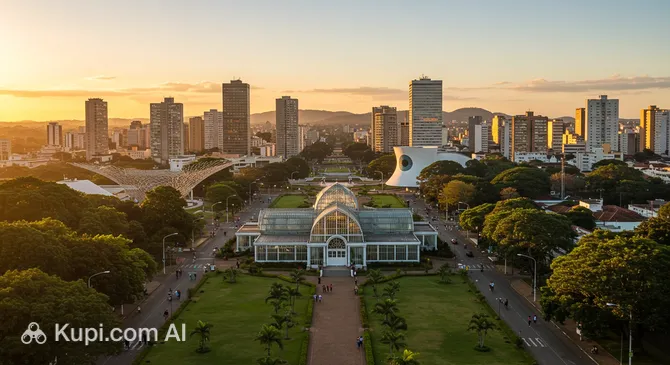
Curitiba, the capital of the state of Paraná, is widely recognized as one of the most innovative and organized cities in South America. Located in the southern region of Brazil, it is celebrated for its sustainable urban planning and an abundance of green spaces that seamlessly blend with modern infrastructure. With a population of nearly 1.9 million people, the city serves as a bustling cultural and economic hub while maintaining a surprisingly relaxed and welcoming atmosphere.
Curitiba. Illustration.
Source: Kupi.com AI
Geographically, the city sits on a plateau at an altitude of approximately 930 meters, which gifts it with a mild subtropical highland climate—often cooler than many other Brazilian destinations. To fully appreciate the local character, it is worth exploring the history of Curitiba, which has been significantly shaped by waves of European immigration, leaving a lasting legacy on its architecture, traditions, and cuisine.
Visitors are spoiled for choice with unique attractions, including the iconic Botanical Garden (Jardim Botânico) with its stunning Art Nouveau-style greenhouse, and the Wire Opera House (Ópera de Arame), a theater constructed entirely of steel tubes in a former rock quarry. Whether you are admiring the futuristic Oscar Niemeyer Museum or strolling through its well-kept parks, Curitiba offers a sophisticated travel experience that should not be missed.
Weather Overview
Due to its location on a high plateau, the city experiences a mild climate that is distinct from the tropical heat often associated with Brazil. Summers, spanning from December to March, are generally warm and pleasant, with average temperatures hovering around 21°C to 22°C and daily highs reaching up to 26°C. However, this season is also characterized by frequent precipitation, with January seeing up to 23 wet days, so packing an umbrella is always a good idea.
In contrast, the winter months of June through August bring cooler air and clearer skies. During this time, average temperatures drop to around 14°C to 15°C, with nighttime lows occasionally dipping near 10°C. Rainfall becomes significantly less frequent, particularly in July, which typically records only about 6 wet days. For more precise planning, you can view the current weather in Curitiba to decide the best time for your visit.
Overall, travelers should expect warm summers with frequent cloudy or wet days and cool, drier winters. The transition months, such as April and November, offer moderate temperatures ranging from 19°C to 20°C, making them comfortable times for outdoor exploration.
Average monthly temperature
Average monthly precipitation
Interesting Facts
Beyond the main tourist postcards, Curitiba holds many fascinating stories and innovative solutions that set it apart from other Brazilian capitals. From its pioneering urban planning to quirky local habits, there is much to discover beneath the surface of this organized metropolis.
Curitiba is the birthplace of the Bus Rapid Transit (BRT) system, featuring dedicated lanes and iconic tube-shaped stations. This efficient model, designed in the 1970s, has since inspired transportation networks in over 300 cities worldwide, including Bogotá and Istanbul.
The city employs an unusual eco-friendly workforce: a flock of sheep is often used to keep the grass short in Barigui Park. This natural maintenance method helps reduce noise pollution and fuel consumption compared to traditional lawnmowers.
Residents can participate in the "Green Exchange" (Câmbio Verde) program, a unique initiative where sorted recyclable trash can be traded for fresh, locally-grown produce. This creative solution helps keep the streets clean while supporting local farmers and improving nutrition for low-income families.
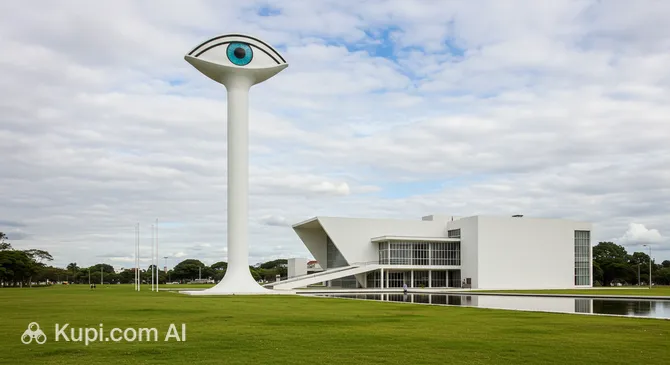
The Oscar Niemeyer Museum is affectionately nicknamed "The Eye" due to its striking architectural design resembling a giant eye balancing on a yellow pillar. It is one of the largest museums in Latin America and a bold symbol of modernism.
Curitiba is home to the 24 Hours Street (Rua 24 Horas), which was the first street in Brazil to operate non-stop day and night. While its operating hours have been adjusted in recent years, it remains a landmark of steel and glass architecture.
Oscar Niemeyer Museum. Illustration.
Source: Kupi.com AI
Traveler photos:
How to Get There
Reaching the capital of Paraná is straightforward, with well-established transport connections linking it to major cities across Brazil and beyond. For a comprehensive overview of all travel options, including bus routes and driving directions, you can read more about how to get to Curitiba on our detailed page. Air travel remains the most efficient choice for most tourists, thanks to the region's busy aviation hubs.
The primary gateway for visitors is Afonso Pena International Airport (CWB). It is important to note that this facility is not located within Curitiba itself, but in the neighboring city of Sao Jose dos Pinhais, approximately 14.4 km from the city center. As a major international airport with high passenger volume, it offers frequent connections. The journey from the terminal to downtown Curitiba by taxi or executive bus usually takes approximately 40 to 50 minutes, depending on traffic conditions.
Another option for those traveling through the southern region is Joinville-Lauro Carneiro de Loyola Airport (JOI). Located in the city of Joinville, it sits about 100 km away from Curitiba. While it handles a smaller volume of passengers compared to Afonso Pena, it serves as a viable alternative for regional connectivity. Travelers arriving here should expect a ground transfer time of roughly 2.5 to 3 hours to reach Curitiba.
For clarity, here is a summary of the main airports:
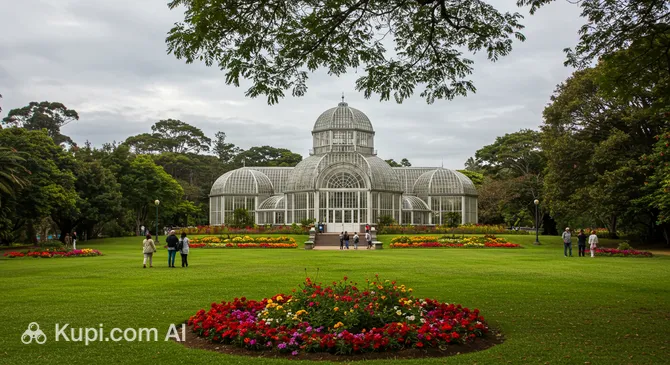
Curitiba is renowned for its abundance of parks and cultural landmarks, offering visitors a perfect blend of nature and urban creativity. One of the undisputed highlights is the Botanical Garden of Curitiba, which serves as the city's most famous postcard image. Opened in 1991, this stunning space features geometric French-style gardens and a magnificent Art Nouveau greenhouse inspired by London's Crystal Palace. It is an ideal location for a peaceful stroll, allowing tourists to admire the native flora and the iconic carpet of flowers leading up to the glass structure.
Botanical Garden of Curitiba. Illustration.
Source: Kupi.com AI
Traveler photos:
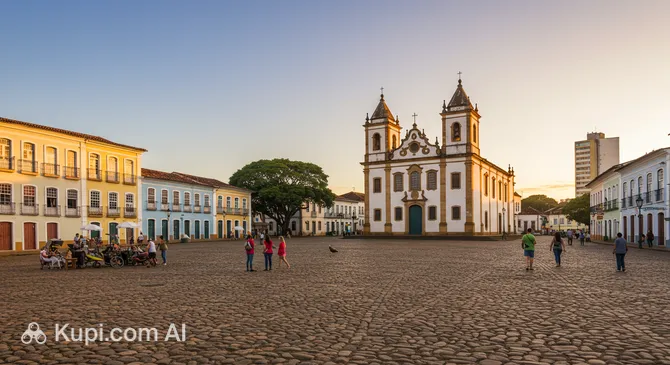
For those interested in the historical roots of the region, Largo da Ordem is the place to be. Located in the heart of the historic center, this cobblestone area is lined with preserved colonial buildings, centuries-old churches, and vibrant cultural centers. It comes alive particularly on Sundays, when it hosts a massive handicraft fair filled with art, music, and street food stalls, making it a lively spot to experience the local atmosphere and pick up unique souvenirs.
Largo da Ordem. Illustration.
Source: Kupi.com AI
Traveler photos:
Gastronomy enthusiasts will find a paradise at the Curitiba Municipal Market. Established in the late 1950s, this bustling market is a sensory delight, packed with stalls selling exotic fruits, spices, cheeses, and organic produce. Beyond shopping for ingredients, it is a fantastic venue to enjoy a meal, with a food court that offers a diverse range of culinary options, from traditional Brazilian snacks to international dishes.
To grasp the sheer scale and organized layout of the metropolis, a visit to the Panoramic Tower is highly recommended. Standing over 100 meters tall, this telecommunications tower features an enclosed observation deck that provides spectacular 360-degree views of the city and its surrounding areas. Visitors can also explore a small museum inside dedicated to the history of telephony, adding an educational element to the scenic experience.
Local Cuisine
The culinary scene in Curitiba is a delicious reflection of its multicultural heritage, blending indigenous ingredients with strong European traditions brought by Italian, German, Polish, and Ukrainian immigrants. A true symbol of this fusion is the pinhão, the seed of the majestic Araucaria tree which is native to the region. During the winter months, this pine nut is omnipresent, eaten simply boiled as a snack or incorporated into sophisticated recipes ranging from pestos and risottos to savory dumplings.
For a truly unique local experience, adventurous eaters must try the famous Carne de Onça. Despite its name, which translates to "Jaguar Meat," it contains no exotic animal products; it is actually a traditional dish made of high-quality raw ground beef served on dark rye bread, generously topped with white onions, chives, olive oil, and spices. It is so iconic that it has been declared an intangible cultural heritage of the city and is a staple in many traditional taverns and bars.
Another regional heavyweight is Barreado, a slow-cooked beef stew originally from the coast of Paraná but widely enjoyed in the capital. The meat is cooked in a clay pot sealed with a cassava flour paste for nearly 24 hours until it completely falls apart, typically served with rice, plantains, and more cassava flour. It is a hearty, comforting meal that pairs perfectly with the city's often cooler climate.
When it comes to drinks, Curitiba is often cited as the craft beer capital of Brazil, boasting numerous award-winning microbreweries and taprooms. A quirky local favorite is the Submarino, a cocktail consisting of a mug of draft beer with a small shot glass of Steinhäger (a German gin-like spirit) submerged inside it. It is a potent and popular choice in the city's lively nightlife districts.
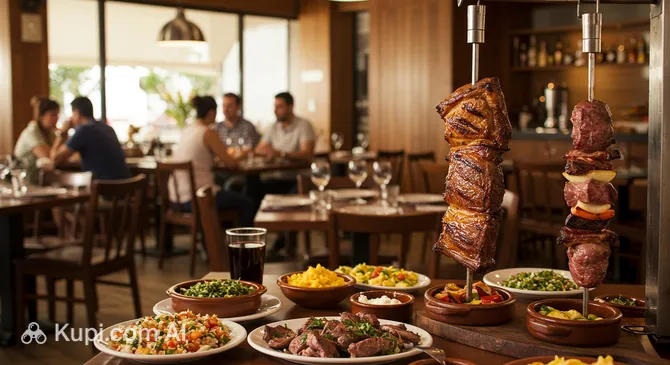
The city offers diverse dining neighborhoods, with the Italian district of Santa Felicidade being famous for its massive family-style restaurants serving endless pasta, polenta, and fried chicken. For those seeking a premium Brazilian steakhouse experience, the upscale Batel neighborhood is the place to go. Here, you can visit establishments like Batel Grill, which offers a top-tier rodízio (all-you-can-eat) service featuring succulent cuts of meat and a vast salad bar.
Batel Grill. Illustration.
Source: Kupi.com AI
Traveler photos:
For a more relaxed evening, the city's bar scene is vibrant and welcoming. Places like Boteco Boa Praça offer a classic Brazilian tavern atmosphere where locals gather to enjoy live music, cold drinks, and typical appetizers. Whether you are looking for a sophisticated dinner or a casual night out with friends, the local food culture caters to every palate.
Travel Tips
Curitiba is widely regarded as one of Brazil's most organized and traveler-friendly cities, but knowing a few local insights will make your visit even smoother. Here are some practical tips to help you navigate the local weather, transport, and customs like a pro.
Dress in layers. Locals often joke that you can experience all four seasons in a single day in Curitiba. The morning might be chilly, the afternoon hot, and the evening rainy. Always bring a light jacket or sweater and comfortable walking shoes. An umbrella or a raincoat is an absolute essential, as showers can be sudden and frequent.
Master the public transport. The city is famous for its efficient Bus Rapid Transit (BRT) system. Look for the tube-shaped glass stations to catch the express buses. For door-to-door convenience, ride-hailing apps like Uber and 99 are extremely popular, safe, and often cheaper than traditional taxis. Car rental is generally not necessary unless you plan to explore the surrounding countryside.
Rely on cards, but carry some cash. The local currency is the Brazilian Real (BRL). Credit and debit cards are accepted almost everywhere, from high-end restaurants to street market stalls. However, it is wise to keep a small amount of cash for small tips or older vendors. In restaurants, a service charge of 10% is usually included in the bill, so additional tipping is optional but appreciated.
Stay alert in the city center. While Curitiba is considered safer than many other Brazilian capitals, standard urban precautions apply. The downtown area (Centro) and the Historic Sector can be sketchy late at night when the streets empty out. Stick to well-lit, busy areas and avoid displaying expensive cameras or smartphones carelessly on the street. Pharmacies are abundant, with major chains like Nissei or Panvel often open 24/7.
Communication essentials. Portuguese is the official language. While hotel staff usually speak English, it is not widely spoken by the general public or bus drivers. Learning a few basic phrases like "Obrigado" (Thank you) and "Por favor" (Please) is very helpful. For internet access, consider buying an e-SIM before arrival, as purchasing a local physical SIM card can sometimes be complicated for foreigners without a Brazilian tax ID (CPF).
Social etiquette. Curitibanos are known to be a bit more reserved than Brazilians from the north, but they are still polite and friendly. A handshake is the standard greeting, though a kiss on the cheek is common between women or in mixed company among friends. It is polite to say "Bom dia" (Good morning) or "Boa tarde" (Good afternoon) when entering shops or elevators.
What to avoid. Do not walk through large parks like Passeio Público alone at night. Also, avoid making the "OK" hand sign (thumb and index finger forming a circle), as it is considered an offensive gesture in Brazil; use the "thumbs up" sign instead to indicate that everything is good.
Use the Tourist Bus. The Linha Turismo is a special double-decker bus that circles the city's main parks and attractions. Buying a ticket allows you unlimited re-boarding for a 24-hour period. It is the most practical and scenic way to visit multiple distant spots, like the Wire Opera House and Tanguá Park, in a single day.
Curitiba is a welcoming destination that uniquely blends urban efficiency with warm Brazilian hospitality. By keeping these practical tips in mind, you will be well-prepared to enjoy everything from the lush botanical gardens to the vibrant culinary scene without a hitch.
Entertainment & Nightlife
Curitiba offers a diverse entertainment landscape that perfectly balances its organized urban structure with a vibrant leisure scene. From energetic nightlife districts to sophisticated shopping centers and family-friendly indoor parks, the city provides ample opportunities for fun and relaxation after a day of sightseeing.
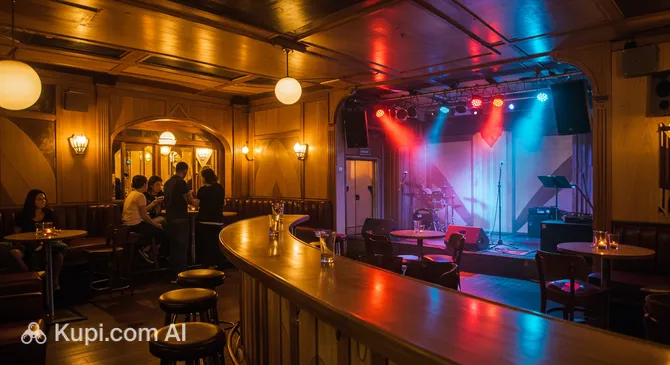
For those seeking lively evening activities, the Batel neighborhood is the undisputed hub of the city's nightlife. This area is renowned for its high concentration of bars, pubs, and clubs that cater to a stylish crowd. A popular destination here is Bossa Bar, which stands out for its spirited atmosphere and live music performances, often featuring Brazilian rhythms that keep the energy high throughout the night.
Bossa Bar. Illustration.
Source: Kupi.com AI
Traveler photos:
Shopaholics will find themselves spoiled for choice with the city's modern retail facilities. Mueller Shopping Mall is a historic favorite among locals, combining a rich variety of international brands with a cinema and extensive dining options in a central location. For a more contemporary experience, ParkShopping Barigui offers upscale stores and a massive food court, situated conveniently close to one of the city's most beautiful parks.
Mueller Shopping Mall. Illustration.
Source: Kupi.com AI
Traveler photos:
Families and active travelers can head to Impulso Park, an exciting indoor amusement park filled with trampolines, climbing walls, and interactive games designed to burn off energy. Meanwhile, technology enthusiasts might enjoy the Digital Arena, a unique venue that hosts immersive exhibitions and digital events, reflecting Curitiba's reputation as an innovative smart city.
Parks & Museums
Curitiba is frequently hailed as the "Ecological Capital of Brazil," a title it earns through its impressive network of over 30 parks and forests that serve as the city's lungs and living rooms. Beyond its lush green spaces, the city boasts a rich tapestry of cultural institutions that preserve the history of the state of Paraná and the diverse immigrant communities that helped build it.
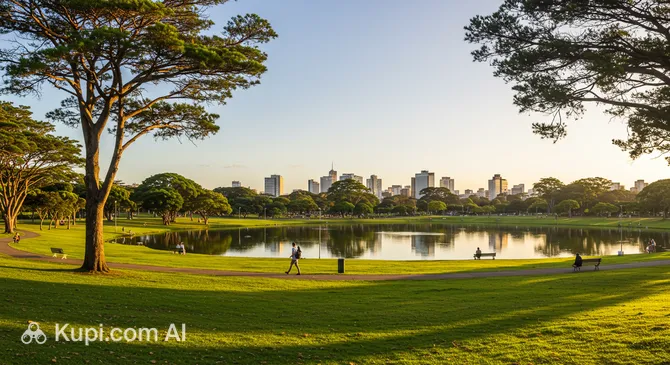
Among the most beloved green spaces is Barigui Park, which functions as the city's unofficial beach where locals flock on weekends to exercise, picnic, and relax. Spanning a vast area, it is famous for its resident capybaras—the world's largest rodents—which can often be seen grazing peacefully near the lake. The park is well-equipped with cycling paths, barbecue grills, and an exhibition center, making it a vibrant hub of social life in Curitiba.
Barigui Park. Illustration.
Source: Kupi.com AI
Traveler photos:
For a more tranquil and unique experience, Zaninelli Woods offers a stunning example of environmental reclamation. Located in a former granite quarry, the park features the Free University of the Environment, a striking architectural structure made of eucalyptus poles that spirals up into the canopy. A wooden walkway leads visitors through the dense vegetation to a peaceful lake surrounded by high rock walls, providing a quiet escape from the urban bustle.
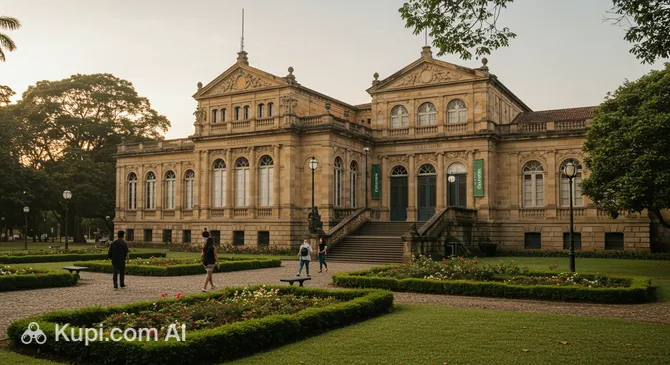
Curitiba's museums are equally compelling, offering deep dives into regional history and global events. The Paranaense Museum, located in the historic center, is dedicated to the history, anthropology, and culture of the state. Its collection includes indigenous artifacts, historical documents, and art that trace the development of Paraná from its earliest inhabitants to the present day. Housed in a beautiful historical building, it provides essential context for understanding the local identity.
Paranaense Museum. Illustration.
Source: Kupi.com AI
Traveler photos:
Another significant institution is the Expeditionary Museum, which pays tribute to the Brazilian Expeditionary Force (FEB) that fought in Italy during World War II. The museum houses a vast collection of uniforms, weapons, photographs, and personal items from the "Pracinhas," as the Brazilian soldiers were known. It stands as a solemn and informative reminder of Brazil's participation in the global conflict.
In terms of historical landmarks, the Ruins of São Francisco are a must-see architectural curiosity. These are the stone remains of a church that was never completed, shrouded in local legends and mystery. Today, the site serves as a picturesque plaza with an amphitheater and the Belvedere arcade, often hosting open-air markets and cultural events.
For an authentic local experience, try visiting Japan Square (Praça do Japão), especially if you are looking for a moment of zen. This park honors the city's large Japanese community and features cherry trees, a traditional tea house, and serene ponds, offering a perfect snapshot of the multicultural soul of Curitiba.
Getting Around
Public transport in Curitiba is not just a way to get around; it is a world-renowned model of urban planning that functions with the efficiency of a subway system, despite being entirely bus-based. The city does not have an underground metro, but its Bus Rapid Transit (BRT) network, known locally as the RIT (Rede Integrada de Transporte), covers the entire metropolitan area effectively. The system is designed to be intuitive, using a color-coded scheme to help passengers identify the function of each bus instantly.
The backbone of the system consists of the Express buses, which are red and travel on dedicated lanes to bypass traffic. These buses stop at the iconic tube stations (estações-tubo)—glass, cylindrical structures raised from the ground. Other key lines include the grey "Ligeirinho" (Direct) buses, which make fewer stops for faster travel, and the green "Interbairros" buses that connect different districts without passing through the city center. Orange feeder buses circulate within neighborhoods, bringing passengers to the larger terminals where they can transfer to express lines without paying a second fare.
Paying for your ride is straightforward. The system operates on a single-fare basis, meaning you pay once and can transfer between different bus lines as long as you stay within the integration terminals or tube stations. While many locals use the electronic MetroCard, tourists can usually pay with cash at the tube stations and terminals, where a ticket attendant is present. However, inside the buses themselves (especially the orange or green ones that stop at street level), cash payment might be restricted or require exact change, so boarding at a tube station or terminal is the safest bet for visitors.
For sightseeing specifically, the Linha Turismo is the best option. These special double-decker buses circulate through the city's main parks and attractions, covering a route of roughly 45 kilometers. Unlike the standard public transport, this service requires a specific ticket that costs significantly more but allows unlimited boarding and alighting for a 24-hour period. It is the most convenient way to visit distant landmarks like the Wire Opera House and Tanguá Park without navigating the regular commuter routes.
If you prefer more direct and private transportation, ride-hailing apps like Uber and 99 are extremely popular, safe, and often very affordable compared to traditional taxis. Standard taxis are also widely available; they are easily recognizable by their orange color with black checkerboard stripes on the side. For short distances, the city offers a public bike-sharing system, though it is less extensive than the bus network and is best used for leisurely rides in parks or the city center.
Buses generally operate from 5:00 AM until midnight, with a few "Madrugueiro" night lines running roughly once an hour after that. To navigate the system like a local, it is highly recommended to download a transport app like Moovit, which provides real-time schedules and detailed route planning. Keep in mind that the express buses can get very crowded during peak hours (7:00 AM to 9:00 AM and 5:00 PM to 7:00 PM), so try to plan your movements outside these times for a more comfortable journey.
Accommodation
Accommodation in Curitiba is diverse and generally offers excellent value for money compared to other major Brazilian capitals like Rio de Janeiro or São Paulo. The city caters to a mix of business travelers and tourists, resulting in a wide selection of lodging options ranging from economical backpacker hostels and functional business hotels to sophisticated luxury stays. Whether you are looking for a simple room near the bus terminal or a high-end suite in a trendy neighborhood, the city is well-equipped to meet various needs and budgets.
When choosing where to stay, the neighborhood is a key factor. The Centro (City Center) is the most practical choice for first-time visitors who want easy access to historical sites and the tourist bus line. For those seeking a more upscale experience with vibrant nightlife and fine dining steps away, the Batel district is the premier address. It is considered the city's most exclusive area, filled with modern hotels and shopping malls. Alternatively, the Civic Center area is quieter and well-organized, often preferred by business travelers and those visiting government institutions.
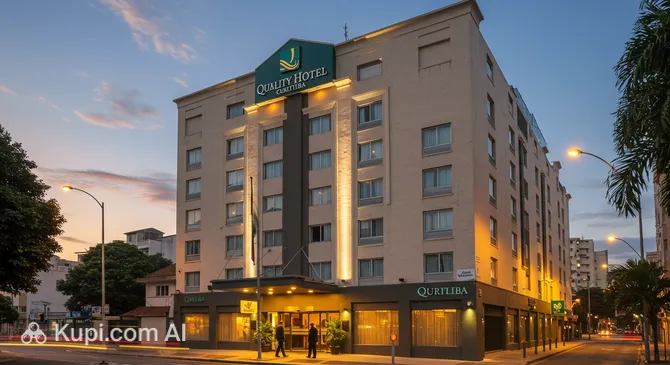
For travelers seeking reliable comfort and good amenities, the city offers several well-regarded establishments. One notable option is the Quality Hotel Curitiba, which is situated in a convenient location and is known for its consistent service standards, making it a safe bet for international visitors. Another solid choice is Hotel Curitiba, which provides a comfortable base for exploring the metropolis. These hotels typically offer essential amenities such as Wi-Fi, breakfast, and easy access to local transport.
Quality Hotel Curitiba. Illustration.
Source: Kupi.com AI
Traveler photos:
The price range for accommodation in Curitiba is quite broad. Budget travelers can find hostel beds or simple guesthouses for very affordable rates, while mid-range hotels offer great quality at moderate prices. Luxury options are available but are generally less expensive than equivalent 5-star hotels in Brazil's coastal tourist hubs. Booking is best done via major online platforms to secure the best rates and read recent reviews.
Booking Tip: While it is usually easy to find a room in Curitiba, it is advisable to book in advance if you are visiting during the winter months (June and July) or during major events like the Curitiba Theater Festival. During these peak times, the best-located hotels in Batel and the city center tend to fill up quickly.
Nearby Cities
For those looking to explore the surroundings, Curitiba serves as an excellent base for day trips to several interesting nearby locations. Just a short distance from the capital lies Sao Jose dos Pinhais, a city that offers a delightful rural escape known as the Caminho do Vinho (Wine Path). This tourist route celebrates the region's Italian heritage with numerous family-run wineries, colonial cafés, and restaurants serving traditional meals, making it a favorite spot for gastronomy enthusiasts.
Another noteworthy destination is Campo Largo, widely recognized as the "Capital of Ceramics." The city is famous for its porcelain industry and attracts visitors looking to shop for high-quality dinnerware and pottery at factory outlets. Beyond shopping, the town provides a peaceful atmosphere with scenic landscapes, offering a pleasant contrast to the busy urban pace of Curitiba.
These nearby destinations offer a glimpse into the diverse culture and landscapes of the region, providing excellent options for travelers seeking to extend their experience beyond the city limits.
Shopping & Souvenirs
Shopping in Curitiba is a delightful experience that mirrors the city's organized and multicultural character. Visitors will find a wide array of options ranging from charming pedestrian streets and bustling traditional markets to sophisticated modern shopping centers. Whether you are looking for high-end fashion, local handicrafts, or unique culinary souvenirs, the city offers diverse retail environments that cater to every taste and budget.
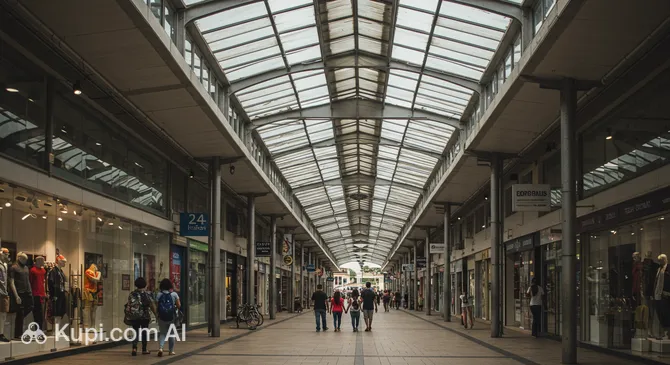
For a quintessential local experience, a stroll down Rua XV de Novembro is a must. Known as the "Flower Street," it was the first major pedestrian street in Brazil and remains the heart of downtown commerce, lined with department stores, boutiques, and cafes. Another iconic spot is the 24 Hours Street. Famous for its striking architecture of metal arches and glass, this gallery offers a variety of shops and dining options, making it a convenient stop for tourists looking for gifts or a quick bite in the city center.
24 Hours Street. Illustration.
Source: Kupi.com AI
Traveler photos:
Travelers who prefer the comfort and variety of large retail complexes will not be disappointed. The Mueller Shopping Mall is a historic favorite, located centrally and housing a comprehensive mix of national and international brands. For a more upscale atmosphere, ParkShopping Barigui is an excellent choice. Situated near one of the city's most beautiful parks, it features a vast selection of premium stores and a large food court with panoramic views, perfect for a relaxing afternoon of retail therapy.
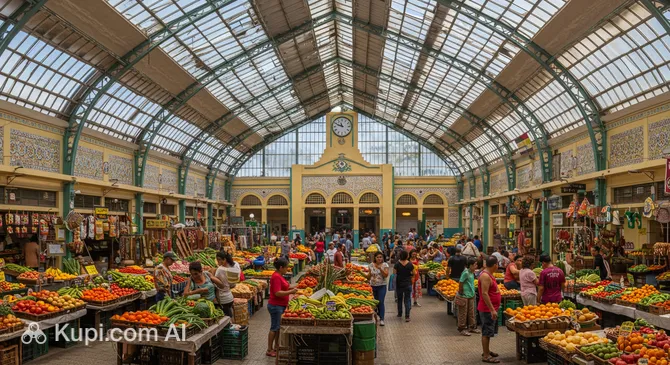
The city's market scene is vibrant and deeply rooted in its immigrant history. The Curitiba Municipal Market is the premier destination for foodies and shoppers alike. Here, you can browse through stalls overflowing with exotic fruits, spices, cheeses, and wines, as well as find stalls selling local crafts. On Sundays, the historic area of Largo da Ordem transforms into a massive open-air fair. This is the best place to hunt for handmade jewelry, paintings, leather goods, and woodwork while enjoying the lively street atmosphere.
Curitiba Municipal Market. Illustration.
Source: Kupi.com AI
Traveler photos:
When it comes to souvenirs, Curitiba offers several unique items that reflect its identity. Look for products made from the pinhão (Araucaria pine nut), such as preserves or themed kitchenware. Local ceramics and woolen clothing are also popular choices, given the cooler climate. Additionally, the "Leve Curitiba" shops, found at major tourist sites, sell high-quality official merchandise, from design objects to t-shirts celebrating the city's landmarks.
Store opening hours in Curitiba are generally consistent. Street shops typically operate from 9:00 AM to 6:00 PM on weekdays and until 1:00 PM on Saturdays, with most closing on Sundays. Shopping malls, however, stay open longer, usually from 10:00 AM to 10:00 PM from Monday to Saturday, and with reduced hours on Sundays (often 2:00 PM to 8:00 PM for stores). Credit and debit cards are widely accepted everywhere, even at most market stalls, though carrying a little cash is always useful for small purchases.
Tourists should be aware that Brazil does not currently have a widely accessible tax-free shopping refund system for international visitors similar to those found in Europe. The price you see on the tag is generally the final price you pay. While duty-free shopping is available at international airports upon departure, it is best to plan your budget assuming that local purchases will not be eligible for a VAT refund.