Support

Gradina Solin

About

Towering over the picturesque landscapes, Solin Fortress (often called Gradina by locals) is a unique historical site located in the immediate vicinity of Split. This ancient stronghold, located in Croatia, is a vital part of Dalmatia's archaeological heritage and a silent witness to the region's centuries-old history.

The fortress is situated at a strategic height at the foot of the majestic Kozjak and Mosor mountains, near the source of the Jadro River. It is part of the extensive ruins of the ancient city of Salona. Visitors can see the remains of powerful defensive walls, towers, and gates that once protected important trade routes and settlements from Illyrian times through the Roman era.
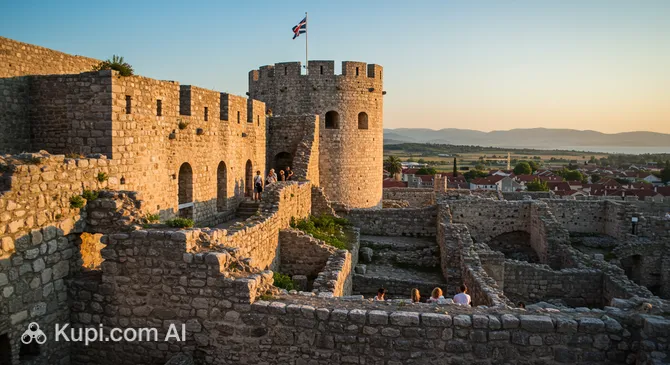
Solin Fortress
Solin Fortress. Иллюстрация. Источник: Kupi.com AI

Today, this site attracts travelers with its authentic atmosphere and high rating among antiquity enthusiasts. Thanks to its location, Solin Fortress offers not only a deep dive into history but also magnificent panoramic views, making it a must-visit for anyone interested in the past of the Adriatic coast.

Contacts

For more information about visiting the fortress or hosting events, you can use the official contact details of the Solin city administration.

How to contactContact
AddressUl. kralja Zvonimira bb, 21210, Solin, Croatia
Phone+385 21 210 048
Websitesolin.hr

What to Do

Visiting Solin Fortress is primarily an opportunity to touch ancient fortifications and ruins that date back thousands of years. Here, you can examine the remains of Illyrian and Roman structures in detail while walking along massive stone walls. It is an ideal place for thoughtful strolls, where every stone can tell a story about the lives of prehistoric tribes or ancient warriors.

From the fortress grounds, breathtaking panoramic views open up over modern Solin, the river valley, and the distant outlines of the coast. Photographers will find many interesting angles here, where the stark geometry of ancient towers contrasts with the soft greenery of the Kozjak and Mosor mountains. Inside the complex, one can try to imagine what the ancient forum looked like or where the market stalls were located, where Illyrians exchanged their goods for Greek products.

Archeology buffs will be interested in seeing the discovery sites of Bronze and Iron Age artifacts. Although the most valuable jewelry and weapons are kept in museums, the atmosphere of the fortified settlement itself allows you to feel the scale of past trade and cultural ties. Additionally, its proximity to other sites in Salona, such as the ancient amphitheater and thermal baths, allows for a complete itinerary for a deep dive into ancient history.

Getting There

Getting to this historical site from central Split is easy, as the distance is only about 5–6 kilometers. A trip by taxi or private car will take approximately 10–15 minutes. For those who prefer public transport, suburban buses run regularly, with a stop within walking distance of the fortress at Ul. kralja Zvonimira bb.

For outdoor enthusiasts, a bicycle ride or even a walk along the coastal area is a great option, allowing you to enjoy the Dalmatian scenery. The site's proximity to major transport arteries and the Jadro River makes it a logical stop as part of a larger sightseeing route that includes a visit to Klis Fortress.

Ближайший город: Split

History & Facts

The history of this place is rooted in deep antiquity. As early as the second half of the 1st millennium BC, the Illyrian tribe of the Delmatae established their settlements here, valuing the strategic position of the hills at the foot of the Kozjak and Mosor mountains. Today's Solin Fortress stands on the foundation of ancient fortifications that served as protection for local residents for many centuries.

During the era of Roman rule, the territory became an integral part of Salona — one of the largest and most important cities of the Roman Empire in this region. It was under Julius Caesar that the active fortification of Illyricum began, and the lands around the current fortress were divided into centuries. Archaeological finds, such as Greek weapons and Illyrian jewelry from the Bronze Age, confirm the active trade relations of the locals with the ancient world.

Later, during the Byzantine and medieval periods, the architectural appearance of the region continued to transform. Basilicas were built here, and elements of Romanesque and Gothic styles were gradually woven into the appearance of Dalmatian fortifications. Today's ruins are a multilayered chronicle capturing the change of eras and civilizations on the shores of the Adriatic.

Time Needed

For a basic tour of the fortress walls and ruins, 1–2 hours is sufficient for most travelers. This is plenty of time to leisurely stroll through the grounds, take commemorative photos, and enjoy the panoramic views of the surroundings.

If you plan to combine your visit to the fortress with exploring the entire Salona archaeological complex, including the amphitheater and ancient basilicas, we recommend setting aside at least 3 hours. Those who enjoy detailed historical study may need even more time to soak in the atmosphere of this ancient site.

Working Hours

One of the main advantages of Solin Fortress is its accessibility. The site is open to visitors 24 hours a day, seven days a week, allowing tourists to plan their visit at any convenient time, whether it's early morning to catch the sunrise or the evening hours when the ancient stones look particularly striking in the rays of the setting sun.

The operating hours remain the same throughout the week:

  • Monday — Sunday: Open 24 hours

Круглосуточно

Nearby

Exploring the surroundings of Solin Fortress allows you to dive deeper into the rich history of the region and see how ancient heritage exists alongside the modern pace of life. Nearby are the key monuments of ancient Salona and magnificent Split.

NameDistance
Ruins of Salona0.8 km
Salona Amphitheatre1.4 km
Konoba Gurman2.1 km
Mall of Split2.1 km
City Center One Split2.7 km
Mačak3.2 km
Gripe Sports Hall4.5 km

Reached the end of the page?

That means the route is fully explored