Support

Vestibul

About

Once you find yourself in the heart of the historic center of modern-day Split, it is impossible to pass by one of the most majestic monuments of antiquity. The Vestibule of Diocletian's Palace is a monumental entrance hall that once served as the formal gateway to the emperor's private apartments. This architectural wonder, located in Croatia, allows visitors to literally touch the imperial past of the region.
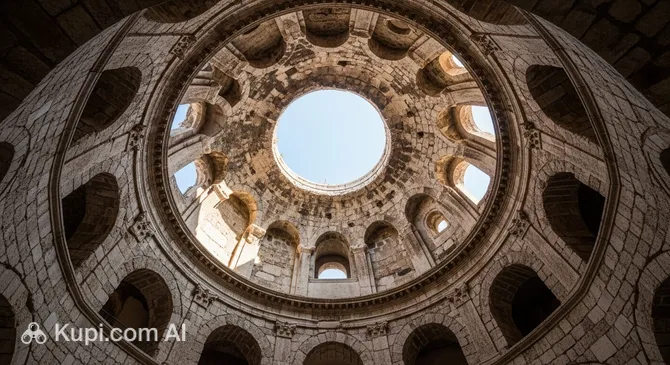
Vestibule of Diocletian
Vestibule of Diocletian's Palace. Иллюстрация. Источник: Kupi.com AI

The structure impresses with its cylindrical shape and high vaulted ceilings. The hall was once topped with a magnificent dome, and its walls gleamed with multicolored marble and intricate mosaics. Today, the Vestibule is an open-air space where ancient stonework meets the sky, creating unique acoustics and visual effects. It is an integral part of the palace complex, which is listed as a UNESCO World Heritage site.

Nowadays, this place functions as a lively city square where ancient solemnity blends harmoniously with the rhythm of modern life. With a rating of 4.8 based on hundreds of reviews, the Vestibule is rightfully considered one of the most memorable locations in the city, attracting history and architecture enthusiasts from all over the world.

Contacts

To find the latest information on events and tours, you can use the city's official resources. The main tourism portal provides data on the most significant sites within the palace complex.

How to contactContact
AddressUl. Iza Vestibula 1, 21000, Split, Хорватия
Websitevisitsplit.com

What to Do

The main reason to visit the Vestibule is its unique atmosphere of ancient grandeur. Visitors can freely explore the preserved semicircular arches and carved capitals that recall the former luxury of the imperial chambers. Thanks to the unique acoustics of this space, you can often find street musicians here, whose melodies take on a special, magical sound under the open dome.

For photography enthusiasts, the Vestibule offers an endless number of striking angles: the play of light and shadow on the ancient stones at different times of day creates perfect conditions for shooting. It's also worth noting the decorative details where polychromy—the use of granite and various types of marble—is evident. If you want to learn more about the secrets of Roman architecture, we recommend joining one of the group tours that regularly begin right here.

After exploring the hall itself, you can stroll through the surrounding narrow streets, browse small souvenir shops, or relax in cozy nearby cafes. During the summer season, the Vestibule becomes a venue for cultural festivals and performances, allowing tourists to dive deeper into local culture and traditions. It is also an excellent starting point for climbing the fortress walls, which offer a panoramic view of the Adriatic Sea.

Getting There

Finding the Vestibule is easy, as it is located in the very heart of the historic center at Ul. Iza Vestibula 1. If you arrive in the city by ferry or train, the walk from the main port or station will take only 10–15 minutes through picturesque pedestrian streets. You can also use city buses No. 1 or No. 12, which stop at the Riva promenade, just a five-minute walk from the entrance to the complex.

For tourists arriving from Split Airport, it is most convenient to reach the center by a special shuttle or taxi—the 25–30 kilometer journey usually takes about half an hour. Once in the Old Town, follow the signs to the Peristyle, as the Vestibule directly adjoins this square.

For those traveling by car, it is important to remember that the historic center is a completely pedestrianized zone. You can leave your car in paid parking lots near the Silver Gate. Using navigation apps with the coordinates 43.5079859, 16.4400111 will help you quickly find your way through the maze of ancient walls.

Ближайший город: Split

History & Facts

The construction of this grand structure dates back to the turn of the 3rd and 4th centuries AD, when the Roman Emperor Diocletian decided to build a residence for his retirement. The Vestibule was designed as a ceremonial prothyron—a grand entrance hall separating the public part of the palace from the private imperial apartments. Everyone who entered here was meant to be struck by the power and wealth of Rome.

In antiquity, the hall looked different: it was crowned by a massive dome, and the walls were decorated with marble cladding of various colors and exquisite mosaics. Looking up today, visitors see the open sky, which gives the architecture a special atmosphere. The palace as a whole was a unique hybrid of a military camp and a luxurious villa, protected by walls 25 meters high with four gates named after metals.

Interestingly, the European public only rediscovered the beauty of this place in the 18th century thanks to the British architect Robert Adam. His detailed drawings of the Vestibule and other parts of the palace significantly influenced the development of Neoclassicism in Europe. Today, this space is a living testament to 1,700 years of history, where ancient masonry harmoniously exists alongside the modern life of the city.

Time Needed

To explore the Vestibule itself, soak in its grandeur, and take some striking photos, 30–45 minutes is enough for most travelers. This time is sufficient to examine the stonework, appreciate the scale of the domed span, and listen to a bit of history from an audio guide.

However, considering that the site is integrated into the overall structure of Diocletian's Palace, it is best to plan your visit as part of a longer walk. In this case, you should allow at least 2–3 hours to explore the entire complex, including the surrounding squares, temples, and cellars, to enjoy the atmosphere of the ancient city at a leisurely pace.

Working Hours

One of the main advantages of this attraction is its accessibility: the Vestibule is open to visitors 24/7. You can come here early in the morning to enjoy the silence without the crowds, or late in the evening when the ancient walls are illuminated by city lights, creating a romantic setting.

Since the site is part of an open architectural complex, entrance is free at any time. However, if you plan to visit the nearby museums or cellars, it's worth checking their operating hours on the official website of the Split tourist center, as they may have their own time restrictions.

Круглосуточно

Nearby

The Vestibule is at the very epicenter of the city's cultural heritage, so literally every step in any direction opens a new page of history. Exploring the immediate surroundings will allow you to see how Roman architecture intertwines with medieval buildings and cozy cafes.

Within just a few minutes' walk are the main treasures of the palace complex. Be sure to check out the underground halls or visit the ancient temples to get a complete picture of imperial life.

NameDistance
Diocletian's Palace0 km
Cathedral of Saint Domnius0 km
Old Town Hall0.1 km
Golden Gate0.1 km
Diocletian's Cellars0.1 km
Temple of Jupiter0.1 km

Reached the end of the page?

That means the route is fully explored