Support

Croatian National Theatre in Zagreb

About

The Croatian National Theatre in Zagreb (Hrvatsko narodno kazalište u Zagrebu) is the heart of theatrical life in Croatia, located in the vibrant center of Zagreb. This majestic building, a prime example of Neoclassical architecture, was designed by the famous Viennese architects Ferdinand Fellner and Hermann Helmer, whose works adorn many European capitals.
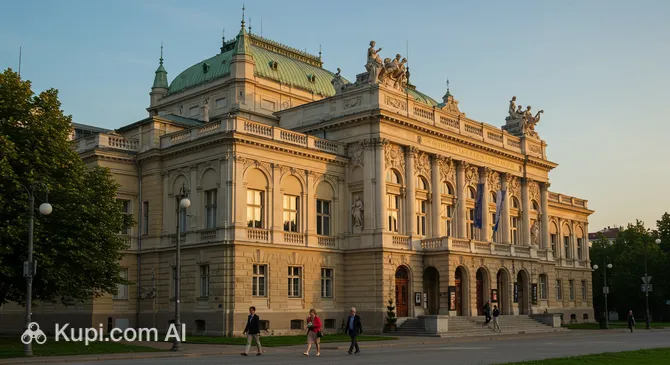
Croatian National Theatre in Zagreb. Illustration.
Source: Kupi.com AI

Traveler photos:

The theater stands proudly on Republic of Croatia Square (formerly known as Marshal Tito Square) and is not only the country's most important cultural institution but also one of Zagreb's most significant architectural landmarks. Its elegant facade and luxurious interior attract both art lovers and curious tourists wishing to touch history and culture.

Inside its walls, the Croatian National Theatre offers a rich and diverse program, bringing together three main types of performing arts: opera, ballet, and drama. The auditorium, designed for 715 seats, regularly hosts productions of both classical and contemporary repertoires, giving audiences unforgettable experiences and emotions. Visiting the theater is a wonderful opportunity to experience the high art and cultural traditions of Croatia.

Contacts

To get the most up-to-date information on the repertoire, ticket availability, and possible schedule changes at the Croatian National Theatre in Zagreb, it is highly recommended to visit its official website. There you will find the latest announcements and details on upcoming productions. Additionally, you can contact the theater's box office directly for consultations and ticket purchases. Below are the main contact details:

How to contactContact
AddressTrg Republike Hrvatske 15, 10000, Zagreb, Croatia
Phone number+385 1 4888 488
Websitewww.hnk.hr

What to Do

Visitors to the Croatian National Theatre in Zagreb can immerse themselves in the world of high art while enjoying a variety of cultural events. Within its walls, classical and modern opera and ballet productions come to life, as well as captivating dramatic plays. A special source of pride for the theater is its permanent opera company, founded back in 1870. Thanks to their skill, audiences have the opportunity to experience both immortal masterpieces of world opera and new, intriguing works.

In addition to the exciting performances, the theater building itself is a work of art that deserves attention. Tourists can admire its majestic Neoclassical architecture and appreciate the elegance of its facade. In front of the theater's entrance is the famous "Well of Life" fountain. This iconic creation by the prominent Croatian sculptor Ivan Meštrović, created in 1905, is an integral part of the ensemble and a popular spot for photos.

Getting There

The Croatian National Theatre in Zagreb is conveniently located in the heart of Zagreb, at Trg Republike Hrvatske 15. Due to its central location, the theater is easily accessible on foot from many parts of the city. A walk to the theater can be a pleasant part of your exploration of the capital of Croatia, allowing you to enjoy Zagreb's architecture and atmosphere.

For those who prefer public transport, Zagreb offers an extensive network of tram and bus routes. Several tram stops are just a few minutes' walk from the theater building, making travel by public transport fast and convenient. It is recommended to check the current schedule and routes on the official website of Zagreb's transport company or use mobile apps for trip planning.

Of course, you can always use taxi services. A taxi ride from most hotels in central Zagreb to the Croatian National Theatre will be short and comfortable. This is an especially convenient option if you are traveling with luggage, late in the evening, or simply prefer a private transfer.

Nearest city: Zagreb

History & Facts

The history of the Croatian National Theatre in Zagreb dates back to 1836, when the city's first city theater was built. This original theater building is now part of the "Old City Hall" complex. The Croatian National Theatre was granted official status in 1860, and just a year later, in 1861, it received state support. This important step placed it alongside the leading national theaters of Europe at the time, highlighting its cultural significance for the country.

Over time, there was a need for a more spacious and representative building. Thus, in 1895, the theater moved to a new, purpose-built building that still graces Republic of Croatia Square (formerly known as Marshal Tito Square) today. The grand opening ceremony of the new theater home was a massive event, attended by Austro-Hungarian Emperor Franz Joseph I himself. The design of this magnificent building was developed by the famous Viennese architects Ferdinand Fellner and Hermann Helmer, whose architectural firm left a significant mark on the theater architecture of Central and Eastern Europe.

The theater building has not only preserved its historical appearance but has also undergone stages of modernization. In the late 1960s, a reconstruction was carried out to adapt it to modern theatrical requirements while maintaining its historical authenticity. A major milestone in the theater's history was the celebration of the 100th anniversary of its current building, which took place on a large scale on October 14, 1995, once again confirming its status as one of the primary cultural symbols of Zagreb and all of Croatia.

Time Needed

When planning your visit to the Croatian National Theatre in Zagreb, expect to spend between 2 and 4 hours for a tour and a possible performance. This general timeframe will allow you to form an impression of this iconic cultural site, taking into account various aspects of the visit.

If you focus on an exterior tour of the magnificent theater building, its architectural features, and the surrounding area with the "Well of Life" fountain, you will likely need about 1–2 hours. This is enough time for a leisurely stroll and photos. However, if your plans include attending an opera, ballet, or drama performance, the total time needed for the visit to fully experience the theater will increase and will likely be 3–4 hours or more, depending on the duration of the performance itself.

Working Hours

The Croatian National Theatre in Zagreb usually operates according to the theatrical season, which typically lasts from autumn until early summer. Exact box office hours and performance start times may vary, so it is highly recommended to check the latest information on the theater's official website or via contact phone numbers. The theater's repertoire includes opera, ballet, and drama productions, and tickets must be purchased in advance to attend any of them.

Given the theater's popularity and the limited number of seats, especially for premieres and well-known productions, it is strongly recommended to book tickets in advance. This can be done online through the theater's official website or directly at the box office. For the most up-to-date information on schedules, ticket availability, and possible program changes, always check the official sources of the Croatian National Theatre in Zagreb.

Nearby

Visiting the Croatian National Theatre in Zagreb is undoubtedly a vibrant cultural event. However, to make your journey to Zagreb even more fulfilling and memorable, it is worth paying attention to the attractions located nearby. Exploring the theater's surroundings will allow you to get to know this beautiful city better, discover its hidden gems, and gain a more complete picture of its history and modern life.

Many interesting sites are within walking distance of the theater, making them a convenient and pleasant addition to your cultural program. Below is a list of some of them, along with the distance, so you can easily plan your route.

NameDistance
VR Laser Tag Zagreb0.3 km
Museum of Illusions0.5 km
Museum of Lost Tales0.5 km
Esplanade Zagreb Hotel0.6 km
Archaeological Museum0.6 km
Ban Josip Jelačić Statue0.7 km
Meteorological Post0.7 km

Have you reached the end of the page?

So the route has been studied inside and out