Support

Berbie Palace

About

Perched on a hill above the quiet Tarn River, in the heart of the historic center, stands the majestic Berbie Palace (Palais de la Berbie). Built in the 13th century, this former episcopal palace is one of the oldest and best-preserved castle ensembles in France. Its red brick appearance, complete with massive towers and a 50-meter-high keep, recalls a time when ecclesiastical power required solid protection.
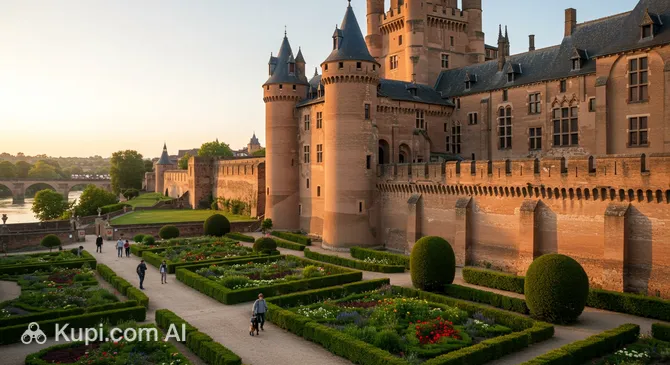
Palace of the Berbie
Palace of the Berbie. Иллюстрация. Источник: Kupi.com AI

Today, this architectural monument is recognized as a UNESCO World Heritage site. It forms part of a single ensemble along with the cathedral, creating a unique "brick city" in Albi. The palace ceased to be a fortress centuries ago, transforming into a refined residence and later into a world-class cultural center.

Currently, the palace halls house the famous Toulouse-Lautrec Museum. It holds the most complete collection of works by the outstanding post-impressionist artist, who was born in the area. Visitors can see not only his legendary posters and lithographs but also early drawings, allowing them to trace the master's entire creative journey against the backdrop of the former bishopric's luxurious interiors.

Contacts

To confirm visiting information, ticket prices, or special events, you can use the institution's official contact details.

How to contactContact
Address4 Rue de la Temporalité, 81000 Albi, France
Phone+33 5 63 49 48 70
Websitewww.albi-tourisme.fr

What to Do

The main draw inside the palace is the Toulouse-Lautrec Museum. Walking through the halls, you will see hundreds of the master's works: from the famous posters of the Moulin Rouge cabaret to intimate portraits and sketches. On the second floor, you can explore the works of the artist's contemporaries, including paintings by Émile Bernard and Maurice Denis, while the Daillon du Lude gallery features an interesting exhibition on the history of the castle itself.

Be sure to step out into the palace gardens, which hold "Remarkable Garden" status. This is a classic French park with geometrically precise patterns of trimmed boxwood and white gravel. The garden terraces offer breathtaking panoramic views of the turquoise waters of the Tarn River and the opposite bank of the city with its characteristic terracotta roofs.

Architecture lovers should take note of the massive Sainte-Catherine and Saint-Michel towers, and peek into the Amboise hall. The combination of austere medieval fortifications and elegant Renaissance interiors creates a unique atmosphere where every stone tells a story.

Getting There

Finding your way to this historical gem is easy, as it is located in the heart of the old town at 4 Rue de la Temporalité. If you arrive in the city by train, the walk from the Albi-Ville railway station takes about 20 minutes (approximately 1.5 km), leading you through picturesque streets right to the cathedral.

For those who prefer public transport, city buses going to the Cathédrale Sainte-Cécile stop are ideal, from which the palace gates are just a couple of minutes' walk away. Special shuttles also run through the center during the tourist season.

If you are traveling by car, take the A68 highway from Toulouse (the journey takes about an hour). You can leave your car at the Place du Vigan parking lot or in the parking areas by the riverbank, which offer a beautiful view of the fortress walls looking up from the river.

Ближайший город: Albi

History & Facts

The history of this site began back in 1250, when bishops Bernard de Combret and Bernard de Castanet decided to erect a powerful castle on the site of ancient fortifications. Its name comes from the Occitan word bisbia, which means "bishopric." The construction of this formidable red-brick fortress lasted about fifty years and was intended to clearly demonstrate the unwavering power of the Church.

Over time, the castle's stern appearance softened. In the 15th century, when defensive functions became secondary, the fortress began to be transformed into a luxurious princely residence. In the 17th and 18th centuries, classical windows and elegant galleries were added, and magnificent gardens were laid out on the site of the former parade ground. Interestingly, during the Wars of Religion, some towers were shortened so that artillery pieces could be placed on them.

A new chapter in the building's history opened in 1922. After the death of the famous artist Henri de Toulouse-Lautrec, his mother donated an extensive collection of his works to the city, and the ancient halls became home to the world's largest collection of the master's creations. Today, this unique architectural monument is considered one of the most significant sites in all of France.

Time Needed

To fully enjoy all the treasures this complex offers, it is recommended to set aside 2 to 3 hours for your visit. This is enough time to leisurely explore the museum's exhibitions, appreciate the architectural power of the medieval halls, and stroll along the terraces.

Typically, getting to know the main Toulouse-Lautrec collection takes about 1.5 hours. At least another 45 minutes should be reserved for visiting the classical gardens and viewpoints, which offer the best vistas of the Tarn River and the city's ancient bridges. If you are passionate about architectural history, add a little more time to study the exterior walls and the keep.

Working Hours

Berbie Palace welcomes visitors throughout the week, except on Mondays. When planning your visit in France, please keep in mind that there is a break in the middle of the day.

Opening Hours:
• Monday: Closed
• Tuesday – Sunday: 10:00 AM – 12:30 PM and 2:00 PM – 6:00 PM.

Please note that opening hours may change depending on the season and public holidays, so it is recommended to check for current information on the official website before your trip.

DayWorking hours
ПонедельникЗакрыто
Вторник10:00 – 12:30, 2:00 – 18:00
Среда10:00 – 12:30, 2:00 – 18:00
Четверг10:00 – 12:30, 2:00 – 18:00
Пятница10:00 – 12:30, 2:00 – 18:00
Суббота10:00 – 12:30, 2:00 – 18:00
Воскресенье10:00 – 12:30, 2:00 – 18:00

Nearby

After visiting the bishop's palace, be sure to find time to explore the surrounding neighborhoods. The Episcopal City of Albi is literally steeped in history, and every step along its cobbled streets reveals stunning new views and architectural monuments.

NameDistance
Toulouse-Lautrec Museum0 km
Au Hibou0.1 km
Albi Cathedral0.1 km
La Forge du Vieil Alby0.2 km
Old Bridge0.2 km
National Garden of Albi0.5 km
Hôtel les Pasteliers0.8 km

Reached the end of the page?

That means the route is fully explored