Support

Tempelhofer Feld

About

Tempelhofer Feld is not just a park; it's one of the most unique and exciting public spaces in Berlin. Located on the site of the former Tempelhof Airport, this massive park offers visitors a one-of-a-kind experience. Where else can you have a picnic, ride a bike, or fly a kite right on former runways? This place in the heart of Germany is a striking symbol of urban transformation and renewal.

The park covers a colossal area of 355 hectares, making it one of the largest urban parks in the world. The airport's original infrastructure remains, including the wide concrete runways that now serve as perfect paths for inline skaters, skateboarders, and cyclists. The vast open spaces create a sense of freedom and openness rare for a metropolis. This is where aviation history meets modern urban leisure culture.
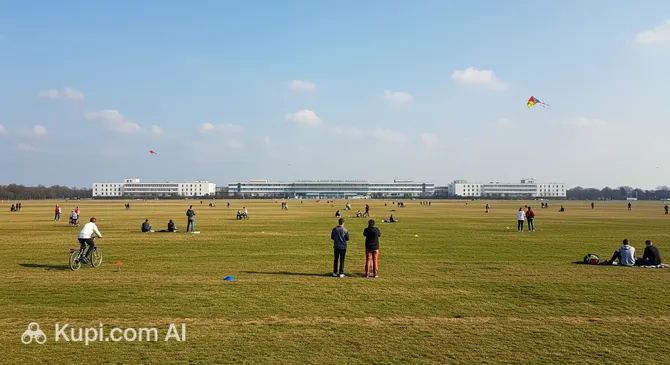
Tempelhofer Feld. Illustration.
Source: Kupi.com AI

Traveler photos:

Tempelhofer Feld is a true paradise for active leisure enthusiasts. Beyond riding on the runways, you can play badminton, frisbee, practice yoga, or simply enjoy a sunny day on the grass. The grounds feature dedicated barbecue areas, community gardens where locals grow vegetables and flowers, and even dog runs. The park regularly hosts various festivals, concerts, and sports events, making it a hub for both tourists and Berliners.

Contacts

To get the most up-to-date information on Tempelhofer Feld's opening hours, current regulations, and scheduled events, we recommend visiting the official website. There, you'll find all the necessary details to plan your visit.

How to contactContact
AddressTempelhofer Damm, 12101 Berlin, Germany
Phone number+49 30 700906710
Websitewww.tempelhoferfeld.berlin

What to Do

The main draw of Tempelhofer Feld is the opportunity for active recreation across the vast open spaces of the former runways. These perfectly flat and wide asphalt strips are practically made for cycling, inline skating, and skateboarding. On windy days, the sky above the field is dotted with colorful kites—it's one of the city's best spots for kite-landboarding and kite flying. The sense of freedom as you speed along a runway with the horizon in view is unforgettable.

In addition to high-speed fun, the park offers many ways for peaceful relaxation and cultural leisure. You can have a picnic on the grass, practice outdoor yoga, or simply go for a run along one of the many paths. Be sure to stop by the community gardens, where local residents lovingly grow vegetables and flowers, creating cozy green oases. Furthermore, Tempelhofer Feld regularly serves as a venue for various cultural events, exhibitions, and festivals, so there's always something new and interesting to discover.

Getting There

Getting to Tempelhofer Feld is very easy, as it is located in the central part of Berlin and is perfectly integrated into the city's transport network. Regardless of where you are staying, you can easily reach this unique spot thanks to the well-developed public transport system, which is the most convenient way to visit the park.

The fastest way to reach the park is by subway (U-Bahn). You can use several lines and stations depending on which entrance you want to reach. The closest stations are U6 Tempelhof, U6 Paradestraße, and U8 Boddinstraße. A walk to the park from any of these will take no more than 5–10 minutes. Additionally, several bus routes stop near various entrances to Tempelhofer Feld, making access even more flexible.

For those who prefer active travel, a bicycle is an excellent option. Convenient bike paths run around the park, and there are rental points nearby. If you're planning to come by car, please note that paid parking spots near the park are limited. Finding a free spot is especially difficult on weekends and during major events, so public transport remains the most reliable choice.

Nearest city: Berlin

History & Facts

The history of Tempelhofer Feld stretches back centuries, long before the advent of aviation. Originally, this vast area in southern Berlin served as a military parade ground and a drill site for the Berlin garrison. This site is inextricably linked to the military and aviation history of Germany and, interestingly, to the history of German football, as it once housed numerous playing fields. The first attempts to conquer the skies over the field began in the late 19th century, laying the foundation for its future aviation purpose.

In the 20th century, Tempelhof became one of Europe's key airports. The airport began operating in the 1920s, and in 1934, a massive reconstruction began. This resulted in a monumental terminal building with a curve extending over 1.2 kilometers, making it one of the longest buildings in the world. Berlin-Tempelhof Airport served until October 30, 2008, when it was permanently closed. This event sparked heated debate about the future of this vast area in the city center, and even a referendum on maintaining flights failed to gain enough support.

Following the airport's closure, its fate remained uncertain for some time. The area was temporarily closed to the public, causing dissatisfaction and protests among locals who demanded this unique space be opened to everyone. Ultimately, the city authorities listened to the citizens, and in May 2010, the former airfield was officially transformed into a public park. Today, Tempelhofer Feld is a symbol of successful transformation and a favorite recreation spot where aviation history harmoniously blends with modern urban life.

Time Needed

To fully experience Tempelhofer Feld, we recommend setting aside 2 to 4 hours. This is enough time to leisurely stroll through the main areas, feel the vastness of the former runways, and relax on one of the green lawns. Such a visit will give you a general impression of this unique public space in Berlin and allow for some memorable photos.

If you're planning a more active visit or want to explore the entire area, it's worth allocating more time—perhaps even half a day. For instance, renting a bike or inline skates will let you comfortably cover the massive territory of the former airport, visit the community gardens, and find secluded spots. It’s also worth remembering that Tempelhofer Feld is the perfect place for a leisurely picnic or kite flying, activities that can easily fill several hours.

Working Hours

Tempelhofer Feld is open to visitors daily and year-round, making it accessible at any time for walks and relaxation. Admission is free, so you don't need to buy tickets or book a visit in advance. However, keep in mind that opening hours depend directly on the season and daylight hours. Generally, the park opens its gates at sunrise (around 6:00–7:30 AM) and closes at sunset.

During the summer months, such as June and July, you can enjoy the vastness of the former runways until late evening, roughly until 10:30–11:00 PM. In winter, for example in December or January, the park closes much earlier, around 4:30–5:00 PM. Since the exact times may vary slightly, it is highly recommended to check the official park website for current information before your visit, especially if you plan to go early in the morning or late in the evening.

6:00 – 22:00

Nearby

Visiting Tempelhofer Feld is a unique experience in itself, but exploring the surrounding area can make your trip to Berlin even more enriching. The neighborhoods adjacent to the former airport are full of contrasts and hidden gems, from historical memorials to trendy spots. A walk through these places will allow for a deeper understanding of the multifaceted character of Germany's capital.

Just a few kilometers from the vast fields of Tempelhof, you'll find world-famous museums, cozy cafes, and iconic landmarks reflecting the city's rich and complex history. By using public transport or even a bicycle, you can easily reach many interesting sites that will complement your experience of visiting this extraordinary park.

NameDistance
Jewish Museum Berlin3.1 km
German Museum of Technology3.1 km
BRLO Brwhouse3.3 km
Berlin Story Bunker3.4 km
Rüyam Gemüse Kebab3.4 km
Topography of Terror3.7 km
Lido4 km

Have you reached the end of the page?

So the route has been studied inside and out