Support

Hamburg Park

About

Hamburg Park (Stadtpark Hamburg) is the largest and one of the most beloved city parks in Hamburg, often called the city's "green lungs." Located in the northern part of the metropolis, it serves as the primary escape from the city's hustle and bustle. The park was designed as a space for all residents and visitors, combining picturesque landscapes, wide lawns for picnics, well-kept gardens, and shaded avenues, making it an ideal choice for walks, sports, and cultural leisure.

The park's territory harmoniously combines natural scenery and elements of formal planning, which had a significant impact on landscape gardening in Germany. It features the large artificial lake Stadtparksee with its "Island of Love" (Liebesinsel), where you can rent a boat, as well as many water canals connected to the city's overall water system. One of the park's most recognizable landmarks is the old water tower, which today houses a planetarium.
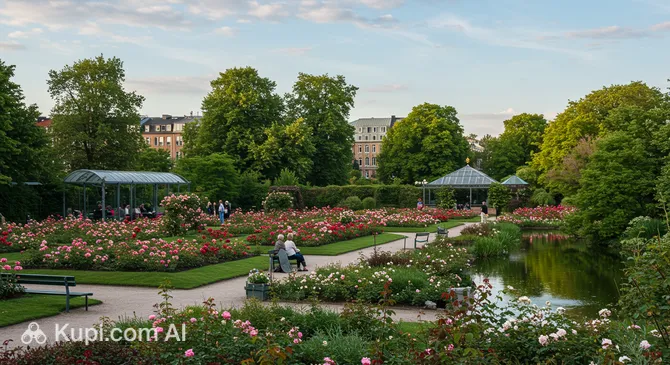
Hamburg Park. Illustration.
Source: Kupi.com AI

Traveler photos:

Hamburg Park offers a variety of recreational opportunities. For sports enthusiasts, there are sports fields, jogging tracks, and even a children's pool open during the summer. The open-air stage regularly hosts concerts and festivals that attract thousands of spectators. Families with children will appreciate the numerous play areas, while the spacious meadows are perfect for a relaxing time in nature. This is a place where everyone will find something to their liking, whether it's a leisurely stroll, a morning run, or attending a cultural event.

Contacts

Since Hamburg Park is a public space open to everyone, it does not have a single visitor contact center. The easiest way to get all the necessary information is to arrive on-site. Reaching the park is very easy via public transport: you can take the U3 subway line to the Borgweg or Saarlandstraße stations, or hop on one of the many buses, such as No. 6, 17, 20, or 179. One of the stops closest to the center of the park is "Stadtpark (Planetarium)."

How to contactContact
Address22 Hamburg, Germany
Phone number+49 40 688757600
Websitewww.hamburg.de

What to Do

Hamburg Park is a true magnet for lovers of an active lifestyle. In addition to an extensive network of paths for running and cycling, there are facilities for team games, such as football and tennis courts. The central spot for summer recreation is Lake Stadtparksee, home to the Naturbad Stadtparksee natural pool. This location is popular not only for swimming but also serves as a training base for triathletes. For more relaxed water-based leisure, you can rent a boat or pedal boat, while children will enjoy the water slide and a special floating island for jumping.

During the warmer months, the park transforms into one of Hamburg's main open-air cultural venues. It hosts the famous Stadtpark Open Air summer concert series, which, from May to September, brings international rock, pop, and jazz stars, as well as popular German performers, to its stage. For a more tranquil break, the well-tended themed gardens and spacious lawns are ideal for a picnic or a barbecue in designated areas. Families with children will appreciate the numerous playgrounds scattered throughout the park.

Getting There

The most convenient way to reach Hamburg Park is by Hamburg's excellent public transport system. The park is located in the Winterhude district, and the trip from the city center takes no more than 20–25 minutes. The simplest way is to use the U3 subway line and get off at one of the stations located just a few minutes' walk from the park: Borgweg or Saarlandstraße.

Additionally, several bus routes serve the park, including No. 6, 17, 20, and 179. The "Stadtpark (Planetarium)" stop is located right next to the central part of the park, making the bus a convenient alternative. You can use the Planetarium dome, visible from afar, as a landmark to help find the right direction.

If you plan to travel by car, please note that the number of parking spaces near the park is limited. Finding a free spot can be particularly difficult on weekends and holidays. To avoid any hassle, it is recommended to use public transport. For active travel around the city, it is beneficial to purchase a day ticket (Tageskarte) from HVV, which is valid for all modes of transport, including the subway, buses, and even ferries.

Nearest city: Hamburg

History & Facts

The history of Hamburg Park dates back to the turn of the 19th and 20th centuries. At that time, Hamburg, like many other European cities, was experiencing rapid industrial growth. The streets were becoming increasingly noisy and crowded with traffic, making them unsuitable for leisure. In response, in 1901, the city senate decided to purchase forest and farmland known as "Sierich's Grove" (Sierichsches Gehölz) to create a large public space. Thus was born the idea of a park that would serve as the "green lungs" for all residents tired of the city's hustle and bustle.

The grand opening of the park took place in 1914, an event that was significant for all of Germany. The project, developed under the guidance of the prominent architect Fritz Schumacher, embodied the then-innovative concept of a "people's park" (Volkspark). Unlike traditional aristocratic gardens designed for contemplative walks, Hamburg Park was intended as a place for active recreation accessible to all sections of the population. Here, visitors could not only walk along the paths but also lounge freely on the lawns, play sports, go boating, and have picnics—all of which was a revolutionary approach to organizing urban leisure.

Throughout the 20th century, the park continued to develop, becoming an integral part of the city's cultural life. One of the most interesting facts in its history is the opening of the famous Planetarium. It was established in 1930 in a former water tower building, constructed between 1912 and 1915 according to a design by the same Fritz Schumacher. While the park faced challenges during the mid-20th century, it was subsequently restored and has since only strengthened its status as a favorite holiday destination for citizens, preserving its unique layout and historical significance.

Time Needed

When planning a visit to Hamburg Park, you should consider your interests and the amount of free time you have. For a general introduction to the park, which includes a leisurely stroll along the main avenues and a look at Lake Stadtparksee and the picturesque gardens, it is recommended to set aside 2 to 4 hours. This will be enough time to feel the atmosphere of Hamburg's "green heart" and see its main landscape highlights.

If you want to dive deeper into what the park has to offer, your visit could take half a day or even a whole day. For instance, you might need this much time if you plan to attend an open-air concert, have a picnic with friends, rent a boat for a trip on the lake, or spend time with children at the numerous playgrounds. Thus, the duration of your visit depends directly on your chosen leisure program.

Working Hours

One of the main advantages of Hamburg Park is its accessibility. The park is open to visitors 24 hours a day, year-round, and entry is completely free. This makes it an ideal place for spontaneous walks, morning runs, or evening relaxation at any time that suits you. No advance booking or ticket purchase is required to visit the park itself.

However, it is worth remembering that while the park itself is accessible 24/7, various facilities on its grounds, such as the Planetarium, boat rental stations, cafes, the natural pool, or mini-golf courses, operate according to their own schedules. Their operating hours may change depending on the season and weather conditions. Therefore, if you plan to visit a specific venue or use a particular service, it is recommended to check the current information on the official websites of these facilities in advance.

Open 24 hours

Nearby

A visit to Hamburg Park is a wonderful opportunity to enjoy nature and tranquility without leaving the city limits. However, exploring its surroundings can significantly enrich your experience of a trip to Hamburg. The area around the park and nearby neighborhoods are home to many interesting sites, from cultural venues to other green zones, which will allow you to deeper understand the multifaceted character of this port city.

By taking the time to explore the nearby attractions, you can get a more complete picture of life and history in Germany and its "northern capital." Just a few kilometers from the park, you will find iconic museums, historical monuments, and other popular leisure spots. Below is a list of nearby attractions with the distance from Hamburg Park indicated.

NameDistance
Birdland4.4 km
Hamburg Conference Hotel4.5 km
Hamburg Kunsthalle4.8 km
Alster Fountain4.9 km
Hagenbeck Zoo5.3 km
Edmondo5.3 km
Resort Hamburg5.3 km

Have you reached the end of the page?

So the route has been studied inside and out