Support

Hagenbeck Zoo

About

Hagenbeck Zoo (Tierpark Hagenbeck) is one of Hamburg's most iconic landmarks and a true gem of Germany. Founded in 1907, it was the world's first zoo to implement the revolutionary idea of keeping animals without cages or bars. Instead, spacious enclosures were created, separated from visitors by moats and natural barriers, allowing for animal observation in settings that closely mimic their natural habitats.
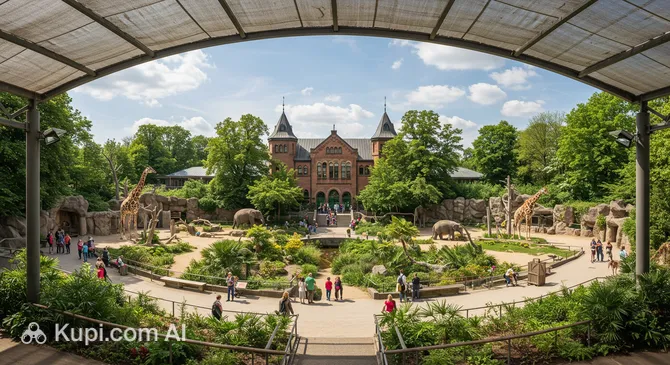
Hagenbeck Zoo. Illustration.
Source: Kupi.com AI

Traveler photos:

The zoo covers a vast, picturesque 25-hectare park with thoughtful landscaping that includes rocks, ponds, and green meadows. It is home to more than 1,850 animals representing over 210 species from every continent, including rare and exotic ones. The walking paths, totaling about 7 kilometers in length, will take you through various themed zones, from the African savanna to the icy reaches of the Arctic.

In addition to the zoo itself, the magnificent Tropical Aquarium is located by the main entrance. Here, you can discover the amazing underwater world and its inhabitants, including sharks, crocodiles, and numerous fish species. Hagenbeck Zoo is rightfully considered one of the best places for a family day out in Hamburg, offering visitors not just animal watching, but a total immersion into the world of wildlife.

Contacts

To check the latest information on opening hours, ticket prices, or special events, you can contact the Hagenbeck Zoo administration directly. All necessary contact details are provided below.

How to contactContact
AddressLokstedter Grenzstraße 2, 22527 Hamburg, Germany
Phone number+49 40 5300330
Websitewww.hagenbeck.de

What to Do

A visit to Hagenbeck Zoo is a fascinating journey to different corners of the globe. Here, you can observe animals in spacious enclosures where they feel completely at home. A walk will take you through impressive themed areas such as the "African Savanna," where giraffes and zebras roam open spaces, and the "Polar World," where you can see polar bears and penguins amidst artificial ice. Unique architectural features, including artificial rocks and bridges, make the immersion into the wild even more complete.

The large Tropical Aquarium deserves special attention, representing a world of its own within the zoo. In its multi-level halls, you will encounter amazing marine life, from vibrant coral fish to formidable sharks. Additionally, you can see crocodiles lurking in the water and even peak into the terrarium with snakes and other reptiles.

Hagenbeck Zoo offers plenty of interactive entertainment for the whole family. Visitors can participate in demonstration feedings of certain animals, attend engaging educational programs, or watch fun performances featuring sea lions. For the youngest guests, there are playgrounds, a petting zoo, and contact zones where they can pet and feed friendly domestic animals, making the visit unforgettable for children.

Getting There

Hagenbeck Zoo is conveniently located in Hamburg's Stellingen district and is easily accessible from any part of the city. The simplest and most reliable way to get there is by public transport. The Hagenbecks Tierpark subway station, served by the U2 line, is located right by the zoo. It is just a few minutes' leisurely walk from the station exit to the main entrance of the park. Additionally, several city bus routes (including 22, 181, and 281) stop nearby, providing even more flexibility.

If you prefer traveling by car, the drive from central Hamburg takes approximately 15–20 minutes, depending on traffic. For visitors' convenience, there is a parking lot located near the zoo grounds. You can also use taxi services, which is a particularly comfortable option for families with young children or travelers with a lot of luggage. A taxi ride from the center takes about 10–15 minutes.

Nearest city: Hamburg

History & Facts

The history of Hagenbeck Zoo is inextricably linked with the name of its creator, Carl Hagenbeck, who was not just an entrepreneur but a true visionary, collector, trainer, and exotic animal dealer. The family business began in the mid-19th century when his father, a fishmonger, purchased several seals and a polar bear brought to Hamburg by a whaling ship. Carl Hagenbeck inherited and significantly expanded this business, organizing expeditions to Africa and Central Asia to bolster his collection and supply rare animals to zoos worldwide.

Hagenbeck's crowning achievement was the opening of the world's first cage-free zoo on May 7, 1907. This was a revolutionary idea: instead of iron bars, animals were separated from visitors by moats, waterways, and natural barriers, allowing them to be observed in conditions as close to nature as possible. Hagenbeck patented this concept, which forever changed the approach to keeping wild animals in captivity, as early as 1896. Thanks to him, the zoo evolved from a simple menagerie into a thoughtfully designed landscape park for recreation and learning about nature.

In addition to the zoo, Carl Hagenbeck was famous for his circus, which he founded in 1890. He was also a pioneer of so-called "gentle training," based on rewards rather than punishment. His passion for his work was so great that he organized entire expeditions for the rarest species; for instance, he was the first to bring Przewalski's horse to Europe, a species almost unknown to science at the time. He described his extensive experience in his book "Of Beasts and Men."

Remarkably, to this day, Hagenbeck Zoo remains a private family-run enterprise managed by the founder's descendants. After surviving destruction during the Second World War, it was fully restored by the Hagenbeck family and is now considered one of the largest private zoos in Germany and Europe. This place is more than just a tourist attraction; it is a living monument to a man whose love for animals changed the world.

Time Needed

When planning a visit to Hagenbeck Zoo, you should expect it to take at least half a day. To explore both main parts of the complex — the zoological park itself and the Tropical Aquarium — it is recommended to set aside at least 4–5 hours. This will give you enough time to leisurely walk past the main enclosures, get to know the variety of animals, and immerse yourself in the underwater world without rushing. Some visitors note that it takes about three hours to see the park and another hour for the aquarium.

If you are traveling with children or want to fully enjoy everything this place has to offer, it is better to plan for a full day visit. This approach will allow you not only to see the animals but also to attend demonstration feedings and educational programs, and let the children play to their heart's content in the special playgrounds. Hagenbeck Zoo is more than just a place for animal watching; it is a large and picturesque park for relaxation, where it is a pleasure to spend time away from the hustle and bustle.

Working Hours

Hagenbeck Zoo is open to visitors year-round, although opening hours vary by season. During the main season, which typically falls during the summer months, the zoo and the Tropical Aquarium are open daily from 9:00 AM to 6:00 PM. Ticket offices close one hour before the park's closing time. As schedules are subject to change, it is strongly recommended to check the latest information on the official zoo website before planning your visit. To save time and avoid queues at the entrance, especially on weekends and public holidays, tickets can be purchased online in advance.

9:00 – 18:00

Nearby

Visiting Hagenbeck Zoo is a highlight in its own right, but exploring its surroundings can make your trip to Hamburg even more fulfilling. The district where the zoo is located and its surrounding areas offer many other points of interest, from picturesque parks to major sports arenas, making it easy to combine several activities in one day.

A stroll through nearby attractions will help you better understand Hamburg's many facets. Some of the city's iconic sites, which will appeal to sports fans, event-goers, and those who appreciate peaceful nature retreats, are just a few kilometers away. Below is a list of nearby places, along with their distance from the zoo.

NameDistance
Birdland2.5 km
Volksparkstadion2.9 km
Lokmam Köz4.2 km
Markthalle Hamburg-Lurup4.8 km
Feldstrasse Bunker (Flak Tower IV)4.9 km
Hamburg Conference Hotel5 km
Panik City5.5 km

Have you reached the end of the page?

So the route has been studied inside and out