Support

Defence Technology Study Collection Koblenz

About

If you are looking for a place where engineering meets history, the Scientific Collection of Defence Engineering (Wehrtechnische Studiensammlung) is a must on your itinerary. Located in Koblenz, this exhibition is one of the most extensive technical displays in Germany and throughout Europe. It is not just a museum in the traditional sense, but an official educational and archival department of the Bundeswehr.
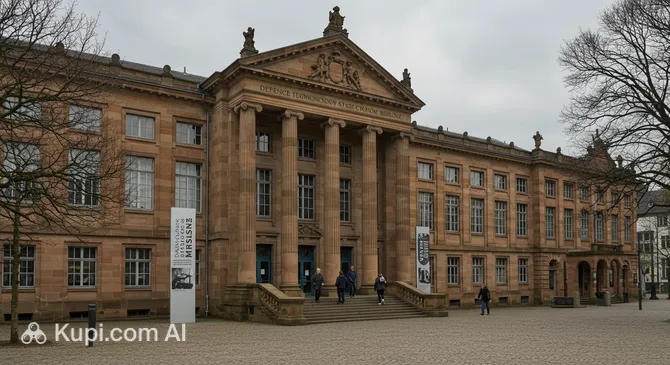
Defence Technology Study Collection Koblenz
Defence Technology Study Collection Koblenz. Иллюстрация. Источник: Kupi.com AI

Spread across 7,000 square meters, the collection features over 30,000 exhibits demonstrating the evolution of technical progress. You will find everything from miniature communication devices to heavy tracked vehicles. The standout feature of the collection is its educational nature—many exhibits are presented as cutaways, allowing for a detailed study of their inner workings and principles of operation.

The collection serves as a living archive, documenting the development of defense equipment from the beginning of the 19th century to the present day. Visitors can see unique prototypes that never went into mass production and functional equipment preserved in its original form. This site will be equally interesting for technology professionals and tourists wishing to touch material history.

Contacts

To clarify information about visiting or special events, you can use the following contact details. It is recommended to check for the most up-to-date information before your visit.

How to contactContact
AddressMayener Str. 85, 56070 Koblenz, Germany
Phone+49 261 9836921423
Websitewww.vffwts.de

What to Do

Your immersion into the world of technology begins with themed halls featuring armored vehicles, motorcycles, and artillery systems. Be sure to look for the unique Renault tank and rare equipment from the Warsaw Pact countries. Aviation enthusiasts will enjoy the aircraft and helicopters on display, while those who appreciate precision mechanics will be impressed by the section dedicated to engines and optical equipment.

Special attention should be paid to the small arms collection. Here, you can trace the development of weaponry from Prussian sabers to modern automatic rifles. The exhibition includes pistols, machine guns, and mortars from various eras, many of which are displayed as educational cutaway models. This offers a rare chance to literally look inside complex mechanisms.

As you wander through the floors, you will see more than just machinery; you will also see personal gear—from antique helmets to modern protective equipment of the Bundeswehr. To ensure you don't miss important details and to hear interesting facts about the creation of prototypes, it is recommended to book a guided tour. The museum staff is always ready to answer technical questions, making your walk as informative as possible.

Getting There

Getting to the museum is quite simple as it is located in the southern part of the city. If you are using public transport, bus No. 5 runs from the Koblenz Main Station (Koblenz Hauptbahnhof). The bus stop is to the right of the station exit, and the bus will take you almost to the very entrance of the exhibition complex.

For those traveling by car, it is most convenient to take the A61 motorway to the Koblenzer Kreuz junction, then switch to the A48 towards the city. Afterward, follow the B9 (Koblenz Nord) and, before reaching the Europabrücke bridge, follow the signs for Mayen/Cochem. There is convenient parking for visitors on the premises.

An important detail: since the collection is located on government-affiliated grounds, it is mandatory for visitors to have a valid ID (passport) for entry. Navigation coordinates: 50.3689764, 7.5850253.

Ближайший город: Koblenz

History & Facts

The history of this unique collection began in 1961–1962, when the first "Collection of Weapons and Design Research" was established in the city of Meppen. However, its official opening in its current status took place much later—on November 12, 1982. The red ribbon was cut by the President of the Bundestag, Richard Stücklen, and the base for the collection became the former Langemark Barracks in Koblenz.

The founder and driving force behind the collection was military historian Arnold Wirtgen. Today, the institution serves not merely as a museum but as an important corporate archive for the Federal Office of Bundeswehr Equipment, Information Technology and In-Service Support. It is actively used for training engineers and preparing specialists for international arms control missions.

The exposition covers a vast timeframe, starting from the early 19th century. Every step of technical progress is documented, with special emphasis on the development of the Bundeswehr. In addition to the equipment, the museum boasts an impressive specialized library, which houses rare technical manuals, blueprints, and historical photographs available for researchers.

Time Needed

The scale of the exhibition is often underestimated: it spans several floors and includes large outdoor areas. For a brief overview of the main halls, you will need at least 2–3 hours. This is enough time to see the key tanks and aircraft without delving into the intricacies of small arms design.

However, true technology and engineering history buffs could easily spend an entire day (4–6 hours or more) here. The sheer number of small details, cutaway engine models, and rare prototypes makes it hard to leave each display case, so plan your visit with plenty of extra time.

Working Hours

The Scientific Collection of Defence Engineering operates on a steady schedule and is open to the public daily, including weekends. Visitors are welcome from 09:30 to 16:30.

Please note that the museum may be closed on public holidays such as Christmas (December 24–25), New Year's Day, Good Friday, and Rosenmontag. It is recommended to plan your visit for the first half of the day to ensure you have time to explore all the halls before closing.

9:30 – 16:30

Nearby

Koblenz is a city with a rich cultural heritage, and a visit to the technical collection can easily be combined with exploring other historical monuments. A walk around the surrounding area will allow you to see both ancient architecture and the majestic fortresses guarding the banks of the Rhine.

NameDistance
Balduin Bridge0.8 km
Druckluftkammer1 km
Drei Hefen1.1 km
Koblenz Railway Museum1.1 km
Altes Brauhaus1.2 km
Alt Coblenz1.2 km
Löhr Center1.2 km

Reached the end of the page?

That means the route is fully explored