Support

Schloss Koblenz

About

The Electoral Palace Koblenz, also known as Kurfürstliches Schloss, is an outstanding monument of Classicist architecture. Located in the picturesque city of Koblenz, this palace served as the residence of powerful Electors for centuries. Today, it is one of the most significant historical sites in Germany, attracting connoisseurs of fine arts and history.
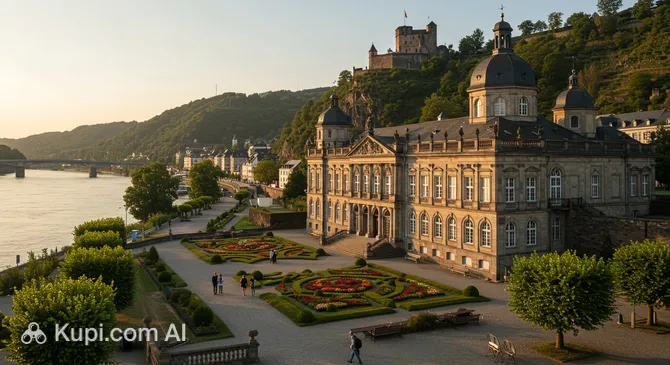
Koblenz Palace
Koblenz Palace. Иллюстрация. Источник: Kupi.com AI

The building stands out with its elegant light facade and strict geometric lines that harmonize with the Rhine embankment landscape. As a striking example of 18th-century palace architecture, it has retained an atmosphere of aristocratic grandeur despite the changing eras and functional purposes.

Currently, the complex is used as a space for exhibitions, conferences, and concerts. While the status of some business units inside may change, the building itself remains a key cultural hub for the region, offering guests the opportunity to connect with the rich past and enjoy the aesthetics of imperial architecture.

Contacts

To plan your visit to the Electoral Palace Koblenz, it is helpful to have the official contact details on hand. You can contact the administration to clarify the event program or visit their resource for up-to-date information. Below is a detailed table with the main contacts for this historical site.

How to contactContact
AddressNeustadt 24, 56068 Koblenz, Germany
Phone+49 261 914810
Websitewww.koblenz-kongress.de

What to Do

Visiting the Electoral Palace Koblenz is a wonderful opportunity to immerse yourself in the atmosphere of the past. One of the main recommendations for tourists is to take a walk through the surrounding gardens and courtyards. From here, magnificent panoramas of the Rhine River open up, providing a perfect backdrop for memorable photos. The well-kept paths and landscape design create ideal conditions for a relaxing break.

Cultural events are frequently held inside the building itself, ranging from classical music concerts to contemporary art exhibitions. Attending such events allows you not only to experience the art but also to see the luxurious interiors and historical halls that may be closed at other times. It is a great way to feel the scale and grandeur of the former Electoral residence.

Additionally, it is worth paying attention to the architectural details of the facade and walking along the embankment to the famous Deutsches Eck. Its proximity to the confluence of the Rhine and Moselle rivers makes a walk around the palace rich and varied, allowing you to see several of Koblenz's main symbols at once.

Getting There

The Electoral Palace Koblenz, located at Neustadt 24, is very easy to reach from anywhere in the city. If you are in the center, a pleasant walk to the building takes very little time, allowing you to enjoy views of the river along the way.

For those arriving by public transport, it is most convenient to travel from the main station (Koblenz Hbf). The walk from the station takes about 10–15 minutes. You can also use bus lines 1 or 2, getting off at the Rheinzentrum stop, which is in the immediate vicinity of the palace complex.

If you value comfort or are traveling in a large group, a taxi from the city center will take you to the main entrance in a matter of minutes. Thanks to its location in the Neustadt district, the palace is one of the city's most accessible attractions.

Ближайший город: Koblenz

History & Facts

The Electoral Palace Koblenz was built in the 18th century by order of Clemens Wenceslaus of Saxony, the last Elector of Trier. He decided to move his residence from the old castle, which he found too cramped and uncomfortable, to a new building that met the tastes of the Classicist era. Thus, one of the most majestic structures of that time appeared in Koblenz.

The palace quickly became more than just a home for the ruler; it became a symbol of the administrative power of the Electorate. Its architectural style combined the rigor of French Classicism with Baroque splendor, making it stand out among other buildings in Germany. Important political decisions affecting the fate of the region were made within these walls.

Over the centuries of its existence, the palace has endured many challenges, including significant destruction in the mid-20th century. However, thanks to extensive restoration work, the Kurfürstliches Schloss has preserved its historical appearance. Today, it serves as a living reminder of the former greatness of the Electors and is an important cultural heritage site.

Time Needed

For a standard viewing of the exterior of the Electoral Palace Koblenz and a stroll through its picturesque terraces, tourists typically need 30 to 60 minutes. This time is quite sufficient to inspect the facade, appreciate the architectural details, and take souvenir photos with the Rhine in the background.

If you plan to visit one of the temporary art exhibitions or attend a concert held in the inner halls, you should set aside about 1–2 hours for the visit. Additional time may also be required if you decide to combine your tour of the palace with a visit to the nearby "German Corner" (Deutsches Eck).

Working Hours

Currently, access to the exterior grounds and palace gardens is possible throughout the day. However, the exact opening hours of the interior halls, exhibition spaces, and the information center may vary depending on the season or the schedule of Koblenz-Kongress cultural events.

Since the official operating schedule is not fixed, visitors are strongly encouraged to check the official website before their trip. This will help avoid disappointment and allow you to find out in advance about private events or special exhibitions.

Nearby

Exploring the surroundings of the Electoral Palace Koblenz can significantly enrich your travel experience. Its proximity to the river and the historical city center makes walking in this area particularly fascinating, allowing you to see many monuments and ancient structures at every turn.

Below is a list of interesting locations within walking or driving distance of the palace complex to help you plan your perfect city itinerary.

NameDistance
Pegelhaus0.4 km
Forum Mittelrhein0.5 km
Historiensäule (History Column) at Görresplatz0.5 km
Koblenz Cable Car0.5 km
Konrad Adenauer Embankment0.5 km
Circus Maximus0.6 km
Schängel Fountain0.6 km

Reached the end of the page?

That means the route is fully explored