Support

Monument to the Battle of the Nations

About

The Monument to the Battle of the Nations (German: Völkerschlachtdenkmal) is one of the most magnificent and iconic landmarks not only in Leipzig but in all of Germany. Located in the southern part of the city, this monumental complex is striking in its scale and is the largest monument in Europe. It was inaugurated on October 18, 1913, to mark the centenary of the battle.
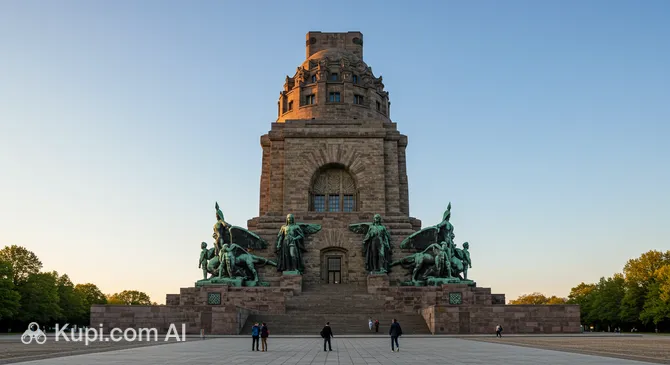
Monument to the Battle of the Nations. Illustration.
Source: Kupi.com AI

Traveler photos:

The monument was erected to commemorate the "Battle of the Nations"—one of the largest battles in world history, which took place near Leipzig in October 1813. It serves as a majestic memorial dedicated to those who fell in this decisive battle, where the coalition forces of Russia, Prussia, Austria, and Sweden triumphed over Napoleon’s army.

The structure stands 91 meters high, and its observation deck offers breathtaking views of the city and its surroundings. Inside the monument is the "FORUM 1813" museum, a branch of the Leipzig Museum of City History, which provides a detailed account of the events of those years. Visiting this site is not just about sightseeing; it is a true immersion into history, allowing you to feel the power and gravity of the events of the past.

Contacts

When planning a visit to the Monument to the Battle of the Nations, it is important to check the latest information such as opening hours, ticket prices, and potential schedule changes in advance. Since direct contact details like phone numbers or email addresses may change, the most reliable way to get up-to-date information is through the official tourism portals of the city of Leipzig. There, you will find the most accurate and verified details for organizing your visit.

How to contactContact
AddressStr. des 18. Oktober 100, 04299 Leipzig, Germany
Phone number+49 341 2416870
Websitewww.stiftung-voelkerschlachtdenkmal-leipzig.de

What to Do

A visit to the Monument to the Battle of the Nations offers several engaging activities. The highlight is undoubtedly climbing to the observation deck at a height of 91 meters. After climbing several hundred steps (or using the elevator for part of the way), you will be rewarded with a spectacular panorama of the city and its picturesque surroundings. It is the perfect spot to appreciate the scale of Leipzig and capture some impressive photos.

Inside the monument, the "FORUM 1813" museum is an essential part of the visit. Here, you can dive deep into the history of the famous 1813 battle by exploring dioramas, uniforms, weapons, and other exhibits that tell the story of those days and the construction of the monument itself. The exhibition provides a better understanding of the historical context and the significance of this massive structure.

Additionally, don't limit yourself to just the interior. The monument is surrounded by a beautiful park with a large pond known as the "Lake of Tears." This is a wonderful place for a leisurely stroll, where you can fully experience the grandeur and monumentality of the architectural ensemble. The complex also regularly hosts various cultural events, choral concerts, and temporary exhibitions, making every visit unique.

Getting There

Getting to the Monument to the Battle of the Nations is quite simple, as it is conveniently located in the southeastern part of Leipzig and has excellent transport links. Whether you prefer public transport or driving, your journey to this majestic monument will be quick and comfortable. For those traveling by car, visitor parking is available near the monument.

The most convenient way to reach the landmark is by using Germany's well-developed public transport system. From Leipzig Central Station, Tram No. 15 runs regularly towards Meusdorf. The trip takes only 15–20 minutes, and your stop is named Völkerschlachtdenkmal. You can also reach the monument via Tram No. 2 or the S-Bahn suburban trains (lines S1, S2, S3), making it accessible from almost any part of the city.

Nearest city: Leipzig

History & Facts

The history of the Monument to the Battle of the Nations is inextricably linked to one of the most significant battles of the 19th century. The Battle of the Nations itself took place near Leipzig from October 16 to 19, 1813. It saw the coalition armies of Russia, Austria, Prussia, and Sweden face off against the forces of Napoleon Bonaparte. This was a clash of monumental proportions involving over half a million soldiers, with casualties numbering in the tens of thousands. The battle became a turning point in European history and led to the liberation of German lands, marking the beginning of the end of the Napoleonic era.

Interestingly, the idea of immortalizing the memory of the fallen heroes emerged almost immediately after the battle, though its realization took nearly a century. It wasn't until 1898, on the 85th anniversary of the battle, that the foundation stone of the future monument was laid. The project was designed by the renowned architect Bruno Schmitz, and the grand opening took place in 1913, exactly on the centenary of the battle. This long journey from concept to completion highlights how significant this event was for the national memory of Germany.

The construction of such a colossal structure was made possible by immense public support. Funding came not only from the state but also through donations from ordinary citizens and a specially organized lottery. The main driving force behind the project was Clemens Thieme, head of the "Association of German Patriots." His tireless energy and organizational talent helped raise the necessary funds and bring this ambitious vision to life, creating one of the most impressive memorials in the world.

Time Needed

When planning a visit to the Monument to the Battle of the Nations, it is worth setting aside enough time to enjoy this grand complex without rushing. On average, it is recommended to allow 1.5 to 2.5 hours for a full experience, including climbing to the observation deck and visiting the museum. This time is usually sufficient to see the main elements of the memorial and feel its majestic atmosphere. Some visitors find that they spend about an hour and a half here.

The main part of your time will be spent exploring the monument itself and heading to the top, which offers impressive views of Leipzig. This can take about an hour. If you have a deep interest in history, add at least another 45–60 minutes for a thoughtful tour of the "FORUM 1813" museum exhibition. We also suggest leaving a little time for a walk through the park at the base of the monument to fully appreciate its scale and take some commemorative photos.

Working Hours

The Monument to the Battle of the Nations is open to visitors year-round, though the hours depend on the season. During the summer period, from April to October, the monument can be visited daily from 10:00 to 18:00. In the winter months, from November to March, the hours are shorter, and it is open from 10:00 to 16:00. Please note that the monument may be closed on certain holidays, such as December 24 and 31.

Advance ticket booking for individual visits is generally not required; however, it may be recommended for group tours or during peak tourist periods. In any case, before planning your visit, we strongly advise checking the current schedule and any potential changes on the attraction's official website to ensure your trip is as smooth as possible.

10:00 – 18:00

Nearby

After fully taking in the grandeur and historical atmosphere of the Monument to the Battle of the Nations, don't be in a hurry to leave the area. Exploring the surroundings will allow you to discover other interesting corners of Leipzig, adding to your overall travel experience. In the immediate vicinity of the monument, you will find a variety of places—from picturesque parks and unique museums to cozy spots where you can relax and share your impressions.

Taking a walk to nearby attractions is a great way to dive deeper into the city's life and see it from different perspectives. Whether you seek cultural enrichment at a museum, a peaceful break in nature, or a taste of the local culinary scene, you will easily find something to your liking just a few kilometers from the famous memorial.

NameDistance
Leipzig Panometer1.8 km
Substanz Beer Garden & Pub2.8 km
Horns Erben3.1 km
Leipzig Wildlife Park3.2 km
Grassi Museum of Applied Arts3.3 km
Torhaus Dölitz Tin Figure Museum3.3 km
Mendelssohn House3.4 km

Have you reached the end of the page?

So the route has been studied inside and out