Support

Marienberg Fortress

About

Marienberg Fortress (German: Festung Marienberg) is a majestic architectural ensemble and one of the main symbols of Würzburg, Germany. The fortress's powerful walls rise on a hill covered with vineyards, offering a magnificent view of the Main River and the city's historical center. Due to its dominant position, Marienberg is visible from almost anywhere in Würzburg and invariably catches the eye of travelers.
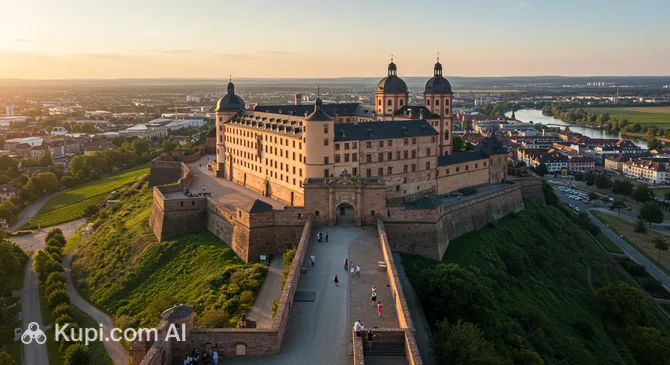
Marienberg Fortress. Illustration.
Source: Kupi.com AI

Traveler photos:

This fortress is not just a military fortification, but a place with a rich centuries-old history. For hundreds of years, it served as the residence of the powerful Prince-Bishops of Würzburg. Its architecture reflects different eras: you can see elements of austere medieval building, graceful Renaissance details, and ornate Baroque forms. A walk through the inner courtyards and bastions lets you feel the spirit of the past and imagine life bustling within these walls.

Today, Marienberg Fortress is home to two significant museums: the Museum of Franconia, which boasts a rich collection of art, and the Fürstenbau Museum, detailing the history of the prince-bishopric. Besides the cultural program, visitors are drawn to the picturesque gardens surrounding the fortress and, of course, the breathtaking panoramic views that make this place an ideal spot for photography and leisurely walks.

Contacts

For the most up-to-date information on opening hours, ticket prices, and special events at Marienberg Fortress, it is best to consult official sources. Key details are available on the attraction's official website.

How to contactContact
AddressMarienberg, 97082 Würzburg, Germany
Phone number+49 931 3551750
Websitewww.schloesser.bayern.de

What to Do

A visit to Marienberg Fortress is an opportunity to touch centuries of history in Würzburg and all of Franconia. Inside the fortress walls are museums where you can learn about the region's rich history. The exhibits include impressive collections of ancient weapons, knightly armor, works of art, and valuable archaeological finds. Of particular note is the Marienkirche—the oldest Romanesque chapel in the city, which served as a burial place for Würzburg's bishops.

The fortress offers both cultural and aesthetic pleasure. Be sure to walk along the massive fortress walls, which offer breathtaking panoramic views of the city, the Main River, and the surrounding hills. Explore the inner courtyards, mysterious towers, and monumental gates to fully experience the medieval atmosphere. The walk becomes even more picturesque thanks to the vineyards covering the slopes at the foot of the fortress, providing a perfect backdrop for photos.

During the warmer months, the Marienberg grounds come alive with various cultural events and festivals. It's worth checking the schedule before your visit, as you might have the chance to attend a concert or a themed tour that will make your visit to this iconic German landmark even more memorable.

Getting There

Marienberg Fortress rises majestically on a hill on the left bank of the Main River, directly across from the old town of Würzburg. Thanks to this location, getting there is quite easy. The most popular and perhaps most scenic way is a walk. A convenient path leads from the Old Main Bridge (Alte Mainbrücke) to the fortress gates, passing through terraced vineyards. The climb is not too steep and takes about 20–30 minutes, rewarded by stunning views of the city and the river.

If you prefer a more comfortable mode of transport or are short on time, you can use public transportation. A city bus (route 9) runs to the foot of the hill, departing from the central square. This is a great option to save your energy for exploring the fortress itself. Additionally, you can reach Marienberg by car—there is a parking lot for visitors at the entrance to the grounds.

Nearest city: Würzburg

History & Facts

The history of Marienberg Fortress dates back to antiquity, long before the castle itself was built. Even in Celtic times, a fortified settlement and a pagan sanctuary were located on this hill above the Main River. The first Christian structure here was the Romanesque Marienkirche chapel, built in the 11th century. This ancient church, which has survived to this day, is one of the oldest in Germany and laid the foundation for the future grand complex.

Construction of the fortress itself began in the early 13th century. The impetus was the city unrest of 1200, after which Bishop Konrad von Querfurt decided to build a "strong house"—a secure residence and defensive center—on the hill. By 1235, Marienberg officially became the residence of the Prince-Bishops of Würzburg and remained so for nearly 500 years, until 1720. This site was not just a home, but the heart of the region's spiritual and secular power.

Over the centuries, the fortress was rebuilt and reinforced many times to meet new fortification requirements. Particularly significant changes occurred in the late 15th century when powerful defensive structures were added, including the famous Scherenberg Gate (Scherenbergtor). Thanks to its strength, Marienberg Fortress withstood numerous sieges and survived turbulent historical events, preserving its impressive and unique appearance that continues to fascinate visitors today.

Time Needed

When planning a visit to Marienberg Fortress, it is worth setting aside at least 2–3 hours for exploration. This will be enough time to leisurely get to know this impressive historical complex, which rises majestically above Würzburg and offers guests both historical exhibits and breathtaking views.

Within the recommended time, you will have enough time to not only walk through the extensive fortress grounds, its courtyards, and massive bastions but also visit the museums located here. Most of the time is typically spent touring the exhibitions of the Museum of Franconia and the Fürstenbau Museum. Additionally, be sure to leave time to enjoy the magnificent panoramic views of the old town, the Main River, and the picturesque vineyards surrounding the hill. If your schedule is limited, a quick walk through the outer courtyards and viewing platforms might take about an hour, but for a full immersion in the history and atmosphere, it is better not to rush.

Working Hours

Opening hours for Marienberg Fortress and its museums may vary depending on the season. They are typically open to visitors daily from morning until early evening, but the schedule may be reduced during the winter months. The fortress grounds themselves are often accessible for walking longer than the indoor exhibits.

To plan your visit and get the most accurate information, it is highly recommended to check the current schedule on the official website of the attraction immediately before your trip. During peak tourist seasons, it may be useful to check if advance ticket booking is required to avoid long waits in line.

DayOpening hours
MondayClosed
Tuesday9:00 – 18:00
Wednesday9:00 – 18:00
Thursday9:00 – 18:00
Friday9:00 – 18:00
Saturday9:00 – 18:00
Sunday9:00 – 18:00

Nearby

Visiting such an iconic site as Marienberg Fortress is a wonderful opportunity to experience the history and grandeur of Würzburg. However, the city's true charm often lies in its surroundings. A stroll through the nearby streets and parks will allow you to immerse yourself deeper in the atmosphere of this Franconian city and see it from different perspectives.

Exploring attractions within walking distance will enrich your experience and complete your day. Discover cozy gardens, historical bridges, and museums located just a few minutes' walk from the fortress. Below is a list of interesting places you can visit without spending much time on travel.

NameDistance
Museum for Franconia0.2 km
Japanese Garden0.3 km
Old Main Bridge0.6 km
Käppele Sanctuary0.6 km
Four Tubes Fountain0.7 km
Old Crane0.8 km
Stachel Restaurant & Wine House0.8 km

Have you reached the end of the page?

So the route has been studied inside and out