Support

Karimunjawa

About

Karimunjawa is a true hidden gem of the Java Sea, a picturesque archipelago of 27 islands. This place is famous for its pristine white sand beaches, crystal-clear turquoise waters, and incredible tranquility. For travelers wishing to discover the authentic side of Southeast Asia, a trip to a country like Indonesia would be incomplete without a visit to this unique marine reserve.
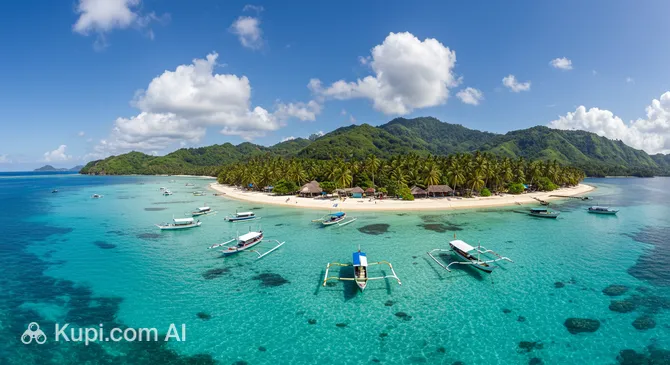
Karimunjawa. Illustration.
Source: Kupi.com AI

Geographically, the archipelago is located about 80 kilometers north of the coast of Central Java. Despite its beauty, the islands remain quite secluded: the population of the main settlement and its surroundings is approximately 9,700 people. This creates a special, relaxed atmosphere, far from the hustle and bustle of overcrowded resorts. The local climate is classic tropical, perfect for relaxing by the water almost year-round.

The archipelago has its own past, steeped in local legends and traditions. The fascinating history of Karimunjawa is closely linked to the name Sunan Nyamplungan and the origin of the islands' name, which can be translated from Javanese as "faintly visible" from the shores of Java. Learning about the cultural context makes a stay here even more meaningful.

The main point of attraction for tourists is its status as a Marine National Park. The underwater world here is mind-blowing: snorkelers and divers can explore extensive coral reefs teeming with colorful fish. Unique activities include the chance to swim with reef sharks at Menjangan Besar Island or take a walk through mysterious mangrove forests.

Karimunjawa is the perfect destination for those seeking harmony with nature and dreaming of the "Javanese Caribbean." Come here to enjoy fantastic sunsets, the freshest seafood, and a silence broken only by the sound of the surf.

Weather Overview

The climate in the archipelago is typically tropical, ensuring comfortable warmth throughout the year. The temperature regime here is remarkably stable: average figures fluctuate within a narrow range from 26.8°C to 27.9°C. Even on the "coldest" nights, the temperature rarely drops below 25.8°C, and during the day, the air warms up to 28.8°C, creating excellent conditions for relaxing by the water.

The main difference between seasons lies in the amount of precipitation and cloud cover. The driest and sunniest period occurs in August and September, when the number of rainy days is minimal (only about 5 per month) and there is practically no rainfall. Conversely, January is the peak of the wet season: despite the warmth, it can rain almost every day (up to 30 days with precipitation), so an umbrella and a raincoat will not be out of place.

Expect consistently warm weather year-round with a high probability of rain from December to March and dry, sunny days in late summer. To choose the perfect dates for snorkeling or beach relaxation, we recommend checking the detailed monthly weather in Karimunjawa in advance.

Interesting Facts

Beyond its idyllic beaches and coral reefs, Karimunjawa holds many fascinating secrets and local beliefs that give the archipelago a special charm.

  • "Faint Outlines" in the name. The archipelago's name comes from the Javanese phrase "kremun-kremun saking Jowo," which translates to "faintly visible from Java." According to legend, this is how one of the revered saints described the islands while looking at them from Mount Muria on the mainland, when they barely appeared through the sea mist.

  • The Mystique of the Dewadaru Tree. On the islands, you can find the rare Dewadaru tree, which locals imbue with magical properties and call "wood of the gods." There is a persistent belief that if a traveler tries to take a piece of this wood off the island, their boat will surely run into trouble or sink. Locals treat these trees with deep respect.

  • Only five inhabited islands. Although the national park includes 27 islands, a permanent population lives on only five of them: Karimunjawa, Kemujan, Nyamuk, Parang, and Genting. The other 22 landmasses remain uninhabited oases of wild nature, accessible only for day trips.

  • Friendship with Sharks. On Menjangan Besar Island, there is a unique natural pool where reef sharks live in semi-wild conditions. It is one of the few places where tourists are allowed to swim freely alongside these predators. The local sharks are accustomed to people and are considered completely safe for swimmers.

How to Get There

A trip to the Karimunjawa archipelago is a real adventure that usually begins with arriving on the island of Java. Since the archipelago is located at sea, direct access is limited, and tourists often have to combine different modes of transport. To plan your route in detail and choose the most convenient option, we recommend reading the detailed information on how to get to Karimunjawa.

The town of Karimunjawa itself does not have a large international airport capable of receiving large liners. The closest and most convenient hub is Ahmad Yani International Airport (SRG), located in the city of Semarang. It is about 126 km from Karimunjawa (in a straight line over the sea). From the airport, tourists usually head to the port of Semarang or travel to the town of Jepara, where ferries depart for the islands. The journey by taxi or bus to the port area takes about 3.5 hours.

An alternative option is Adi Sumarmo International Airport (SOC), located in the city of Solo. The distance to Karimunjawa is about 189 km. The car journey from this airport to the coast to catch a ferry takes approximately 5 hours.

Many travelers also choose Yogyakarta International Airport (YIA) in the city of Yogyakarta as their point of entry. Although it is further away—about 233 km from the archipelago—it is a major hub with a large number of flights. The transfer to the departure port takes about 6 hours.

For convenience, here is a summary of the main airports used to reach the region:

AirportPassenger trafficDistance
Achmad Yani International Airport2.3 mln126 km
Adi Sumarmo International Airport1.2 mln189 km
Yogyakarta International Airport4.3 mln233 km
Kertajati International Airport413 240269 km
Dhoho International Airport1.5 mln270 km

As for rail connections, there are no trains directly on the islands. However, train travel is a popular way to reach the port cities on Java. Tourists often take trains to Semarang (to Semarang Tawang or Semarang Poncol stations) from Jakarta or Surabaya. From the station, you can easily reach the Tanjung Emas port in Semarang or the Kartini port in Jepara by taxi or shuttle bus to continue your journey by ferry or speedboat.

Main Attractions

The archipelago offers travelers not only beach relaxation but also fascinating nature excursions. The main attractions here are related to the sea and scenic viewpoints that allow you to appreciate the beauty of the islands from above.

Tanjung Gelam Beach is perhaps the most famous and photographed beach on the main island. It is renowned for its wide strip of snow-white sand and incredibly clear turquoise water. The hallmark of this place is the coconut palms leaning toward the water, creating a perfect tropical postcard. People often come here toward evening to enjoy one of the best sunsets in the archipelago, as the sun slowly sinks directly into the Java Sea.

Love Hill (Bukit Love) is a popular observation deck located near the town center. This spot is definitely worth a visit for its panoramic views of the green hills and the azure expanse of the ocean dotted with islands. Various art objects and sculptures are installed at the top, including a "LOVE" sign, making the hill a favorite spot for commemorative photos. The climb is easy, and the view is breathtaking.

Menjangan Kecil Island is a real magnet for snorkeling enthusiasts. The waters around this small island abound with vibrant, colorful corals and schools of tropical fish. The depth here is shallow, allowing even beginners to comfortably observe the underwater world directly from the surface. Boat tours to this island are among the most popular excursions.

The Mangrove Forest (Hutan Mangrove) offers a change from marine landscapes to a mysterious jungle atmosphere. Convenient wooden boardwalks have been laid out for tourists, leading deep into the thickets. Walking along these trails allows you to quietly observe the unique ecosystem, see rare birds, and climb a special observation tower that offers a view of the green carpet of mangrove trees stretching to the horizon.

Local Cuisine

The culinary scene of Karimunjawa is a true paradise for seafood lovers. Since life here is inextricably linked to the sea, the basis of the local diet is the freshest fish and marine delicacies that reach the table just a few hours after being caught. Don't look for fine molecular cuisine here; the food on the islands is simple, honest, and incredibly tasty thanks to the exceptional quality of the ingredients.

The main dish that every guest of the archipelago must try is Ikan Bakar—grilled fish. Local chefs often use coconut shells for grilling, which gives the dish a special smoky aroma. The fish is marinated in a mixture of turmeric and garlic and served with spicy sambal sauce and rice. Another gastronomic hallmark of the region is Pindang Serani—a light fish soup with a clear yellow broth. Thanks to lemongrass, basil, turmeric, and chili, it has a refreshing sweet-and-sour taste with spicy notes, perfect for the hot climate.

Among the drinks, the absolute favorite remains Es Kelapa Muda—the water of a young coconut, often served right in the nut, sometimes with ice and syrup. It’s the best way to rehydrate after swimming. In the evenings, Wedang Jahe—a hot ginger drink with palm sugar—is popular. As for alcohol, despite Indonesia's strong Islamic traditions, in the tourist areas of Indonesia like Karimunjawa, you can easily order a cold beer, which perfectly complements a seafood dinner.

The center of attraction for foodies in the evenings is the town square—Alun-Alun. As the sun sets, this place transforms into a lively night market. Tourists come here to personally choose fresh lobsters, squid, crabs, or parrotfish from ice-covered stalls, which are then cooked over an open fire. Dinner at Alun-Alun is not just a meal but a cultural experience: it’s customary to eat "lesehan" style, sitting on mats at low tables right on the grass under the open sky.

Travel Tips

Karimunjawa is a secluded and unique place, so preparation for your trip plays a key role. To ensure your holiday goes smoothly, we have gathered the most important recommendations to help you avoid everyday hassles and fully immerse yourself in the "Javanese Caribbean" atmosphere.

  1. Clothing and Gear. Bring light clothing made from natural fabrics, but remember: Indonesia is a country with strong Islamic traditions. Outside of the beach and hotel, it is recommended to wear clothes that cover your shoulders and knees. Be sure to pack aqua shoes—the entrance to the water is often coral, and there is a risk of stepping on a sea urchin.
  2. Transport Issues. There is no public transport such as buses here. The most convenient way to move around is renting a scooter. Traffic on the island is calm, so even beginners can manage. If you don't drive a bike, you can rent a bicycle or arrange a car transfer with locals. Traditional wooden boats are used for moving between islands.
  3. Cash is King. This is a critical piece of advice: withdraw enough local currency (Indonesian Rupiah) while still on Java (in Semarang or Jepara). There are very few ATMs on Karimunjawa (often only one is working), and they frequently run out of bills or lose connection. Cards are only accepted at large hotels; in other places, only cash is used.
  4. Connectivity and Internet. Wi-Fi in guesthouses is often slow and unstable. We strongly recommend buying a SIM card from the Telkomsel operator in advance. Other providers (such as XL or Indosat) may simply not have a signal here, especially on remote beaches. Download offline maps of the area to your phone before your trip.
  5. Health and First Aid Kit. The island has only a small clinic (Puskesmas) with basic services; there are no major hospitals. Be sure to pack your own first aid kit: remedies for stomach upset, antiseptics, painkillers, and high-quality repellents (mosquitoes can be active in the evenings). Drink only bottled water.
  6. Local Etiquette. The islanders are very friendly but conservative. It is customary to remove your shoes when entering a private home or small guesthouse. Only use your right hand to give money, food, or to greet someone (the left is considered "unclean"). A smile is a universal language that opens any door here.
  7. What to Avoid. Categorically do not step on corals while snorkeling—this not only destroys the fragile ecosystem but can also lead to painful cuts. Also, refrain from walking through the village, shops, and market in swimsuits or trunks—this behavior is considered disrespectful to the local residents.
  8. Electricity. Be prepared for potential power outages on the islands. A powerful power bank (external battery) will be indispensable for charging your phone or camera after a busy day, especially if you are staying in a small bungalow.

By following these simple rules, you can avoid unnecessary worries and focus on the main thing—the incredible beauty of the tropical nature and the underwater world. May your journey to Karimunjawa be one of your brightest, safest, and most carefree adventures!

Entertainment & Nightlife

Nightlife in the Karimunjawa archipelago is radically different from the noisy parties of Bali or the metropolises of Java. Here, you won't find multi-story nightclubs with lasers, thumping discos until dawn, or red-light districts. Evenings here follow a relaxed "island life" rhythm: a time for heartfelt conversations, acoustic music, and stargazing—the stars shine particularly bright here due to the lack of light pollution.

The epicenter of evening activity is invariably the town square—Alun-Alun. After sunset, this place transforms from a simple field into a lively social hub. Both locals and tourists flock here. The atmosphere is as casual as it gets: people sit on mats, dine on fresh seafood, chat, and share impressions of the day. It's common to see groups with guitars holding impromptu open-air concerts.

If you're looking for a place to have a cocktail or a cold beer in a more familiar setting, the choice of establishments is limited, but each has its own charm. Here are a few popular locations for a pleasant evening:

  • Amore Cafe — one of the most famous spots on the island. It’s located a bit away from the port but attracts guests with its cozy terrace and relaxed vibe. European tourists often gather here to enjoy fruit shakes or beer, use the Wi-Fi, and simply socialize.

  • The Happinezz — a popular cafe and hostel with a friendly, bustling atmosphere. It’s a great place to meet travelers from all over the world. In the evenings, low-key music plays, and the staff makes you feel like you're visiting old friends.

For those who want to spend the evening in a more refined setting, it’s worth checking out the bars at the larger resorts, such as Breve Azurine Lagoon Resort. Prices here will be higher than the island average, but in return, you get excellent service, quality drinks, and a romantic sea view.

Practical Tips and Safety:

Most establishments close fairly early, around 10:00 PM – 11:00 PM, although gatherings at Alun-Alun can last until midnight. The dress code is extremely casual everywhere—shorts and a T-shirt are appropriate in any spot. The average check for a drink in a cafe is about 30,000 – 50,000 IDR.

As darkness falls, the island streets become empty and are virtually unlit. If you plan to move around on foot, be sure to have a charged phone with a flashlight. There are almost no sidewalks, so you'll have to walk along the shoulder of the road. The most popular way to get to your hotel at night is by rented scooter, but be extremely careful on unlit sections. There are no official taxis or apps like Grab/Gojek here, so it's best to arrange a transfer in advance with your accommodation.

Regarding daytime cultural entertainment, Karimunjawa is about nature, not urban leisure. There are no cinemas, shopping malls, theaters, or large museums. The only "cultural points" can be considered small galleries of local craftsmen selling wood and coconut souvenirs. The main "theater" here is the underwater world, and the "amusement park" consists of mangrove forests and uninhabited islands.

Parks & Museums

Unlike major metropolises, Karimunjawa cannot boast of classic museum districts or manicured city squares with fountains. Here, nature itself serves as the main exhibition hall, and cultural heritage is closely interwoven with the legends and spiritual life of the islanders. The "green zones" here are wild jungles and protected territories, while historical shrines and ethnographic corners play the role of museums.

Karimunjawa National Park is undoubtedly the main natural attraction of the region, covering more than 110,000 hectares of land and sea. Although it is not a city park in the usual sense, it is the heart of the archipelago. Tourists come here not just for a walk, but to touch a pristine ecosystem: from dense tropical forests on the hills to unique mangrove thickets on the coast. It is an ideal place for those who want to see rare birds, wild deer, and feel the power of Indonesia's untouched nature.

Joko Tuwo Hill (Bukit Joko Tuwo) is an interesting alternative to the popular Love Hill. It is a natural elevation offering spectacular views of Karimunjawa town, the port, and neighboring islands. The path to the top passes through a scenic green area. This place attracts tourists with its peaceful atmosphere and the opportunity to watch sunsets in a more secluded setting, away from the main tourist groups.

Speaking of cultural sites, it's worth noting that there are no traditional indoor museums on the islands. However, there are unique open-air exhibits. On the same Joko Tuwo Hill, there is a kind of natural history museum: a massive skeleton of a whale that washed ashore many years ago is on display here. Locals preserved the giant's bones, and now it is one of the most impressive sights, clearly demonstrating the richness and power of the Java Sea's fauna.

Sunan Nyamplungan’s Grave (Makam Sunan Nyamplungan) on Karimunjawa Island is a major historical and spiritual landmark. This is the burial site of Amir Hasan (the son of one of the Walisongo saints), who played a key role in spreading Islam in the region. The complex is a traditional Javanese shrine. Visiting this site allows tourists to gain a deeper understanding of the archipelago's settlement history and feel the respect local residents have for their ancestors.

For an immersion into living culture, we recommend visiting the Bugis settlements on Kemujan Island. While not an official museum, the architecture of the houses on stilts (rumah panggung) is a true ethnographic monument. The Bugis are famous seafarers, and their way of life still retains authentic features rarely found in modern cities.

Insider Tip: If you are interested in nature, try to find the small Butterfly Park, which sometimes operates near the center. It’s not a large-scale zoo, but a cozy place to see endemic insect species. And for history buffs, the best time to visit Sunan Nyamplungan’s grave is early morning when local pilgrims come to pray, creating a special mystical atmosphere.

Getting Around

It is important to note immediately that the usual public transport system is completely absent in the Karimunjawa archipelago. Here you won't find regular buses, shuttles, trolleybuses, and certainly no metro. The islands live at a calm pace, and the transport infrastructure is minimally developed, which is part of the local charm. Tourists have to rely on rented vehicles or arrangements with private drivers.

The most popular and convenient way to get around the two main islands (Karimunjawa and Kemujan, which are connected by a bridge) is renting a scooter (motorbike). Rental points can be found literally at every step: at the port, at guesthouses, and at hotels. This gives you total freedom of movement: you can explore remote beaches and viewpoints at your own pace. Strict formalities aren't required to operate a scooter here, but having an international Category A driving license is highly recommended for your own legal safety.

If you don't drive two-wheeled transport, the alternative is local cars that serve as taxis. However, these are not classic metered taxis that you can hail on the street. Most often, they are private cars or pickups modified for passenger transport. You can only order such a car through your hotel reception or by negotiating with locals in the village center. Ride-hailing apps (like Grab or Gojek), popular in other regions, are either non-existent or do not work reliably here.

Since Karimunjawa is an archipelago, boats are an essential part of the "transport system." Traditional wooden motorized boats are used to visit neighboring uninhabited islands. There are both organized group tours and the option to rent a boat with a captain for the entire day for an individual trip. Public boats for locals run between inhabited islands (for example, to Parang or Nyamuk), but they are rare and don't always follow a strict schedule, so tourists rarely use them.

The payment system on the islands is exclusively cash. There are no transport cards, passes, or contactless payments for transport. It is customary to pay for bike rentals or car transfers on the spot in Indonesian Rupiah. The cost of a scooter rental usually varies from 70,000 to 100,000 IDR per day, depending on the condition of the vehicle and the rental period. Car transfer prices are negotiable and depend on the distance (for example, a trip from the port to a remote hotel).

A few practical tips for drivers: there is only one official gas station (SPBU) on the island, which is often closed or out of fuel. Therefore, gasoline is widely sold in glass bottles at roadside stalls. The road quality on the main route is decent, but on the way to secluded beaches, the asphalt may give way to dirt or rocky paths. Street lighting outside the main village is almost non-existent, so try to return to your hotel before dark or check that your headlights are working before heading out.

Accommodation

The choice of accommodation in the Karimunjawa archipelago is quite diverse, though you shouldn't expect an endless string of chain hotels like in Bali. The bulk of the room stock consists of cozy homestays and small boutique hotels. For discerning travelers, several luxury resorts are available, located both on the main island and on secluded private islets.

Areas to Stay

The geography of accommodation here is quite simple and is divided into three main zones, each offering a different experience:

  • Town Center (near Alun-Alun and the port): The most popular and practical choice. Staying here puts you within walking distance of the nightly seafood market, souvenir shops, and the pier where tour boats depart. It’s ideal for those who want to be in the heart of the action.
  • North and West of the main island (including the Kemujan area): Here you'll find more secluded hotels and resorts with private beaches. This area is suitable for those seeking peace and beautiful sunsets right from their bungalow window. Keep in mind that reaching the center with its restaurants will require a scooter (about 15–30 minutes).
  • Private Islands: For maximum seclusion, you can choose resorts that occupy an entire small island (such as Menjawakan or Kura Kura). This is an option for total relaxation in a "Robinson Crusoe" style, but with a high level of comfort.

Types of Accommodation

The most common format is "losmen" or homestays. These are budget accommodations often run by local families. Conditions are simple: a bed, a fan (sometimes air conditioning), and a basic bathroom. A unique local experience is provided by the so-called Wisma Apung—floating houses on the water where you can dive into the sea right from your doorstep.

In the middle-class and luxury segment, there are resort hotels with swimming pools, restaurants, and well-kept grounds. They offer more familiar international service, hot water, and stable Wi-Fi, which is still considered a luxury on the islands.

Price Range and Booking

Prices in Karimunjawa are pleasantly affordable compared to other popular resorts in Indonesia:

  • Budget segment: A simple room with a fan can be found for 150,000 – 250,000 IDR per night.
  • Middle class: Comfortable rooms with air conditioning and breakfast will cost between 400,000 – 800,000 IDR.
  • Resorts: Prices for high-end hotels start from 1,500,000 IDR and can reach several hundred dollars per night on private islands.

Booking Tip: Despite the relaxed atmosphere, during the peak season (July-September) and on weekends, good options are booked up very quickly. We strongly recommend booking accommodation in advance through online platforms. If you choose a budget guesthouse, you can often message the owners directly through messengers. And remember: many small places only accept cash, so stock up in advance.

Nearby Cities

For those who want to explore the surrounding area, Karimunjawa serves as an excellent starting point for day trips to several interesting nearby locations. Given the national park's island setting, most of these cities are port hubs on the island of Java with which the archipelago has established ferry connections. This makes them ideal options for a short visit before or after your island getaway.

Jepara is the city closest to the archipelago and the main departure port for ferries. It is often called the world capital of wood carving. Travelers can visit numerous workshops where unique furniture and souvenirs are created, as well as stop by the Kartini Museum, dedicated to Indonesia's national heroine. This is an excellent option for getting acquainted with Javanese crafts before sailing to the islands.

Semarang is the administrative center of Central Java, offering a fascinating mix of cultures. It's worth walking through the Old Town (Kota Lama) with its preserved Dutch colonial architecture and visiting the famous Lawang Sewu ("Thousand Doors") building. The city is also famous for its gastronomy, especially Chinese-Indonesian dishes, which can be sampled at the night market.

Pekalongan is known as the "City of Batik." It is part of the UNESCO Creative Cities Network and is the best place to buy authentic Indonesian fabrics. Although it is a bit further from the main ports, textile and culture enthusiasts often include it in their itinerary for the Batik Museum and colorful markets.

CityPopulationDistance
Jepara1 257 91286 km
Pati122 785120 km
Semarang1 621 384127 km
Batang127 832143 km
Pekalongan298 386145 km

These nearby destinations provide insight into the diverse culture and landscapes of the region.

Shopping & Souvenirs

Shopping in the Karimunjawa archipelago has its own unique characteristics, dictated by the islands' distance from the "mainland." People don't come here for fashion brands or major sales, but for the authentic atmosphere and unique local products. The commercial infrastructure is sparsely developed and primarily focused on the basic needs of residents and souvenir products for tourists. Therefore, when going on a trip, you should be prepared for walks through small shops rather than air-conditioned boutiques.

The main commercial activity is concentrated in the only large settlement on the eponymous island—Karimunjawa village. The main shops and stalls are located along the central street leading from the port to the town square (Alun-Alun). Here you can find small shops selling beachwear, food, sunscreen, and essentials. This is a colorful area where trade is conducted at a relaxed pace, and sellers are always ready to exchange a few words with customers.

It is important to know that there are no familiar shopping centers, malls, or large supermarket chains on the islands at all. If you need serious shopping or electronic purchases, it is better to do it beforehand on the island of Java—in Semarang or Jepara—before boarding the ferry. On Karimunjawa, commerce is represented exclusively by private small businesses: kiosks (warung) and small souvenir galleries.

Markets play a key role in the lives of the islanders. The Traditional Market (Pasar Tradisional Karimunjawa) operates in the morning hours and offers fresh fruits, vegetables, and fish. It’s the best place to buy exotic fruits at low prices. In the evening, shopping activity moves to Alun-Alun square. While this place is better known as a gastronomic night market, stalls with handmade jewelry and simple souvenirs are often set up around the perimeter.

As souvenirs from a trip to a country like Indonesia, and specifically from these islands, tourists most often bring home items made from rare wood. Karimunjawa is famous for craftsmen working with Dewadaru, Kalimosodo, and Stigi wood. These trees are believed to possess special energy. In local shops, you can buy prayer beads, bracelets, canes, and pendants made from these materials. Also popular are T-shirts with island symbols, locally produced coconut oil, and, of course, various types of fish crackers (krupuk ikan), which are made particularly delicious here.

Shops on the island usually open around 8:00–9:00 AM and stay open until 9:00 PM, although some souvenir shops may close earlier or take a break during the heat of midday. The payment system is almost exclusively cash-based. Credit cards are only accepted at a few large hotels and diving centers. It is strongly recommended to carry a sufficient supply of Indonesian Rupiah, as ATMs on the island often malfunction or run out of money.

The Tax Free system does not operate in the Karimunjawa archipelago. This is a small retail zone where receipts are often not issued at all, and the concept of VAT for tourists is not applied. Prices here are fixed and quite low, but polite and friendly bargaining is appropriate at markets and in souvenir shops.

Reached the end of the page?

That means the route is fully explored