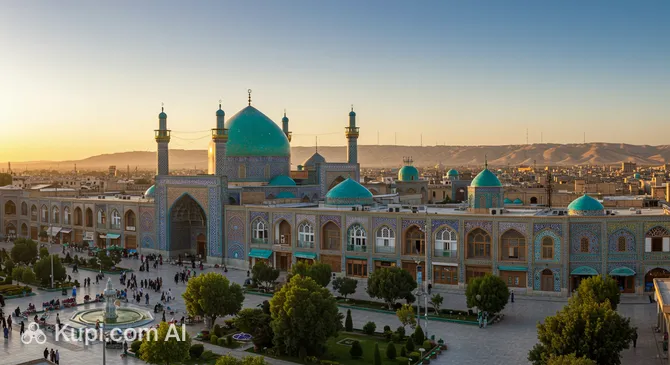
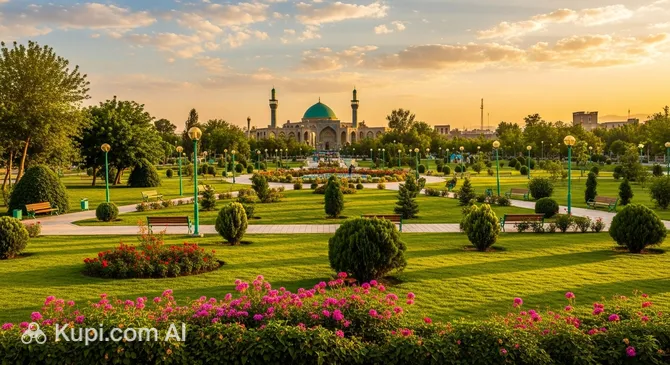
Qom is one of the most significant and atmospheric cities in Iran, located approximately 140 kilometers southwest of Tehran. It is a recognized theological center of the country and a major pilgrimage site for Shiites from all over the world. The city is spread across an arid plain, and its appearance is largely defined by majestic religious architecture, with domes and minarets visible from afar.
With a population of about 1.2 million people, Qom is a major administrative and transport hub connecting the capital with the central and southern regions of the country. A spirit of deep tradition prevails here: theological students in traditional robes are often seen on the streets, and the city's life is governed by the rhythms of prayer and religious holidays. The city's rich historical heritage is inextricably linked to its role as a stronghold of Islamic science and culture.
Qom. Illustration.
Source: Kupi.com AI
The main magnet for travelers is the magnificent architectural ensemble of the Fatima Masumeh Shrine, whose golden domes shine in the sunlight. Beyond its spiritual significance, Qom attracts tourists with its ancient bazaars, unique confectionery, and the opportunity to see traditional Iranian society without the polish of the capital. A visit to this city is an invitation to experience the authentic and conservative soul of the country.
Weather Overview
Qom is characterized by an arid continental climate, which results in sharp seasonal temperature fluctuations. Summers here can be very hot: in July and August, the thermometer often rises above +40 °C, and the air remains dry and dusty. At this time, it is better to plan walks for early morning or late evening when the city comes alive after the daytime heat.
Winters in the city are cool but rarely extremely cold, although night frosts are not uncommon. Precipitation falls mainly in the winter months and early spring, but the total amount is small. If you want to learn more about seasonal changes, up-to-date information on the weather in Qom will help you pack your suitcase correctly.
The best time to visit is considered to be spring (March–May) and autumn (October–November). During these periods, the temperature is most comfortable at around +20…+25 °C, which is ideal for long walking tours of the historical center and bazaars. It is worth remembering the strong sun even in the off-season, so sunscreen and a hat will not be out of place.
Average monthly temperature
Average monthly precipitation
Interesting Facts
Qom hides many surprising features that make it unlike other Iranian metropolises. Here are a few facts to help you get to know the city better:
Qom is considered Iran's second most important holy city after Mashhad. Its spiritual status is so high that the city is often called the "Iranian Vatican."
It is home to one of the world's largest Shiite spiritual academies (Hawza). Tens of thousands of students from over 80 countries study in the local madrasas.
Qom's city bazaar is an architectural monument and features some of the most impressive brick domes in Iran, built without the use of modern support structures.
In the vicinity of the city lies the unique Namak Lake (Salt Lake). During dry periods, it turns into an endless white field of salt, creating alien landscapes popular with photographers.
Qom is the birthplace of the famous "Sohan" sweets. This buttery saffron and pistachio brittle is produced here according to ancient recipes, and its aroma fills the streets of the central districts.
How to Get There
Thanks to its location at the intersection of Iran's key transport arteries, getting to Qom is easy. The city is situated on the main highway connecting Tehran with the southern provinces, ensuring excellent road accessibility. You can always find more details on how to reach the city in local guides, but the main options remain buses, trains, and taxis.
The city does not have its own airport, so most international travelers arrive via Imam Khomeini International Airport (IKA) in Tehran. From the airport to the center of Qom, you can take a taxi or book a transfer; the journey takes about 1.5–2 hours depending on traffic.
Rail travel is another comfortable way to get around. Qom Railway Station receives regular trains from Tehran, Isfahan, and other major cities. A trip on a high-speed train from the capital will get you to Qom in less than two hours, and the station is conveniently located relative to the city's central districts.
Station
Passenger traffic
Distance
Qom Railway Station
7
1 km
Kashan railway station
3
91 km
Tepe Sefid Railway Station
5
115 km
Tehran Railway Station
12
122 km
Hamadan Railway Station
2
208 km
Isfahan Railway Station
6
244 km
Main Attractions
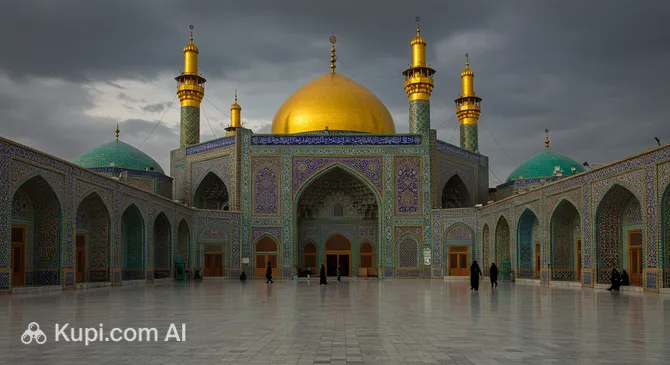
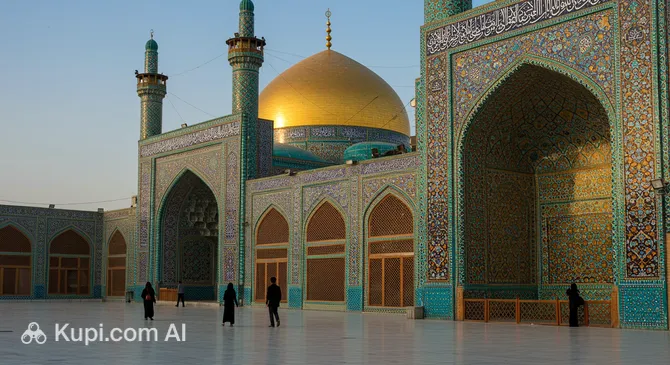
The main sanctuary and architectural landmark of the city is the Fatima Masumeh Shrine. This colossal religious complex captivates the imagination with its gilded domes, graceful minarets, and mirror mosaics in the interior. The shrine is a center of attraction for millions of pilgrims, and special guides are available for tourists to help understand the history and etiquette of this sacred place.
Fatima Masumeh Shrine. Illustration.
Source: Kupi.com AI
Traveller photos:
In the outskirts lies another significant site — the Jamkaran Mosque. It is famous for its vast plaza and majestic prayer hall. In the evenings, when the illumination is turned on, the mosque looks particularly solemn. It is believed that this place possesses special spiritual power, so the flow of believers never ceases, day or night.
Jamkaran Mosque. Illustration.
Source: Kupi.com AI
Traveller photos:
For those who want to take a break from the city bustle, Alavi Public Park is an excellent choice. This is one of the city's most well-maintained green areas, where locals love to spend time with their families. It is also worth visiting the Old Bazaar of Qom to see traditional caravanserais and domed rows that have preserved the atmosphere of a medieval trade route.
Local Cuisine
A gastronomic journey to Qom is impossible without tasting its famous sweets. The main symbol of the city is Sohan — a unique flat brittle made from wheat germ, butter, sugar, and saffron, generously decorated with pistachios. The aroma of saffron and cardamom wafts from numerous confectionery shops located around the shrine.
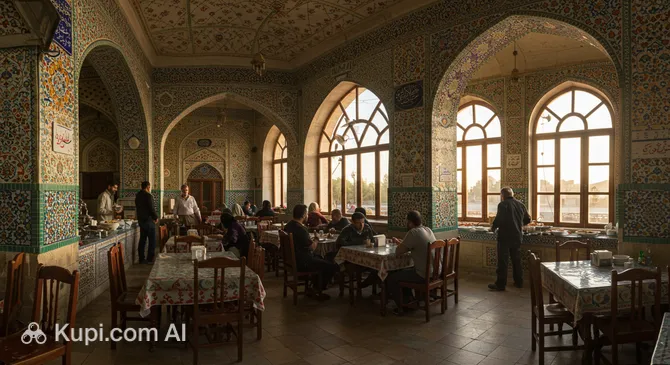
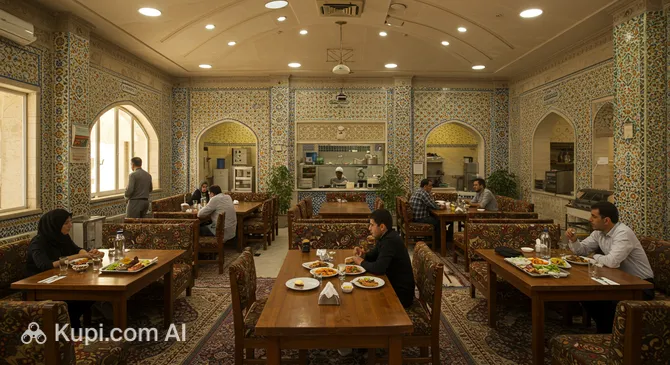
In local restaurants, you should definitely try classic Iranian dishes. Particularly popular are various types of kebabs and Ash-e Reshteh — a thick soup with noodles, herbs, and legumes, which warms you up perfectly on cool evenings. The food culture here is traditional: locals prefer dining in family restaurants with cozy traditional daybeds (takhts) or in modern establishments.
Mehr-o-Mah Tourist Complex. Illustration.
Source: Kupi.com AI
Traveller photos:
If you are on the road, be sure to stop by the Mehr-o-Mah Tourist Complex. This is one of the most popular places for a snack, featuring both traditional dishes and modern fast food. The Maral Setareh Recreation Area, located on the approach to the city, also offers quality cuisine and a comfortable rest.
Travel Tips
Visiting one of Iran's most conservative cities requires some preparation and respect for local traditions. These tips will help you feel comfortable and avoid misunderstandings during your trip to Qom.
Observe the dress code: For women, wearing a loose coat (manteau) that covers the hips and a headscarf is mandatory. To enter the main shrines, women will need a chador (usually available for free rental at the entrance), and men should avoid shorts and sleeveless shirts.
Respect etiquette at holy sites: Behave modestly and do not speak loudly. Photography inside mausoleums is often prohibited or restricted, so always ask permission from the staff.
Use guide services: At the entrance to the Fatima Masumeh Shrine, free English-speaking guides are often offered to foreign tourists to help them navigate correctly and share interesting facts.
Carry cash: International bank cards (Visa, Mastercard) do not work in Iran. Exchange currency at official exchange offices (sarafi) and keep an adequate supply of local Rials with you.
Transport apps: Install a local taxi-calling app. This will save you from the need to haggle or explain your route with gestures.
Plan your visiting time: On Fridays, many shops and stalls in the bazaar may be closed, and during religious mourning periods or holidays, the city becomes extremely crowded.
Try the local specialty: Be sure to buy fresh Sohan. It is best to get it from shops where it is prepared right in front of you — it is most delicious when it is still warm.
Following these simple rules will allow you to fully enjoy the city's unique atmosphere and experience the warm hospitality of the local residents.
Entertainment & Nightlife
Entertainment in Qom is predominantly quiet and family-oriented, dictated by the city's strict traditions. You won't find nightclubs or bars in the usual Western sense here; however, evening life thrives in a different format. After sunset, the main walking streets and squares around the shrines fill with people: numerous cafes, pastry shops, and tea houses open, where pilgrims and locals discuss news over a cup of tea.
For cultural leisure, the city has cinemas and cultural halls hosting lectures, theatrical performances on religious and historical themes, and conferences. A popular spot for evening relaxation is Alavi Public Park, where you can enjoy the cool air and stroll along well-kept alleys.
Mehr-o-Mah Tourist Complex. Illustration.
Source: Kupi.com AI
Traveller photos:
Many travelers prefer to spend their evenings in modern complexes such as the Mehr-o-Mah Tourist Complex. Located on the highway toward the capital, it offers an excellent selection of restaurants with panoramic views, lounge areas, and shops. This is one of the few places where you can feel a more modern and relaxed atmosphere while remaining within the province.
Parks & Museums
Despite the dry climate, Qom offers several cozy places for walks. One of the most popular is Alavi Public Park. This is a spacious green area with fountains, playgrounds, and picnic zones, which becomes especially lively after sunset when the heat subsides.
Alavi Public Park. Illustration.
Source: Kupi.com AI
Traveller photos:
The city's museum life is closely intertwined with its spiritual status. Be sure to visit the Astan-e Qods Museum within the shrine complex, which houses priceless Quranic manuscripts, ancient carpets, and gifts brought to the mausoleum over the centuries. This place allows for a deeper understanding of the art of Islamic calligraphy and the history of religious thought in the region.
For lovers of open-air architecture, the Gonbad-e Sabz (Green Domes) complex — three 14th-century mausoleums with unique brickwork — will be of interest. Also noteworthy is the Old Bazaar, which is a living museum of crafts and daily life in itself. Although Qom may have fewer classical galleries than the capital, its historical madrasas and mosques fully compensate with their cultural richness.
Getting Around
The transport system of Qom consists of an extensive network of buses and taxis, which are the main way of getting around for residents and tourists. City buses connect remote residential areas with the central square and the shrine; however, for travelers, this type of transport may seem difficult due to the lack of signs in English.
The most convenient and accessible way to get around remains the taxi. Both official yellow cars and private drivers operate in the city. Iranian ride-hailing apps (such as Snapp) are popular, allowing you to see the trip's cost and destination in advance, which is very helpful given the language barrier. The cost of travel within the city is very reasonable.
It is worth considering that the central areas around the shrine are often congested, and some streets are entirely pedestrian. If you are planning a trip during religious holidays, be prepared for traffic jams and the need to cover part of the way on foot. Bicycle rental is not yet developed in the city, and the main part of the attractions in the center is within walking distance.
Accommodation
The hotel infrastructure in Qom is primarily geared towards accommodating pilgrims, which defines the nature of the lodging. Most hotels are concentrated within walking distance of the Fatima Masumeh Shrine. Here you can find everything from modest guesthouses (mosaferkhaneh) to quite modern 4-star hotels offering comfortable rooms and traditional breakfast.
For those seeking more secluded or modern accommodation, there are options in the newer districts of the city or along major highways. It is worth considering the Mehr-o-Mah Tourist Complex, which offers not only dining services but also convenient rest areas nearby for transit travelers.
Maral Setareh Rest Area. Illustration.
Source: Kupi.com AI
Traveller photos:
It is recommended to book accommodation in Qom in advance if your trip coincides with important religious dates or holidays when the city is crowded with believers. On ordinary days, finding a vacant room is not difficult. Prices for accommodation here are usually lower than in Tehran, making the city attractive for budget travelers.
Nearby Cities
Qom serves as an excellent starting point for exploring Iran's central regions due to its location on the way to the most famous historical cities. Many travelers use the city as a transit point, but the surroundings of Qom also deserve attention.
Just a couple of hours' drive away is majestic Tehran, the country's capital with its endless museums and palaces. If you want to explore small authentic places, head to the city of Saveh, famous for its pomegranate orchards and historical architecture. Another popular destination for a half-day trip is Delijan, near which there are interesting caves.
Don't miss the chance to visit Kashan, located slightly to the south. This city is famous for its magnificent 19th-century merchant houses and the Fin Garden. Exploring nearby cities will allow you to see the versatility of Iranian culture, from the strict religiousness of Qom to the refined aesthetics of desert oases.
Shopping & Souvenirs
Shopping in Qom is primarily a hunt for authentic souvenirs and sweets. The epicenter of trade is the Old Bazaar, where shops selling carpets, spices, and traditional textiles are concentrated under ancient domes. Qom is famous for its finely crafted silk carpets, which are considered some of the best in the world due to their intricate patterns and high quality.
The main gastronomic souvenir is, undoubtedly, Sohan. Shops selling this sweet are located literally at every step in the city center. Here you can not only buy a fresh product in a beautiful tin box but also watch the preparation process through the window. Tourists also often buy prayer beads made of gemstones, religious literature, and perfume oils here.
Mehr-o-Mah Tourist Complex. Illustration.
Source: Kupi.com AI
Traveller photos:
For those who prefer a more modern format, the Mehr-o-Mah Tourist Complex is located on the outskirts of the city. It features clothing, cosmetics, and accessory stores, as well as departments with high-quality local products in gift packaging. Most shops in the bazaar work from morning until late evening with a lunch break, while modern shopping centers are open without breaks.