Support

Rothe House & Garden

About

Imagine a unique architectural ensemble that transports you back to the late Renaissance. Rothe House and Garden is the only surviving complete example of a medieval urban burgage plot in a country like Ireland. This complex, consisting of three separate houses and courtyards, was built at the turn of the 16th and 17th centuries in the heart of Kilkenny.
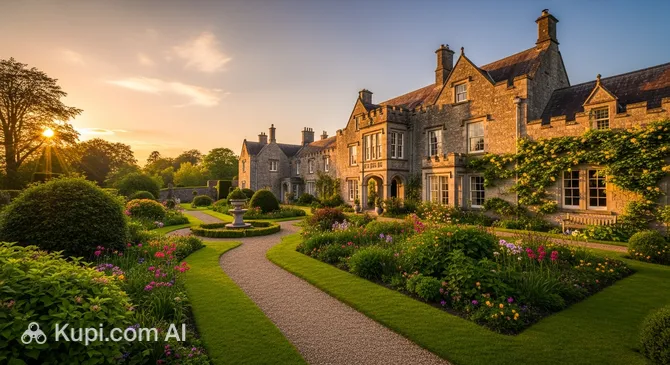
Rothe House & Garden
Rothe House & Garden. Иллюстрация. Источник: Kupi.com AI

This site is recognized as a National Monument and is a magnificent example of a wealthy merchant's residence. Today, it serves as the headquarters of the Kilkenny Archaeological Society, which carefully preserves an extensive collection of artifacts, antique maps, and rare books detailing the region's rich past.

Visitors are drawn not only by the architecture but also by the atmosphere of authentic history. The three houses, built between 1594 and 1610, are interconnected and complemented by a stunning restored garden. This space allows guests to see how influential families of the time lived and conducted business, making the complex one of the city's most significant landmarks.

Contacts

For those planning a visit, below is the up-to-date contact information and the precise location of this historic site in the city center.

How to contactContact
Address16 Parliament St, Gardens, Kilkenny, R95 P89C, Ирландия
Phone+353 56 772 2893
Websiterothehouse.com

What to Do

Your journey into history begins with a walk through the three houses, each representing a different era from the 16th to the 19th century. Exploring the interiors, you can admire details of the English Renaissance style and learn about the merchant way of life. Exhibitions are regularly updated, showcasing rare items from the Archaeological Society's collection.

Pay special attention to the restored 17th-century garden, which reopened to the public in 2008. It is a true oasis of tranquility, featuring fruit trees, vegetables, and herbs typical of the period. Be sure to find the ancient well dug by Cistercian monks—an impressive feat of engineering with a rainwater harvesting system.

For those interested in their roots, the complex houses a family history center. Here, you can commission professional genealogical research to learn more about the families of County Kilkenny. Additionally, there is a tourist information center on-site to help plan the rest of your journey.

Getting There

Located at 16 Parliament Street, the attraction is in the heart of the city's activity. It is very easy to reach on foot from almost anywhere in central Kilkenny, making it a perfect stop during a stroll through the historic quarters.

The city is conveniently connected to other parts of the country. From the train or bus station, the complex can be reached in 10–15 minutes at a relaxed pace or a quick taxi ride. For those traveling by car, several city parking lots are available within walking distance in the city center.

Ближайший город: Kilkenny

History & Facts

The history of this site is inextricably linked with John Rothe FitzPiers, an influential cloth and silk merchant who, along with his wife Rose Archer, built this house as a family residence and business hub. At the time, the Rothe family was part of a tight-knit oligarchy that controlled the city's economic life for several generations.

The complex's walls have witnessed turbulent historical periods. In the mid-17th century, the house was confiscated due to the family's involvement in the Confederation of Kilkenny. It is believed that important meetings of the Church Assembly may have taken place within these walls. Later, the property was returned to the owners and lost again, reflecting the complex fate of the region following the Battle of the Boyne.

Interestingly, for over a hundred years, one of the houses served as a meeting place for the Gaelic League. Thomas MacDonagh, a well-known national figure, taught Irish history here. In 1962, the building was acquired by the Kilkenny Archaeological Society, and after extensive restoration, it opened its doors to the public in 1966.

One of the unique features of the monument is that part of its territory includes a surviving section of the medieval city wall. This makes the complex a rare example of a fully intact medieval urban burgage plot that has preserved its structure through four centuries.

Time Needed

To leisurely explore all three houses, study the artifact displays, and enjoy the peace of the garden, it is recommended to set aside 1.5 to 2 hours for your visit. This is the optimal time to soak in the atmosphere of the old city and examine the architectural details closely.

If you plan to use the genealogical center's services or study the library archives in detail, the visit could take half a day. For most tourists, a standard two-hour itinerary is quite enough for a full introduction to this unique location.

Working Hours

Currently, the complex is usually open to guests from Tuesday to Saturday, 10:00 AM to 6:00 PM. Please note that Mondays and Sundays are typically closing days when the museum is closed to visitors.

The schedule may change depending on the season or special events. To ensure a smooth trip, it is recommended to check the current opening hours on the official website or by phone shortly before your visit.

DayWorking hours
понедельникЗакрыто
вторник10:00–18:00
среда10:00–18:00
четверг10:00–18:00
пятница10:00–18:00
суббота10:00–18:00
воскресеньеЗакрыто

Nearby

Its location in the center of the historic quarter makes visiting this site an excellent starting point for further exploration of the city. A walk through the surrounding streets will allow you to see even more ancient monuments, each complementing the overall picture of the region's ancient grandeur.

NameDistance
Smithwick's Experience0 km
Cleere's Bar & Theatre0.1 km
Market Cross Shopping Centre0.2 km
The Black Abbey0.2 km
St. Mary's Medieval Mile Museum0.3 km
Butcher Restaurant0.3 km
St Canice's Cathedral0.3 km

Reached the end of the page?

That means the route is fully explored