Support

Fukaya

About

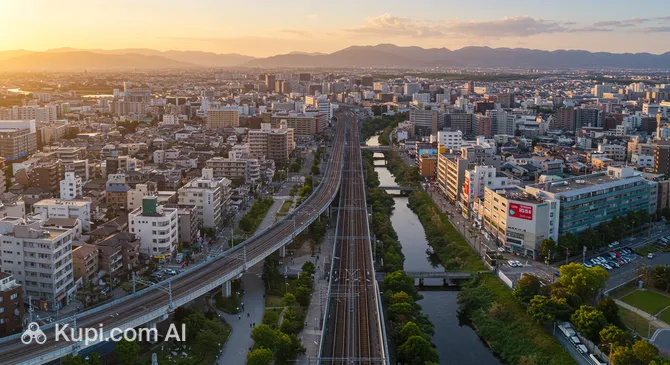
Fukaya is a cozy city located in Saitama Prefecture on Honshu Island, just an hour's train ride from Tokyo. It is a place where Japan reveals a newer, calmer side to travelers, far from the hustle and bustle of megacities. Here, fertile plains meet picturesque rural landscapes, and modern conveniences harmoniously coexist with a traditional way of life.

Fukaya. Illustration.
Source: Kupi.com AI

The city covers an area of about 138 km² and has a population of over 140,000 people. Fukaya is not just a "bedroom community" for the capital, but an independent and unique center in its own right. Local residents take pride in their well-kept streets, parks, and developed infrastructure, which makes staying here comfortable for both living and tourism.

The history of Fukaya, which has roots in the Edo period, deserves special attention. In the past, the city flourished as a center for trade and crafts, and this heritage is still felt today. Today, it is an important transport and economic hub in the Kanto region, while retaining the charm of an old Japanese town.

Tourists are drawn here by the opportunity to get acquainted with the authentic rhythm of life in the Japanese countryside. You can stroll through city gardens admiring seasonal flowers, appreciate traditional architecture, or visit local farmers' markets with fresh products. Fukaya is an excellent choice for those seeking peace, family vacations, and a deep immersion into the country's culture without the tourist crowds.

Weather Overview

The climate in this region is characterized by clearly defined seasons, allowing you to enjoy diverse landscapes throughout the year. To choose the best time for a trip, it's worth finding out in advance what weather in Fukaya awaits you. In general, the city is characterized by hot, humid summers and fairly cool but dry winters.

Summer months, especially July and August, are the warmest: the average temperature reaches 26.9°C, and daytime highs often exceed 30°C. However, this is also the rainy season: for example, in July, precipitation can be observed up to 22 days a month, so a light raincoat or umbrella will be indispensable on your trip.

Winter here, on the contrary, is characterized by a small amount of precipitation. In January, the coldest month, the average temperature is about 4.0°C, and at night the thermometer can drop to -0.2°C. Despite the chill, winter days are often clear, with minimal rain (only about 6 days with precipitation in December and January).

Spring and autumn are considered the most comfortable for walking. In May, the air warms up to a pleasant 18.1°C, and October pleases with mild weather and an average temperature of about 16.8°C. Expect warm summers with periodic rains and cold, dry winters, making the shoulder seasons an ideal time for tourism.

Average monthly temperature

Average monthly precipitation

Interesting Facts

Beyond the main attractions, Fukaya hides many interesting details that reveal themselves to the inquisitive traveler. Here are a few facts that will help you better understand the character and uniqueness of this place:

  • Capital of Green Onions. Fukaya bears the unofficial title of the "Onion Kingdom." The local variety, Fukaya-negi, is famous for its incredible sweetness and tenderness; it is often served as a delicacy. The city mascot, Fukka-chan, became the symbol of this agricultural pride. This charming character with horns in the shape of green onion stalks enjoys huge popularity far beyond the city limits.

  • Birthplace of the "Father of Japanese Capitalism." The city is inextricably linked with the name of Eiichi Shibusawa, who was born right here. This outstanding figure played a key role in the modernization of the economy that Japan experienced during the Meiji era. At his initiative, a brick factory was built in Fukaya, the products of which were used to construct iconic buildings, including the famous Tokyo Station.

  • The Legend of the Depth. There is a beautiful theory about the origin of the city's name, tracing back to the word "fukai," which translates as "deep." Ancient legends say that in ancient times, there were deep marshes or ponds in this place, shrouded in legends of water spirits who invisibly guard these lands.

  • Living History. You can still feel the atmosphere of the past on the old trading streets of the city. Traditional houses with tiled roofs and wooden facades have been preserved here, where time seems to have slowed down. Local craftsmen continue to create handmade products, maintaining the region's ancient craft traditions.

How to Get There

When planning a trip to this cozy corner of Saitama Prefecture, it is important to think through the logistics in advance. The city has excellent transport accessibility, making it a convenient destination for both short visits and long stays. You can find all the details and alternative routes on the page how to get to Fukaya.

Since Fukaya itself does not have its own airport, most tourists arrive via the major air hubs of the capital located in neighboring Tokyo. The closest and most convenient hub is Haneda (IATA: HND), located in Tokyo at a distance of about 85 km. This is one of the busiest airports in the world, accepting many international flights. A trip from here by taxi or car will take approximately 2 hours and 30 minutes, although many travelers prefer high-speed trains, which allow for a faster journey.

Another popular option is Narita International Airport (IATA: NRT), which is also located in Tokyo (Chiba Prefecture), about 110 km from Fukaya. This is the country's main international gateway for long-haul flights. The journey by car from Narita to the city will take about 3 hours. Both airports offer a wide range of services and excellent connections to the railway network leading toward Saitama.

For clarity, here is summary information on the main airports through which you can reach the region:

AirportPassenger trafficDistance
Haneda Airport85.7 mln85 km
Ibaraki Airport776 063102 km
Narita International Airport40.8 mln111 km
Matsumoto Airport112 618122 km
Fukushima Airport250 000154 km

Rail travel is perhaps the most popular and efficient way to get to Fukaya. The city is served by the JR Takasaki Line, which directly connects it with major Tokyo stations such as Ueno and Shinjuku (via the Shonan-Shinjuku Line). The city's main station, Fukaya, is an attraction in itself: its red brick building resembles the famous Tokyo Station. A train journey from the center of the capital usually takes between 60 to 90 minutes, providing a comfortable and scenic ride without traffic jams.

Main Attractions

Fukaya is a city with a rich historical heritage and wonderful places for recreation that will appeal to a wide variety of travelers. From architectural masterpieces reminiscent of the connection with the capital to spacious amusement parks—there is plenty to see. Here is a list of the main attractions worth including in your itinerary.

Fukaya Station
The first thing a traveler sees when arriving in the city by train is the magnificent station building, which is often called "mini-Tokyo." The station was reconstructed in 1996 and faced with tiles imitating red brick. This design is no coincidence: it was in Fukaya that the bricks used to build the famous Tokyo Station were produced. The building is especially beautiful in the evening when the lights are turned on, making it the perfect backdrop for memorable photos.

Eiichi Shibusawa Memorial Museum
For those interested in history and economics, a visit to this museum will be a true discovery. It is dedicated to the life and work of Eiichi Shibusawa, a native of the city who is called the "father of Japanese capitalism." The exhibition features personal belongings, documents, and photographs telling about his contribution to the modernization of the country. One of the unique features of the museum is a lecture delivered by a realistic android created in the image of Shibusawa himself. Near the museum is his ancestral home, which has preserved the atmosphere of 19th-century life.

Aqua Paradise Patio and Fukaya Green Park
This place is a real oasis for outdoor enthusiasts and families with children. "Aqua Paradise Patio" is one of the largest indoor water parks in the Kanto region, designed in the style of Southern European resorts. It features a wave pool, a lazy river, water slides, and saunas available year-round. The complex is located on the grounds of Fukaya Green Park, which is bathed in blooming tulips in spring and lilies in summer, creating picturesque landscapes for walks.

Hanazono Forest
Those with a sweet tooth and lovers of European aesthetics should definitely stop by this sweets-themed park. The complex is styled after a European manor with a well-kept rose garden. Inside, visitors will find a huge selection of desserts: from freshly baked bread and cakes to the famous baumkuchen, which is prepared right before the guests' eyes. It is the perfect place to buy delicious souvenirs and enjoy a cup of tea in an exquisite atmosphere.

Local Cuisine

The cuisine of this city is a true paradise for gourmets who appreciate natural flavors and seasonal products. The gastronomic symbol of the region is rightfully considered to be Fukaya-negi—a special variety of green onion (leek) that is distinguished by its incredible sweetness and soft texture. Local chefs work wonders with it, adding it almost everywhere: from soups to appetizers. The main dish that every traveler must try is Fukaya-negi udon. Thick wheat noodles are served in a fragrant broth with a large amount of sautéed sweet onions, which gives the soup a rich and unique taste.

For street food and dessert lovers, a stroll through Fukaya will be a pleasant adventure. Small shops often sell traditional Japanese sweets: mochi rice cakes filled with red bean paste or fragrant, charcoal-grilled dango. These treats pair perfectly with a cup of hot green tea, which is the most popular non-alcoholic drink. As for alcohol, local homemade pickles and marinated vegetables, which surrounding farms are famous for, serve as an excellent snack for traditional Japanese sake.

The food culture here is closely linked to seasonality and supporting local producers. Residents and tourists enjoy visiting farmers' markets where you can buy the freshest strawberries, vegetables, and signature sauces. The best way to immerse yourself in the city's gastronomic life is to visit one of the annual food festivals. There, you can not only taste the best local dishes but also participate in masterclasses on making sushi or udon, experiencing authentic hospitality and the unhurried rhythm of life in the Japanese countryside.

Travel Tips

Preparing for a trip to Fukaya will help you avoid minor inconveniences and focus on the beauty of the Japanese countryside. We have gathered a list of practical recommendations to help you feel confident and comfortable in this cozy city in Saitama Prefecture.

  1. Clothing for the season. The climate here has its own peculiarities: summers are hot and humid, so choose loose clothing made of natural fabrics and be sure to wear a hat. In winter, a dry, piercing wind called "karakaze" often blows in the region, so even on a sunny day, you will need a windproof jacket, scarf, and gloves. Comfortable shoes are a must, as many attractions are best explored on foot.

  2. Transport nuances. The city center around the station is compact and pleasant to explore on foot or by rented bicycle. For trips to remote parks or flower centers, use the "Kururin" public buses—they run along the main routes. It is better to call a taxi in advance through your hotel or look for them at station stands, as it can be difficult to "catch" a car on the street in residential areas.

  3. Money and payment. The national currency is the yen (JPY). Although Japan is rapidly moving toward cashless payments, cash is still necessary in Fukaya, especially in small shops, temples, or when buying bus tickets. You can withdraw money from international cards at 7-Eleven (Seven Bank) or Japan Post ATMs. Tipping is not expected—impeccable service is considered the norm here.

  4. Health and safety. The city is very safe, and you can walk freely at any time of day. Drugstores offer a wide range of products, but medicines may differ from the names you're used to, so it's better to bring a basic first-aid kit with you. Tap water is safe to drink, but most tourists prefer to buy bottled water from the ubiquitous vending machines.

  5. Communication and language. Unlike Tokyo, the level of English proficiency among local residents may be lower. We strongly recommend installing a translator app on your smartphone with a photo translation function (for menus and signs). Free Wi-Fi is available at the station and in large stores, but for a stable connection, it's better to rent a pocket Wi-Fi or buy a tourist SIM card upon arrival at the airport.

  6. Local etiquette. Maintain silence on public transport and do not talk on the phone on trains and buses. Greeting people with a slight bow is customary. If you visit traditional restaurants with tatami mats or private homes, be sure to remove your shoes at the entrance—your socks should be clean and intact.

  7. What to avoid. Do not eat or drink on the go—this is considered bad manners. If you bought a snack from a stall or a drink from a machine, stop nearby, finish it, throw the trash into the appropriate container (waste sorting here is very strict), and only then continue your way.

  8. Tip for foodies. Do not miss the chance to visit the Michi-no-Eki Hanazono roadside station. This is not just a rest stop for drivers, but a true center of local culture. It is the best place to buy fresh "Fukaya-negi" onions and sweets featuring the city mascot, Fukka-chan. It is best to arrive in the first half of the day while there is the widest selection of farm products on the shelves.

Fukaya is a place where sincere hospitality is more important than formalities, but knowing the basic rules will help you show respect for the local culture. By following these tips, you can easily blend into the city's unhurried rhythm and get the most out of your Japanese journey.

Entertainment & Nightlife

Entertainment and nightlife in Fukaya have their own unique, calm character, significantly different from the bustling neon districts of Tokyo. Here you won't find huge dance clubs or noisy raves until morning. Evening leisure in this city is, above all, an immersion into the authentic Japanese culture of socializing, delicious food, and local drinks in a cozy atmosphere.

The center of attraction in the evening is the area around Fukaya Station, especially its North Exit. Most of the establishments where locals relax after a working day are concentrated here. The streets come alive at sunset when the "akachochin" (red paper lanterns) are lit, inviting you to stop in. This is the best place to start getting to know the city's nightlife by simply hopping from one bar to another.

The foundation of evening relaxation here is the izakaya (traditional Japanese pubs). In Fukaya, they range from chain establishments with tablet menus to tiny family bars with only 5-6 seats. The atmosphere in them is democratic and relaxed, with no dress code: you'll meet both office workers in suits and young people in jeans. It's customary here to order many small dishes for the table—yakitori (chicken skewers), sashimi, edamame—and accompany them with beer or local sake.

For those who want to dive deeper into the local flavor, it's worth paying attention to the so-called snack bars (sunakku). These are small establishments, often run by a hostess called a "Mama-san." Here you pay for the time spent and drinks, and the main entertainment is conversation and karaoke. Foreigners are usually welcome in such places, but knowing a few phrases in Japanese or having an online translator will be a big plus for making contact.

Singing enthusiasts should definitely visit karaoke boxes, which are popular throughout Japan. There are several large chain establishments in Fukaya that operate until late at night or even 24/7. This is a great option for a group: you rent a private soundproof room, order drinks, and sing your favorite songs without feeling self-conscious in front of strangers. Prices here are quite reasonable, especially on weekdays.

Regarding daytime entertainment, the city offers a more measured pace. The Ario Fukaya shopping complex serves as a cultural hub. It's not just a place for shopping, but the city's main entertainment venue with a modern cinema, arcade machines, and a food court. During the day, you can also visit local museums or stroll through the parks mentioned earlier, enjoying nature before an evening out in the city.

Practical Tips and Safety:

  • Opening hours: Most restaurants and izakayas open around 5:00 PM – 6:00 PM. The kitchen often closes by 10:00 PM – 11:00 PM, although bars may stay open until midnight or 1:00 AM.
  • Transport: Be careful with the train schedules. The last trains toward Tokyo or neighboring large cities leave around 11:00 PM – 12:00 AM. If you miss them, you'll have to take a taxi. They are easy to find at Fukaya Station, but in remote areas, it's better to call a car by phone or through an app.
  • Safety: Fukaya is an exceptionally safe city. Night walks here pose no threat; however, streets outside the station area can be quite dark and deserted, so stick to lit routes.
  • Prices: The average check in an izakaya will be from 2,500 to 4,000 yen per person, which is noticeably cheaper than in the capital. Most places accept cards, but in small bars, cash is still preferred.

Parks & Museums

Fukaya is a city where the history of Japanese industrialization is wonderfully intertwined with the beauty of nature. For tourists, this means the opportunity to walk through picturesque flower fields and touch the legacy of the Meiji era by visiting unique museums and historical sites in one day.

Fukaya Green Park
This is perhaps the city's most famous green zone, attracting photography and nature lovers from across the region. The park is famous for its large-scale flower festivals. In spring, tens of thousands of tulips bloom here, creating a vibrant carpet reminiscent of Dutch landscapes, and in summer, lilies—the official flower of the city—take over the relay. Spacious lawns and walking paths make this place ideal for picnics and quiet relaxation in the fresh air.

Fukaya Castle Ruins Park
Located near the city hall, this park is laid out on the site of an ancient castle that belonged to the Uesugi clan. Although only fragments of stone walls and moats remain from the fortress itself, the park has become a favorite resting place for citizens. It is a true oasis of peace with well-kept ponds, bridges, and relaxation areas. It is especially beautiful here in spring when the cherry blossoms bloom, turning the historical territory into a pink cloud. This is a great alternative to noisy tourist spots for those seeking solitude within the city.

The cultural program in Fukaya is inextricably linked with the name of Eiichi Shibusawa and the industrial history that Japan experienced during its period of modernization. The city's museums are small but informative, allowing for a deeper understanding of the Japanese mentality.

Eiichi Shibusawa Memorial Museum
This museum is a must-visit for those who want to learn the history of the formation of the modern Japanese economy. The exhibition tells in detail about the life of the local native who became an influential industrialist and banker. Near the museum is his ancestral home, "Nakanchi"—a beautifully preserved old building where you can see traditional interiors and feel the atmosphere of a wealthy 19th-century family's daily life.

Hoffman Kiln and Former Brick Factory
Industrial architecture enthusiasts will be interested to look at the remains of the famous brick production. It was here that bricks were fired for the construction of Tokyo Station and other iconic Meiji-era buildings. Although access inside the historical structures may be limited for preservation, the exterior view and information stands give an idea of the scale of production that once made the city famous.

Insider Tip:
For authentic experiences, head to the Nanatsu Ume district. This is the territory of a former sake brewery founded 300 years ago. Today, the historical warehouses have been transformed into a cultural space with retro shops, cafes, and the one-of-a-kind "Fukaya Cinema," located right inside an old workshop. This place is steeped in nostalgia and the spirit of old Japan, hidden from the eyes of the mass tourist.

Getting Around

The public transport system in Fukaya, as in many regional cities in Japan, is characterized by punctuality and reliability, although it is not as extensive as in megacities. The main transport artery is the railway, specifically the JR Takasaki Line. Trains run frequently and connect the city with major hubs such as Tokyo and Omiya. Central Fukaya Station is the main hub from which most tourist routes begin.

To move around within the city, it is most convenient to use the bus network. Both regular route buses (for example, the Kokusai Juo company) and special municipal transport known as "Kururin" operate here. These small public buses are easily recognized by their bright design featuring the city mascot, Fukka-chan. They run on several circular routes, connecting the station with hospitals, shopping centers, and parks. This is the most budget-friendly way to reach the main locations, although service intervals can range from 30 to 60 minutes.

The fare payment system here is standardized but has its own nuances. At the railway station and on private company buses (Kokusai Juo), popular transport IC cards are widely accepted: Suica, PASMO, and other compatible cards (ICOCA, Kitaca). Simply tap the card against the validator when entering and exiting. However, on "Kururin" municipal buses and in some taxis, payment may only be accepted in cash. The fare on a city bus is usually fixed or depends on the zone, averaging from 100 to 200 yen per trip.

If you plan to visit remote attractions such as the Aqua Paradise Patio water park or Hanazono Forest Park, public transport may not be the most convenient option due to infrequent schedules. In such cases, a taxi can be helpful. Taxi stands are located at the north and south exits of Fukaya Station. Drivers are polite and use a meter but rarely speak English, so we recommend preparing the destination name in Japanese beforehand or showing the point on a smartphone map.

Given the flat terrain, a bicycle is an excellent alternative to transport. Rental points are available in the city, often located near the station or at tourist information centers. Renting a bicycle will allow you to be independent of bus schedules and enjoy the city views at your own pace. This is especially relevant in spring and autumn when the weather is conducive to long rides.

It is important for tourists to remember the operating hours of transport. Trains run from approximately 5 AM until midnight, but bus service ends much earlier—the last "Kururin" trips often depart around 6:00 PM – 7:00 PM. Be sure to check the return schedule in advance, especially on weekends and holidays when the number of routes is reduced. Train tickets are purchased at station machines (English menu available), and for buses, it's best to always have 100 and 500 yen coins on hand.

Accommodation

The choice of accommodation in Fukaya reflects the calm and business-like rhythm of this city. Unlike overcrowded tourist centers, functionality and affordability prevail here. The foundation of the hotel stock consists of modern business hotels offering excellent value for money, as well as small family-run guest houses where you can feel at home.

The most convenient area for tourists to stay is the vicinity of Fukaya Station. By staying here, you will be within walking distance of the city's main transport artery, making it easy to plan trips to Tokyo or around Saitama Prefecture. In addition, most restaurants, izakayas, and 24-hour convenience stores are concentrated in the station area, which solves the issue of dining and evening leisure.

A typical room in a local hotel is a classic Japanese "business standard": compact but impeccably clean, with all necessary amenities including pajamas, slippers, and a set of toiletries. Some hotels have their own large baths (sento), where you can relax after long walks. For those looking for a more authentic experience, traditional ryokans can be found on the outskirts of the city, although there are not as many as in resort areas.

The price range in Fukaya is significantly lower than in the capital, making the city an attractive option for budget travelers. The cost of a night in a mid-range hotel usually varies within the budget and mid-tier segments. Booking is best done through popular international online platforms or Japanese aggregators.

Booking Tip: Although it is usually not difficult to find a vacant room, the situation changes during peak seasons. We strongly recommend booking accommodation in advance (1–2 months) if your trip falls during the cherry blossom season (early April) or the tulip season, when guests flock to the city for festivals at Fukaya Green Park.

Nearby Cities

For those who want to explore the surrounding area, Fukaya serves as an excellent starting point for day trips to several interesting nearby locations:

Just 11 km away is Kumagaya. This city is widely known for the Kumagaya Sakura Tsutsumi, which is among the top 100 places for cherry blossom viewing in the country. In spring, the riverbank turns into a picturesque pink corridor. In addition, Kumagaya holds the proud title of "Rugby Town" and is famous for having one of the hottest summer climates in Japan, which locals compensate for with a famous shaved ice dessert.

A little further, in the neighboring Tochigi Prefecture, lies the city of Ashikaga. The main jewel of this place is the Ashikaga Flower Park, where century-old wisterias grow, forming fantastic blooming tunnels. Also located here is Ashikaga Gakko—Japan's oldest higher education institution, which has preserved the atmosphere of medieval scholarship.

Lovers of history and crafts will find Kiryu interesting. This city has long been a center of the textile industry and is often called the "Kiryu of the East" (analogous to the Nishijin district in Kyoto). Here you can stroll through historical quarters and see unique old factory buildings with sawtooth roofs where famous silks are still woven.

CityPopulationDistance
Honjo76 75710 km
Kumagaya193 19011 km
Yorii32 17212 km
Oizumi41 68112 km
Kamisato29 98714 km

These nearby destinations provide a glimpse into the diverse culture and landscapes of the region.

Shopping & Souvenirs

Shopping in Fukaya is characterized by a calm and measured rhythm typical of the Japanese countryside. Here you won't find endless rows of luxury boutiques like in Tokyo, but the city offers something else—authentic goods, the freshest local products, and unique sweets. It's an ideal place for those who want to buy quality items for everyday life or find gastronomic souvenirs that are impossible to encounter in other regions of the country.

The main commercial life has historically been concentrated in the vicinity of Fukaya Railway Station. A stroll through the streets radiating from the station's north exit allows you to immerse yourself in the atmosphere of traditional Japanese "shotengai" shopping districts. Here you'll find small family-owned shops, kimono stores, tea houses, and bakeries, many of which have been operating for generations. This is a great place for an unhurried walk and for finding handmade goods or ceramics.

For those who prefer modern comfort and a wide range in one place, the main center of attraction is Ario Fukaya. This is a large shopping and entertainment complex featuring popular Japanese clothing brands, home goods stores, bookstores, and a large supermarket. You can find everything you need here: from cosmetics and electronics to fashion accessories, and the spacious corridors and rest areas make shopping pleasant even in hot or rainy weather.

A true gem of local shopping is the Michi-no-Eki Hanazono roadside station. This is not just a market, but a huge complex where farmers from all over the area gather. Here they sell the freshest vegetables, fruits, and flowers at very attractive prices. Located nearby is a famous sweets complex where you can buy fresh pastries and desserts straight from the bakery. Visiting these places is the best way to see the richness of the region's agricultural culture and taste local delicacies.

The choice of gifts from Fukaya is inextricably linked with the city's symbols. First of all, pay attention to products made from the famous Fukaya-negi onions: these could be onion crackers, special sauces, dressings, or even marinated snacks. No less popular are goods featuring the city mascot, Fukka-chan—a cute character with onion horns; plush toys, keychains, and stationery with her are sold everywhere. Local sake or a box of baumkuchen also make excellent gifts.

Large shopping centers like Ario are usually open from 10:00 AM to 9:00 PM daily. Small private stores and souvenir shops in the city center often close earlier—around 6:00 PM or 7:00 PM—and may have a day off in the middle of the week (often Wednesday). Regarding payment, credit cards and transit cards (Suica, Pasmo) are accepted without problems in supermarkets and malls. However, in small shops, markets, or old stores, cash still remains the primary, and sometimes only, means of payment.

The tax refund system (Tax Free) is available in large chain stores, drugstores, and shopping centers catering to tourists. If you see a "Japan. Tax-free Shop" sticker at the entrance or checkout, you can count on a consumption tax deduction when purchasing goods for a certain amount (usually over 5,000 yen) on a single receipt. To complete the procedure, you will definitely need your original passport with an entry stamp.
Reached the end of the page?

That means the route is fully explored