Support

Nodafuji Wisteria

About

Nodafuji Wisteria is a true wonder of nature, hidden in a picturesque corner of Izumisano, Japan. Appearing as a magnificent tunnel of blooming wisteria, this attraction annually draws travelers with its ethereal beauty and delicate fragrance.
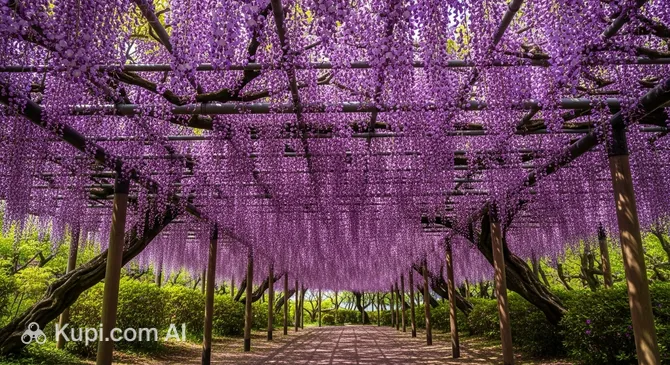
Nodafuji Wisteria
Nodafuji Wisteria. Иллюстрация. Источник: Kupi.com AI

The centerpiece of this location is an ancient vine forming a stunning purple canopy over 100 meters long. During the blooming period, thousands of clusters hang down, creating a "purple rain" effect that makes the location one of the most photogenic in Osaka Prefecture. The peaceful atmosphere of the Sennan countryside only enhances the impression of this natural work of art.

For the Japanese, wisteria, or "nodafuji," symbolizes beauty and the fleeting nature of life. This site is more than just a botanical object; it is part of a deep tradition of nature contemplation. Visitors often note the well-kept nature of the garden and the opportunity to experience classic Japanese aesthetics far from the noise of the megalopolis.

Contacts

To help you plan your visit to this floral landmark, it is useful to have current contact information at hand. Below are the primary contact details and the location address.

How to contactContact
Address1338 Shindachimakino, Sennan, Osaka 590-0522, Япония
Phone+81 90-4281-8741
Websitekumanokaido-fuji.sakura.ne.jp

What to Do

The main reason to visit is for a leisurely stroll under the thick clusters of wisteria. At the peak of the bloom, which usually occurs in April and May, the air is filled with a gentle fragrance, and the sun's rays filtering through the purple flowers create a magical play of light. Experienced tourists suggest visiting the garden early in the morning to avoid large crowds and capture the best photos in soft lighting.

In addition to admiring the flowers, you can enjoy a small picnic in the shade of the trees, taking in the peace and tranquility. At this time of year, you can often see butterflies and birds attracted by the abundance of nectar, adding a special charm to the place. For those who want to combine relaxation with activity, there are paths nearby for short hikes through the rural parts of Izumisano.

For families with children, a visit can be an excellent educational opportunity to learn about the botanical features of wisteria and the traditions of Japanese gardening. Photographers value this location for its unique angles, especially during sunset when the purple hues become most vibrant.

Getting There

The most convenient way to reach the floral tunnel from central Osaka is by train. You can take the Nankai Line (or JR lines) to Izumisano Station. The journey takes about 40–50 minutes. From the station, you can reach the attraction in 10–15 minutes by taxi or local bus, heading towards the Shindachimakino district.

For travelers arriving via Kansai International Airport (KIX), the trip is even shorter. The Nankai Airport Express train will take you to Izumisano Station in just 20 minutes. If you prefer an active outing, you can take a pleasant four-kilometer walk from Rinku Town Station, part of which follows the coastline.

For those traveling by car, it is easiest to take the Hanshin Expressway toward the Sennan area. Parking spaces are available near the attraction; however, they can fill up quickly during peak blooming season, making public transport a more reliable priority option.

Ближайший город: Izumisano

History & Facts

The history of wisteria cultivation in Japan dates back to the distant past. The tradition of creating these floral tunnels became especially popular during the Edo period (17th–19th centuries), when wealthy gardens and temple complexes began decorating with climbing plants for the aesthetic enjoyment of the nobility and pilgrims.

The site where the Nodafuji Wisteria is located is closely linked to the historical Kumano Kaido route. This is an ancient network of pilgrimage trails that believers have used for centuries to travel to sacred shrines. The garden in the Izumisano area emerged as part of this cultural landscape mosaic, preserving the spirit of traditional Japanese gardening.

The primary tree forming this living corridor is believed to be over 50 years old. it is carefully maintained by the efforts of local residents and enthusiasts who see it as a symbol of continuity between generations. In the Sennan region, wisteria has traditionally been revered not only for its beauty but also as an important element accompanying tea ceremonies and spring hanami festivals.

Time Needed

For a standard tour of the tunnel and the surrounding grounds, most guests need 1 to 2 hours. This is plenty of time to stroll leisurely under the canopy of flowers, take memorable photos, and simply relax on a bench to soak in the atmosphere.

However, if you plan to visit during the height of the blooming season or on a weekend, it is better to set aside up to 3 hours. During these times, the number of people wishing to see the "purple wonder" increases significantly, small queues may form at the best photo spots, and the overall setting encourages a longer, more measured stay.

Working Hours

The operating schedule of Nodafuji Wisteria depends directly on the plant's natural cycle. Typically, during the peak blooming period (late April to early May), the site is open to the public daily from 9:00 AM to 5:00 PM.

Since the exact start and end dates of the blooming season change every year depending on weather conditions, we strongly recommend checking the current schedule on the official website or confirming information by phone before your trip to ensure you catch the garden in its best state.

Nearby

Exploring the surrounding area can significantly enrich your trip. The vicinity of Izumisano and neighboring Sennan offers both modern entertainment centers and quiet historical corners where you can experience the authentic spirit of the region.

NameDistance
Rinku Marble Beach4.3 km
Rinku Premium Outlets4.7 km
Rinku Star Gate5 km
Stargate Hotel Kansai Airport Restaurant5.3 km
Rinku Gate Tower5.4 km
Eiraku Yumenomori Park8.4 km
Sky View Observation Hall8.6 km

Reached the end of the page?

That means the route is fully explored