Support

Mashiko

About

Mashiko is a charming town nestled in Tochigi Prefecture, in the picturesque Kanto region, about 100 kilometers north of Tokyo. It is surrounded by green hills and endless rice fields, creating an atmosphere perfect for peaceful strolls and slow immersion into authentic Japanese provincial life. Thanks to its mild climate and abundant nature, Mashiko attracts travelers seeking genuine experiences and inspiration away from the hustle and bustle of Japan's megacities.

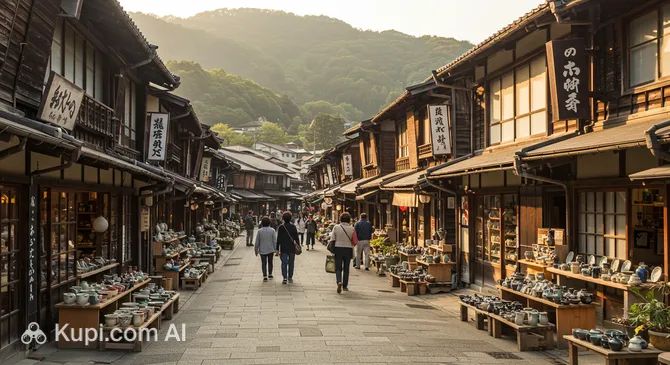
Mashiko. Illustration.
Source: Kupi.com AI

With a population of about 21,600, Mashiko maintains an intimate, almost rural way of life while remaining an important cultural center for its region. The town seems to breathe creativity and is known far beyond the country's borders primarily for its unique Mashiko-yaki pottery tradition. This centuries-old tradition has turned Mashiko into a true mecca for lovers of ceramics and handmade crafts. Here, you can not only purchase unique pieces but also visit numerous workshops and sometimes even try your hand at being a potter.

Beyond its ceramics, Mashiko enchants with its peaceful atmosphere. It is a pleasure to simply wander the streets lined with traditional Japanese architecture, peek into small galleries and craft shops, relax in cozy tea houses, and enjoy the beauty of the surrounding landscapes. Mashiko is a place where time seems to slow down, allowing every guest to touch the true soul of Japan and take home a piece of its warmth and harmony.

You can find more interesting facts on the history of Mashiko page.

Weather Overview

The weather in Mashiko is characterized by distinct seasons. Summer, especially in July and August, is warm and quite humid here, with average temperatures around 25-27°C, and maximums can exceed 30°C. Winters, from December to February, are cool, with average temperatures from 3°C to 5°C, sometimes dropping below freezing, and with less precipitation. Spring and autumn offer mild and comfortable weather, ideal for walking and exploring the town.

Overall, expect a warm summer with occasional rain and cool, relatively dry winters. To get more detailed information about the weather by month, you can check the detailed forecast on the Mashiko climate page.

Average monthly temperature

Average monthly precipitation

Interesting Facts

In addition to its picturesque nature and traditional atmosphere, Mashiko hides many curious details that make it a truly unique place. Here are some interesting facts about this charming town:

  • Mashiko is not just a town, but a true ceramic capital, world-famous for the "Mashiko-yaki" style. Pottery traditions here date back to the 19th century, and today dozens of workshops continue the work of their ancestors, offering guests not only the chance to purchase unique items but also to try their hand at the pottery wheel themselves.

  • Twice a year, during Golden Week in spring and in November, Mashiko transforms as it hosts grand pottery fairs. During these days, the main street, Jonaizaka, turns into a bustling market with hundreds of stalls, attracting artisans, collectors, and tourists from all over the world, creating the atmosphere of a major creative festival.

  • Mashiko is home to the ancient Saimyo-ji Temple, whose main jewel is a three-story pagoda built in the 16th century. It is one of the oldest wooden structures of its kind in eastern Japan, attracting both history buffs and those seeking tranquility.

  • The town is a center of attraction for many famous Japanese artists and ceramicists. They not only draw inspiration here but also often hold workshops and exhibitions to share their art. Mashiko has also influenced many European and American artisans who have come here to study Japanese pottery traditions.

How to Get There

The most convenient way to reach Mashiko is by air, using one of the airports located relatively nearby. Although Mashiko itself does not have its own airport, the nearest air gateways offer various options for travelers. From the airports, you can usually reach Mashiko by rental car, taxi, or bus service, if available to the nearest major towns from which you can then proceed to Mashiko.

One of the primary options is Narita International Airport (NRT), a major international hub located in Tokyo, approximately 82.3 km from Mashiko. A car trip from here to Mashiko will take roughly 2 hours 20 minutes to 2 hours 30 minutes. Another major capital airport is Haneda (HND), also in Tokyo, at a distance of about 105.4 km. The journey from this airport to Mashiko by car usually takes about 2 hours 50 minutes to 3 hours.

The closest airport to Mashiko is Ibaraki Airport (IBR) — only 43 km away in the city of the same name. This is a regional airport, and the drive from it to Mashiko by car will take approximately 1 hour 20-30 minutes. Another option is Fukushima Airport (FKS), which is about 89.5 km from Mashiko. This is a small airport, and a car trip from it can take around 2 hours 30-40 minutes.

For convenience, here is a summary of the main airports from which you can reach Mashiko:

AirportPassenger trafficDistance
Ibaraki Airport776 06343 km
Narita International Airport40.8 mln82 km
Fukushima Airport250 00090 km
Haneda Airport85.7 mln105 km
Niigata Airport1.1 mln186 km

Main Attractions

Mashiko is not just a town; it is a true ceramic capital of Japan, famous for its unique "Mashiko-yaki" products. A trip here is an immersion into the world of pottery, tradition, and inspiration, where every corner breathes creativity.

One of the main points of interest is the Mashiko Museum of Ceramic Art (Ceramic Art Messe Mashiko). This extensive complex offers visitors a deep dive into the world of local ceramics. Here, you can see both historical masterpieces and works by contemporary artists, and learn about complex firing and decorating techniques. The museum is interesting not only for its rich collections but also for its modern architecture, as well as frequently held temporary exhibitions and educational programs. This makes it attractive to a wide range of tourists interested in art, design, and crafts.

No less significant is the Shoji Hamada Memorial Mashiko Sankokan Museum. A visit to this museum is an opportunity to touch the legacy of Shoji Hamada, one of the founders of the influential Mingei (folk art) movement and a person who largely defined the worldwide fame of Mashiko ceramics. The museum is located in his former residence and workshops, creating a special, authentic atmosphere. Tourists come here to see his iconic works, his personal collection of folk art from around the world, and to better understand the philosophy behind the simple but expressive forms of Mashiko-yaki.

For those seeking not only art but also spiritual peace and an interest in history, the Saimyoji Temple is a must-visit. This ancient Buddhist temple, said to have been founded in the 8th century, impresses with its rich history and traditional architecture. Its beautiful three-story pagoda, which is an important cultural property, and the centuries-old trees on its grounds particularly stand out. A visit to Saimyoji Temple allows you to step away from the busy pottery streets and enjoy the silence and beauty of Japanese temple culture, making it attractive for lovers of history and quiet contemplation.

And, of course, the very heart of Mashiko is its pottery streets and numerous studios. A walk along streets such as Jonaizaka Street turns into a fascinating exploration. Here, you can find dozens of shops and galleries offering ceramic products for every taste — from traditional everyday tableware to unique avant-garde art objects. Many workshops are open to visitors: you can watch potters at work, and in some, even try your hand at a workshop to create your own piece. This is a unique opportunity not just to buy a souvenir, but to take a piece of Mashiko's soul with you. Twice a year, in spring and autumn, the town comes alive during the famous Mashiko Pottery Fair, which attracts ceramic enthusiasts and collectors from all over the world.

Local Cuisine

The gastronomy of Mashiko is inextricably linked to its greatest pride — its famous ceramics. One of the key features of the local cuisine is serving dishes in Mashiko-yaki clayware. It is believed that such tableware not only adds a special aesthetic charm to the meal but also keeps food warm longer and positively affects its taste. Travelers can enjoy this unique experience in many local cafes and restaurants.

The menu in Mashiko is based on traditional Japanese dishes, prepared with an emphasis on seasonality and the freshness of ingredients. Many vegetables are grown on surrounding farms, guaranteeing their high quality. Be sure to try the rice dishes, fragrant miso soups, and, of course, various local sweets often served with a cup of green tea. During the ceramic festivals that liven up the town, street food is particularly popular: grilled vegetables, sweet adzuki beans, and traditional Japanese pastries.

The food culture in Mashiko offers diverse options. In addition to cozy restaurants where you can leisurely enjoy lunch or dinner, it's worth checking out the local markets and fairs. Here, farmers and artisans often offer tastings and sales of homemade sauces, jams, and other local products. This is a wonderful opportunity to experience Japanese gastronomic traditions in a relaxed setting. For drinks, besides green tea, you can try local sake produced in the area.

Travel Tips

Welcome to Mashiko, the charming city of ceramics! To make your trip to this corner of Japan as comfortable and memorable as possible, we have prepared some practical tips.

  1. Clothing and Essentials:

    The climate in Mashiko is temperate, with distinct seasons. In summer (June-August), it is hot and humid, so choose light, breathable clothing. In winter (December-February), it can be chilly, sometimes with snow — warm clothes will come in handy. Spring and autumn are the ideal times to visit, with comfortable temperatures. Be sure to bring comfortable shoes, as you will be walking a lot through pottery workshops and picturesque streets. Don't forget an adapter for electrical appliances (Japan uses type A and B sockets, 100V voltage) and a small umbrella or raincoat, especially if you are traveling during the rainy season (June-July).

  2. Getting Around Town:

    It is most convenient to move around Mashiko using local buses, which connect the main points of the town, including the pottery districts and the train station (if you arrive by train in a neighboring city). Taxis are also available but can be more expensive. If you plan to actively explore the surroundings of Tochigi Prefecture, you might consider renting a car (an international driver's license will be required). However, for getting to know Mashiko itself, public transport and walking will be perfectly sufficient.

  3. Finances and Payments:

    The local currency is the Japanese Yen (JPY). It is better to exchange currency in advance or at the airport upon arrival, as the number of exchange offices in Mashiko itself may be limited. Large hotels, restaurants, and some shops accept credit cards, but cash remains very important, especially in small pottery workshops, local stalls, and cafes. ATMs that accept international cards can be found in post offices (Japan Post Bank) and 7-Eleven stores. Tipping in Japan is not practiced and may even cause confusion.

  4. Health and Safety:

    Mashiko, like Japan in general, is considered a very safe place. However, standard precautions never hurt: keep an eye on your belongings and be attentive in crowded places. Pharmacies (薬, kusuri) exist, but most medications are sold by prescription, and staff do not always speak English. It is recommended to carry a small first-aid kit with familiar medications. Be sure to take out travel medical insurance before your trip.

  5. Communication and Internet:

    The official language is Japanese. In tourist areas such as information centers or large hotels, you may encounter English-speaking staff, but overall, English proficiency is not high. Learn a few basic phrases in Japanese (“konnichiwa” – hello, “arigato” – thank you, “sumimasen” – excuse me); this will be greatly appreciated by the locals. For communication and internet, it is convenient to purchase a tourist SIM card or rent a pocket Wi-Fi router at the airport. Free Wi-Fi is available in many hotels and some public places.

  6. Local Etiquette:

    Japanese people are very polite and value respect for tradition. It is customary to remove your shoes when entering a Japanese home, some temples, and traditional restaurants. In public places, especially on transport, try to speak quietly. A slight bow is used instead of a handshake when greeting or saying goodbye. It is customary to give and receive items (such as business cards or money) with both hands. These simple rules will help you feel more confident.

  7. What to Avoid:

    Try not to eat while walking on the street (except in designated street food areas). Also, in Japan, it is not customary to blow your nose loudly in public — it is better to go to a restroom. Never stick your chopsticks vertically into a bowl of rice, as this is associated with funeral rituals.

  8. A Special Tip for Mashiko:

    Mashiko is the heart of pottery. Be sure to set aside time to visit the pottery workshops (kamamoto) and shops where you can not only buy unique Mashiko-yaki products but also watch the masters at work. If your trip coincides with the spring (late April - early May) or autumn (early November) pottery fair, don't miss the chance to visit this vibrant event. Many workshops offer classes where you can try your hand at being a potter — it's an unforgettable experience!

We hope these tips help you plan the perfect trip to Mashiko and enjoy its unique atmosphere and hospitality. Have a great trip!

Entertainment & Nightlife

Mashiko, known throughout Japan for its centuries-old pottery traditions, offers its guests a quiet and authentic evening experience rather than the vibrant nightlife of megacities. Here, you won't find noisy nightclubs or districts packed with bars until dawn, but you can enjoy a cozy atmosphere and local flavor.

Evening entertainment in Mashiko focuses on traditional Japanese restaurants and izakayas (Japanese pubs). This is a great opportunity to try local cuisine made from fresh seasonal products and, of course, to taste the various types of sake for which Tochigi Prefecture is famous. The atmosphere in such establishments is usually very welcoming and relaxed, perfect for unhurried conversation. The dress code is generally casual. Most restaurants and izakayas are open until late evening, but not all night, so it's best not to arrive too late.

While there are almost no specialized nightclubs in Mashiko, some cafes or small bars may offer music and drinks in the evening, creating a pleasant environment to relax after an eventful day. Concert venues or large night markets are not typical for this town; evening leisure here is more intimate and focused on socializing and gastronomic pleasures.

In terms of practical advice, it's worth noting that Mashiko is a small town, and the choice of venues for evening pastimes may be limited compared to larger centers. Average prices in restaurants and izakayas are quite affordable. For getting around in the evening, taxis are considered a safe mode of transport. Public transport follows a schedule, which is best checked in advance if you plan on late trips.

Mashiko, like most small towns in Japan, is a very safe place for walking, including in the evening. However, standard precautions are never out of place. Taxis can usually be called through your hotel or found at the few taxi stands.

Regarding daytime entertainment, Mashiko is a true paradise for ceramic lovers. Numerous pottery workshops and galleries invite you to get acquainted with the work of local masters, and in some, you can even try your hand at pottery. A visit to the Mashiko Museum of Ceramic Art is a must. The town is also surrounded by beautiful nature, perfect for walking. There are no amusement parks or large theaters here; the focus is on cultural heritage and crafts.

Parks & Museums

Mashiko is not just a town; it is a true center of ceramic art in Japan, harmoniously combining a rich cultural heritage with peaceful natural landscapes. Here, every traveler will find something for the soul, whether it's a stroll through a picturesque park or an immersion into the world of traditional pottery.

Among the city's green zones, Mashiko no Mori (Mashiko Forest) particularly stands out. It is a wonderful place for leisurely walks where you can enjoy the silence and beauty of Japanese nature at any time of year. Various events are often held here, and the park is especially popular in spring and autumn due to the cherry blossoms and vibrant colors of the autumn leaves. Another notable place is the area around the Mashiko Museum of Ceramic Art, which is a beautiful park space in itself. Here, you can not only get acquainted with art but also relax among sculptures and well-maintained gardens, enjoying the peaceful atmosphere.

The main cultural jewel of the town is undoubtedly the Mashiko Museum of Ceramic Art (Mashiko Togei Messe). This complex is dedicated to the famous Mashiko-yaki ceramics and offers an extensive exhibition of works by both historical masters and contemporary artists. Visitors can learn about the history of the local pottery craft and see unique specimens. No less significant is the Shoji Hamada Memorial Mashiko Sankokan Museum, dedicated to one of the founders of the Mingei (folk art) movement and a key figure in the popularization of Mashiko ceramics. The museum is located in his former residence and workshops, allowing you to touch the life and work of the great master. In addition to these large museums, Mashiko is dotted with numerous private galleries and pottery workshops where you can see the work of local artisans and even purchase unique pieces.

The historical heritage of Mashiko is closely linked to pottery. It is definitely worth paying attention to the preserved traditional ceramic kilns (noborigama), some of which are still in use or have been turned into museum exhibits. These massive structures are witnesses to the centuries-old history of ceramic production in the region. A walk along the town's main street, Jonaizaka Street, will also provide many impressions: old shops selling ceramics and houses with traditional architecture are located here.

For a truly authentic experience, stop by one of the active pottery studios, many of which offer pottery workshops. This is a unique opportunity not only to watch the masters at work but also to create your own piece to remember your trip to Mashiko. Also, don't miss the chance to visit local markets where you can find not only ceramics but also fresh farm products and local delicacies.

Getting Around

Public transport in Mashiko consists mainly of buses and rail services, allowing for fairly convenient travel both within the town and to neighboring locations. Given Mashiko's size, there is no extensive subway or tram network, but the existing options cover the basic needs of residents and tourists.

The main form of public transport in Mashiko is the bus. They run on various routes, connecting the town center with its outskirts and nearby attractions. Bus schedules can usually be found at stops or on the websites of local transport companies. Additionally, the Mooka Railway line passes through Mashiko, with Mashiko Station connecting the town to other settlements in Tochigi Prefecture, including the city of Mooka, and further allowing for transfers to JR East lines for travel to larger cities like Utsunomiya.

The payment system in Japan, and Mashiko is no exception, is quite convenient. To pay for travel on buses and trains, you can use cash (usually coins or small denomination bills) or rechargeable smart cards such as Suica or Pasmo. These cards work on most types of transport throughout the country and can be purchased and topped up at machines at train stations or in some convenience stores. When boarding a bus (often through the rear door), you should take a numbered ticket (if you don't have a smart card), and payment is made to the driver upon exiting (through the front door), where the amount depends on the distance traveled. When using a smart card, simply tap it against the reader when boarding and exiting.

Tourists are advised to familiarize themselves with routes and schedules in advance, especially if planning trips to remote areas. Train tickets can be bought at station machines or ticket offices. Public transport usually operates from early morning until late evening, but service frequency may decrease in the evening hours and on weekends. It's important to remember that in Japan, it is customary to keep quiet on public transport and not to talk on the phone.

As an alternative to public transport in Mashiko, you can use a taxi. Taxi stands are usually located at the train station and other key points in town. For more independent travel, especially if you plan to explore the surroundings, you might consider renting a car, though keep in mind that traffic moves on the left. Given the picturesque nature and compactness of the town itself, bicycle rental can also be an enjoyable way to discover Mashiko and its famous pottery workshops.

Accommodation

In Mashiko, a renowned center of Japanese pottery, travelers will find various accommodation options to suit different preferences and budgets. The town offers traditional Japanese inns (ryokans) and cozy guesthouses (minshuku), as well as more standard hotels.

When choosing a place to stay, consider areas near the main pottery street, Jonaizaka Street, where many workshops, shops, and galleries are concentrated. It can also be convenient to stay near the Mashiko Museum of Ceramic Art or other workshops and kilns of interest. This will allow you to easily immerse yourself in the town's atmosphere and its primary craft.

While specific hotel names are not listed here, you can easily find suitable options on popular online booking platforms. In Mashiko, you can find small family-run ryokans offering an authentic Japanese experience with traditional dinners and breakfasts, as well as more modern guesthouses or small hotels. The choice depends on your preferences — whether you're looking for full cultural immersion or just a comfortable place to sleep.

Regarding price range, Mashiko offers housing from budget options in guesthouses to mid-range prices in ryokans and hotels. There are few luxury resorts here, as the town is more oriented toward quiet cultural tourism. It is recommended to book accommodation in advance, especially if your trip coincides with major pottery fairs (usually in spring and autumn) or national holiday periods in Japan, when demand increases significantly. Most options are available for booking through well-known international and Japanese online travel services, while some ryokans and guesthouses may accept bookings directly through their websites or by phone.

Nearby Cities

For those looking to explore the surrounding area, Mashiko serves as an excellent starting point for day trips to several interesting nearby locations:

CityPopulationDistance
Ichikai11 2058 km
Mooka78 6658 km
Haga14 83310 km
Motegi11 63111 km
Sakuragawa38 67716 km

Each of these cities offers something unique. For example, Utsunomiya, the capital of Tochigi Prefecture, proudly holds the title of "gyoza capital" — be sure to try these famous Japanese dumplings at one of the many local restaurants. Besides gastronomic delights, Utsunomiya attracts visitors with the unique Oya History Museum, located in the vast underground spaces of a former stone quarry. The town of Mooka, located just 8 km from Mashiko, will delight fans of the past with the opportunity to ride a real SL Mooka steam locomotive and learn about local cotton production traditions. And Oyama can be an interesting destination for those seeking a mix of modern shopping centers with quiet temples and picturesque parks offering peaceful relaxation.

These nearby destinations provide a glimpse into the diverse culture and landscapes of the region.

Shopping & Souvenirs

Mashiko is not just a town; it is a true paradise for lovers of Japanese ceramics and unique handcrafted goods. Shopping here is fundamentally different from the hustle and bustle of big megacities. The main "catch" for a tourist is, undoubtedly, the famous Mashiko-yaki ceramics, known for their simplicity, warmth, and functionality. The town literally breathes pottery art, offering guests not only finished products but also the chance to watch the masters at work.

The center of attraction for everyone looking for authentic souvenirs and ceramics is Jonaizaka Street. Along this picturesque street and its adjacent alleys are many pottery workshops, galleries, and shops where everyone will find something to their liking — from traditional tableware to modern art objects. A walk along Jonaizaka itself becomes a fascinating journey into the world of Japanese craft.

In Mashiko, you won't find the giant modern shopping centers common in big cities. The charm of local shopping lies specifically in visiting small artist shops, studios, and galleries. However, it's worth paying attention to places like the Mashiko Pottery Center (Mashiko Toen), which presents a wide range of products from various artisans. Some museums dedicated to ceramics also have their own shops with interesting souvenirs.

The main event for shopaholics and art lovers in Mashiko is the famous Mashiko Pottery Fair (Mashiko Toukiichi). It is held twice a year — in spring (usually late April to early May) and autumn (early November). During these days, the town turns into a huge open-air market where hundreds of potters and artisans display their best work. This is a unique opportunity to purchase exclusive items and chat with the creators. At other times of the year, there are fewer permanent large markets in town, and the focus shifts to brick-and-mortar shops and galleries.

Undoubtedly, the main souvenir from Mashiko is Mashiko-yaki ceramics. The choice is huge: from traditional cups, plates, and vases to artist sculptures and decorative panels. Look for items with the glaze characteristic of Mashiko and simple but elegant forms. Besides ceramics, you can find other local craft goods, such as woodwork or indigo-dyed textiles. Local food products are also popular: sake, soy sauce, or sweets.

Most shops and galleries in Mashiko are open from approximately 10:00 AM to 5:00 PM or 6:00 PM. Some small workshops may have more flexible schedules or close on certain days of the week, so it's worth checking hours in advance if you plan to visit a specific place. As for payment, many shops accept credit cards, especially the larger ones. However, it is always useful to have some cash on hand, especially for purchases in small studios or at fairs.

For foreign tourists in Japan, there is a tax refund (Tax Free) system for purchases exceeding a certain amount (usually 5,000 yen excluding tax). Many shops in Mashiko, especially those catering to tourists and selling ceramics, may provide this service. Look for the special "Tax-Free Shop" sign. You will need your passport to process the tax refund. The procedure is usually completed right in the shop at the time of purchase.
Reached the end of the page?

That means the route is fully explored