Support

Kotonomama Hachimangu Shrine

About

The Kotonomama Hachimangu Shrine is one of the most significant and revered Shinto shrines in Japan, located in the city of Shizuoka. This sacred place is dedicated to the deity Hachiman, who in Shinto tradition is considered a powerful patron of warriors and a protector of the country. Historically, Hachiman was especially revered by the Minamoto samurai clan, for whom he served as a guardian deity.
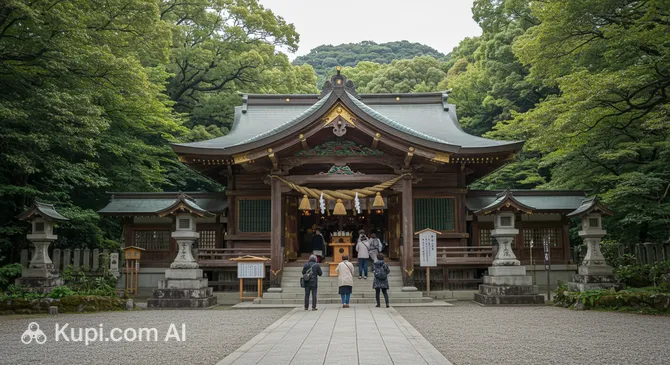
Kotonomama Hachimangu Shrine. Illustration.
Source: Kupi.com AI

Traveler photos:

The shrine is an impressive complex of religious structures spread across a spacious and well-maintained territory. The architecture of the buildings is executed in a traditional Japanese style characteristic of Shinto shrines, distinguished by elegant forms and harmony with the surrounding natural landscape. Every detail here is filled with deep symbolism and reflects centuries-old traditions.

A visit to the Kotonomama Hachimangu Shrine offers a unique opportunity to experience the spiritual culture of Japan. The bright and spacious grounds, filled with an atmosphere of peace and tranquility, are perfect for leisurely walks, contemplation, and reflection. This site attracts both pilgrims and tourists seeking to feel the spirit of this ancient land.

Contacts

For the most up-to-date information regarding the opening hours of the Kotonomama Hachimangu Shrine, possible tours, or scheduled events, we recommend visiting the attraction's official website if available, or checking for details at tourist information centers in the city of Shizuoka.

Generally, such shrines can be reached via public transport or taxi; it is best to confirm exact routes on-site or by using online maps.

How to contactContact
Address642 Yasaka, Kakegawa, Shizuoka 436-0004, Japan
Phone number+81 537-27-1690
Websitekotonomama.org

What to Do

The Kotonomama Hachimangu Shrine in Shizuoka offers visitors a unique opportunity to touch the ancient traditions of Japan. This is a place where you can witness numerous Shinto rituals and ceremonies, which are particularly vibrant and frequent during the New Year holiday period. A visit to the shrine allows you to immerse yourself in a spiritual atmosphere and observe customs passed down through generations.

One of the significant events you might encounter is the "Kagura Hajime Shiki"—the ceremony marking the start of ritual kagura dances. This colorful ritual is held on the first day of the New Year and is dedicated to the deity enshrined here. Watching kagura dances is a chance to see an ancient art form filled with grace and symbolism, and to feel the special energy of the celebration.

The "Jyoma Shinji" ritual, also known as the "Ritual of Divine Expulsion of Spirits," is of particular interest. During this ceremony, arrows are shot at a large target, symbolizing the expulsion of evil spirits and the attraction of good luck. This custom has deep historical roots, being especially important for samurai, and observing it allows one to connect with the warrior traditions of the past.

Another notable ceremony is "Chona Hajime Shiki", or the "Start of the Adze." During this ritual, traditional carpentry tools are used to symbolize the beginning of construction or maintenance work at the shrine. People involved in construction and crafts participate in this ceremony, praying for safety and prosperity in the coming year. For visitors, it is a rare chance to see traditional tools and ancient techniques in action.

Getting There

Reaching the Kotonomama Hachimangu Shrine in Shizuoka can be done in several ways, depending on your location and preferences. As a rule, Japanese cities boast a well-developed public transportation system, making travel to local attractions quite convenient.

The most likely option is using local buses. Many shrines and temples in Japan are well-integrated into the public transport network. Check the bus schedules and routes heading toward the shrine from Shizuoka's central stations or nearby rail hubs. A short walk from the bus stop to the shrine itself may be required.

Another option is taking a taxi. This is a more expensive but more comfortable method, especially if you are traveling with luggage or in a group. Taxis can be taken from your hotel, a major railway station, or simply hailed on the street in the central part of the city. A taxi ride from the center of Shizuoka to the shrine will likely be the fastest way to get there.

Before your trip, it is recommended to confirm the exact location of the Kotonomama Hachimangu Shrine on a map and check the current public transport routes. It is also helpful to have the name of the attraction written in Japanese to show a taxi driver or to ask locals for directions.

Nearest city: Shizuoka

History & Facts

The Kotonomama Hachimangu Shrine, located in the city of Shizuoka, possesses a rich history rooted in the deep past. It is inextricably linked to the powerful Minamoto clan. Members of this clan, particularly the ancestors of the famous Minamoto no Yoritomo, deeply revered Hachiman—the deity considered the patron of their lineage. This faith played an important role in strengthening their power and managing their territories.

One of the remarkable features of the shrine is its preservation of ancient traditions and rituals that have reached us almost unchanged. A vivid example is the "Jyoma Shinji" ritual. In the past, it marked the beginning of the new year's work for the Kamakura samurai. This ceremony, filled with deep meaning, continues to be held today, attracting both locals and tourists interested in Japanese culture.

Today, the Kotonomama Hachimangu Shrine is not just a religious site, but also an important cultural center where traditional Japanese customs are carefully preserved and passed down through generations. The shrine is particularly popular during the first three days of the New Year. At this time, a huge number of pilgrims and visitors flock here—by some estimates, about two and a half million people. People come here to pray for good health, prosperity, and luck in the coming year, creating a unique atmosphere of unity and hope.

Time Needed

When planning a visit to the Kotonomama Hachimangu Shrine in Shizuoka, most visitors find that it takes approximately 1-2 hours to explore. This time is usually sufficient to leisurely stroll through the grounds, examine the main buildings, soak up the atmosphere, and take commemorative photos.

During this period, you can get acquainted with the architectural features of the shrine, experience its spiritual significance, and perhaps observe local traditions if your visit coincides with an event. Of course, if you are passionate about Japanese culture and history or simply prefer a more meditative and thoughtful visit, your stay may last longer. For those who are short on time and only want to get a general impression, an hour might be enough.

Working Hours

Exact information regarding the opening hours of the Kotonomama Hachimangu Shrine in Shizuoka can vary. Generally, many Shinto shrines in Japan are open to visitors during daylight hours year-round; however, access to main buildings or for specific ceremonies may be limited. It is recommended to check the current schedule on the shrine's official website, if available, or on-site upon arrival.

Usually, pre-booking tickets for visiting such shrines is not required unless it pertains to special events or guided tours. To obtain the most accurate and recent information regarding opening hours and potential restrictions, it is best to consult the official tourism resources of Shizuoka or contact the shrine representatives directly.

Open 24 hours

Nearby

Visiting the Kotonomama Hachimangu Shrine is undoubtedly a highlight, but exploring its surroundings can make your trip to Shizuoka even more rewarding and memorable. Nearby attractions allow you to dive deeper into the culture and history of this amazing region of Japan.

From historical monuments to unique natural sites and cultural centers, everyone will find something of interest in the immediate vicinity of the shrine. This is an excellent opportunity to expand your itinerary and discover new facets of Shizuoka without spending much time on travel. Below is a list of some attractions located nearby.

NameDistance
Suwahara Castle Ruins4.6 km
Shizuoka Tea Museum5.7 km
KADODE OOIGAWA6.9 km
Horai Bridge10.4 km
Rose Arena10.8 km
Shizunami Beach16 km
Aprecio18.4 km

Have you reached the end of the page?

So the route has been studied inside and out