The Q'enqo Archaeological Complex is one of the most mysterious and impressive monuments of the Incan civilization, located just a few kilometers from the city of Cusco in Peru. This site, whose name translates from Quechua as "labyrinth," is a unique sanctuary carved directly into a massive rock. Spanish conquistadors gave it this name because of its network of underground galleries and zigzag channels, the purpose of which is still debated by historians.
Traveler photos:
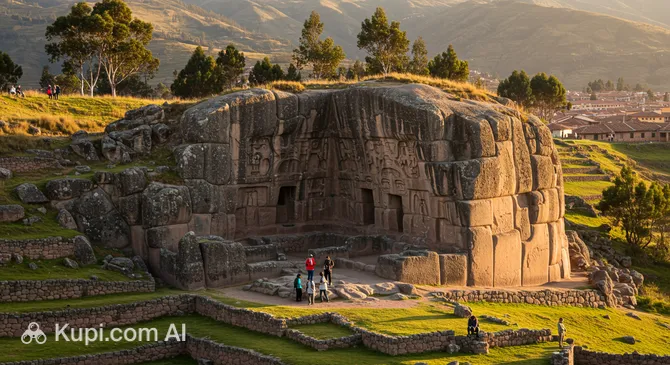
The complex is a natural rock outcrop that ancient masters transformed into a sacred space. Here, you can see skillfully carved stairs, altars, niches, and even thrones. The rock surface is decorated with relief images of animals such as the puma and the snake, which held special significance in Incan mythology. The main feature of Q'enqo is its semi-circular arena with a large stone throne and an underground cave where ritual embalming and sacrifices were presumably carried out.
Q'enqo is not just ruins, but a place with powerful energy that allows you to touch the secrets of an ancient culture. It is believed that the complex played an important role in Incan astronomical observations. For example, on the day of the winter solstice, light rays hit the central stone in a specific way, confirming its ceremonial significance. A visit to Q'enqo leaves an unforgettable impression and is a must-see for anyone wanting to better understand the world of the great Inca Empire.