Support

Sacsayhuamán

About

Sacsayhuamán is an impressive Inca architectural complex located on a hill near the city of Cusco, in Peru. The name of this ancient fortress, which means "satisfied falcon" in Quechua, reflects its grandeur and power. Today, it is one of the most iconic sites demonstrating the engineering genius of the ancient civilization.

Originally, Sacsayhuamán served as both a military citadel and an important religious center. In the unique city plan of Cusco, which is believed to be shaped like a puma, this complex symbolizes its sharp teeth. According to historical records, the ruler and his court lived in its towers, while ammunition and provisions were stored in deep basements.

Most visitors are struck by the three massive zigzag walls built one above the other on the hillside.
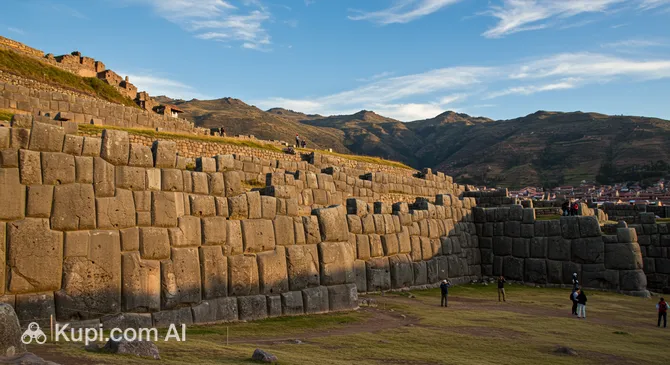
Sacsayhuamán. Illustration.
Source: Kupi.com AI

Traveler photos:

Especially impressive is the first terrace, built of giant stone blocks, some of which weigh over a hundred tons. The precision with which these blocks are fitted together without a single drop of mortar still evokes admiration and wonder from engineers and researchers around the world.

Contacts

Sacsayhuamán is an extensive archaeological park that does not have a single contact center for visitors. Since it is an open-air historical site, the best way to plan a visit is to focus on its location and access methods. You can reach the complex from the center of Cusco on foot, which takes about 45 minutes, by taxi, or as part of an organized tour group.

To get the most up-to-date information on opening hours, entrance fees—which are often part of a general tourist ticket for Peru—and available tours, it is recommended to contact official tourist centers in Cusco or the website of the Peruvian Ministry of Culture.

How to contactContact
AddressCusco 08002, Peru

What to Do

A visit to Sacsayhuamán is an opportunity to see firsthand one of the most impressive creations of the Inca civilization. The main thing that attracts tourists here is the three giant zigzag walls built of massive stone blocks. These megaliths are perfectly fitted together without the use of any mortar, which still amazes engineers and historians. The first wall is particularly mind-blowing, clearly demonstrating the power and majesty of Inca rule.

In addition to the famous walls, you can explore other structures within the complex. For example, there are the remains of the Muyucmarca circular tower, which is believed to have belonged to the Inca ruler himself and his court. Visitors can also wander freely throughout the complex, examining numerous terraces, the foundations of other buildings, and even underground passages that give an idea of the high level of engineering art of the ancient civilization.

Finally, another essential part of a visit to Sacsayhuamán is the stunning panoramic views. From the hill where the complex is located, a magnificent view of the city of Cusco opens up, spreading out in the valley below. This place is perfect not only for immersing yourself in the history of Peru, but also for taking unforgettable photos and simply enjoying the beauty of the surrounding landscapes.

Getting There

Sacsayhuamán rises majestically on a hill in the northeastern part of Cusco, and there are several ways to reach this impressive complex from the city center. The choice depends on your preferences, physical fitness, and available time. The most popular options are taking a taxi, walking for the more active, or visiting as part of an organized excursion group.

The fastest and most comfortable way is certainly taking a taxi. The car will take you directly to the entrance, driving through the city's winding narrow streets, which can be a small adventure in itself. For those who enjoy active recreation, the climb on foot is a great opportunity not only to enjoy panoramic views but also to better acclimatize. The walk takes about 45–60 minutes, but remember that the route is uphill. You can also get there by local bus from the central Plaza de Armas or join one of the many tours.

Regardless of the chosen transport, it is crucial to prepare in advance for the altitude. Sacsayhuamán, like all of Cusco, is located at an altitude of over 3,500 meters above sea level, which can cause altitude sickness in unprepared tourists. It is recommended to spend at least a couple of days in the city to acclimatize before visiting the complex, drink plenty of water, move at a steady pace, and be sure to wear comfortable shoes for walking on ancient stones.

Nearest city: Cusco

History & Facts

The history of Sacsayhuamán is rooted in ancient times, predating even the rise of the Inca civilization. Archaeological finds in the vicinity of the complex, particularly ceramics of the Killke culture (900–1200 AD), indicate that this area was inhabited long before the start of the massive construction. Legend has it that the construction of the great city of Cusco began at the foot of the Sacsayhuamán hill. Some researchers suggest that stones from the earliest buildings may have been used as fill for the famous terraces we see today.

The main phase of construction for this grand structure took place in the 15th century, during the golden era of the Inca Empire. According to the official version, the work was initiated either by the ninth ruler, Pachacuti Inca Yupanqui, or his son, Túpac Inca Yupanqui. The construction of the complex continued for over 50 years and was largely completed under their successor, Huayna Capac. However, as historical chronicles tell, the final completion of all plans was hindered by civil wars that broke out in the empire, leaving descendants with unsolved mysteries and unfinished elements.

Four master builders are credited with the creation of this engineering marvel, whose names history has preserved. The construction was overseen successively by Apu Huallpa Rimachi, who developed the initial plan, as well as Inca Maricanchi, Acahuana Inca, and Calla Cunchuy. Their knowledge and organizational skills allowed for the creation of a complex that remains a vivid testament to the highest level of architectural and engineering advancement of the Inca civilization in Peru.

Time Needed

When planning a visit to Sacsayhuamán, you should allow 2–3 hours for a full and leisurely exploration. This time will be enough to explore the three famous zigzag walls, climb to the top of the hill for panoramic views of Cusco, and study other interesting parts of the complex, such as the remains of the towers and the stone "thrones." If you are short on time, a quick look at the most impressive megalithic structures will take about an hour.

The duration of your visit also depends on your chosen format. Organized tours usually last 1.5–2 hours and include a guide who will share historical facts and theories about the site's purpose in Peru. Independent exploration gives you the freedom to stay longer at the most interesting objects. For those interested in archaeology, ancient history, or photography, a visit can easily stretch into half a day, as every detail of this grand structure deserves attention.

Don't forget that Sacsayhuamán is a large open-air complex located at an altitude of over 3,500 meters. You will have to walk a lot, including uphill, so set aside time for a steady pace and short breaks. Many travelers combine a visit to Sacsayhuamán with other nearby archaeological sites such as Q'enqo, Puca Pucara, and Tambomachay, turning the excursion into an exciting day-long adventure.

Working Hours

The Sacsayhuamán archaeological complex is open to visitors year-round, making it easy to include in your travel plans for Peru in any season. Typically, the opening hours are daily from 7:00 AM to 5:30 PM. To enter the site, you will need to purchase the so-called "Cusco Tourist Ticket" (Boleto Turístico del Cusco), as separate tickets for Sacsayhuamán only are not sold. You can choose either a full ticket, valid for 10 days and covering many of the region's attractions, or a partial ticket (Circuit I), which is valid for one day and gives access to Sacsayhuamán and three other nearby archaeological sites.

Advance ticket booking is usually not required; they can be purchased directly at the entrance to the complex or at official sales points in Cusco, such as the COSITUC office on Avenida El Sol. However, it is worth remembering that opening hours may change on national holidays or during special events, such as the Inti Raymi festival. Therefore, before your visit, it is highly recommended to check current information on the official website or at the city's tourist information centers.

7:00 – 17:30

Nearby

A visit to Sacsayhuamán is just the beginning of your acquaintance with the rich history of Cusco. The surroundings of this grand complex are literally saturated with other significant sites that will help you gain a deeper understanding of Inca culture and Peru's colonial period. A walk through the area will allow you to form a more complete picture of this amazing region.

Many of these attractions are within walking distance, making it easy to combine them into one busy sightseeing day. From observation decks with breathtaking views to unique museums, everyone will find something interesting right next to the ancient fortress.

NameDistance
Cristo Blanco Viewpoint0.4 km
Sapantiana Aqueduct0.4 km
Santa Ana Square0.7 km
Inca Museum0.7 km
Museum of Pre-Columbian Art0.7 km
Yaku Restaurant0.8 km
Aranwa Cusco Museum0.8 km

Have you reached the end of the page?

So the route has been studied inside and out