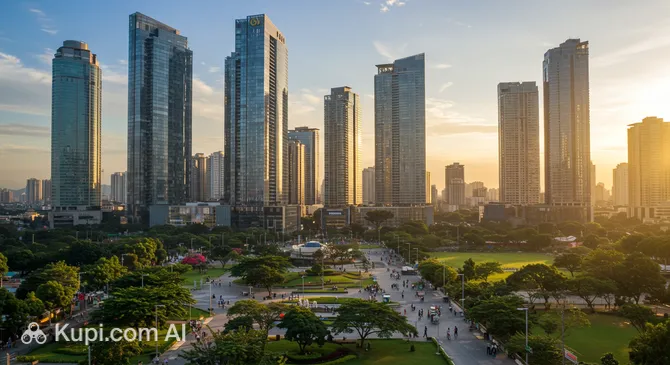
Taguig is a rapidly developing metropolis located in the heart of the Philippines' National Capital Region. The city, which grew from a quiet fishing village on the eastern shore of Laguna de Bay, has transformed into one of the key business and residential hubs of Metro Manila. Here, modern skyscraper architecture harmoniously coexists with historical monuments, creating a unique look for a highly urbanized district.
Taguig. Illustration.
Source: Kupi.com AI
Geographically, the city occupies a favorable position on the eastern edge of the capital region, serving as an important link between the metropolitan center and coastal areas. According to the history of Taguig, active development and rapid population growth began here relatively recently, but today the number of residents reaches impressive levels — from 880,000 to over a million people, according to various estimates. This makes the city a significant player in the economic and social life of the entire country.
Taguig's appeal to travelers lies in its versatility: from modern public spaces and high-end restaurants to memorial complexes that preserve the memory of the historical past. We invite you to explore this energetic city, where the rhythm of life never slows down, offering guests the best of modern Philippine hospitality.
Weather Overview
Taguig is dominated by a classic tropical climate, characterized by high temperatures and significant humidity throughout the year. Average thermometer readings usually fluctuate between 26°C and 30°C. The hottest period occurs in April and May, when daytime temperatures can exceed 33°C. The most comfortable weather in Taguig sets in from December to February, when the heat subsides slightly and the air becomes drier.
The city is characterized by a clear division into precipitation seasons. The wet season begins in May and reaches its peak between July and September, when tropical downpours can be very intense. The dry season lasts from January to April, offering tourists sunny days and minimal rainfall. It is worth noting that proximity to Laguna de Bay makes the city sensitive to heavy precipitation, which sometimes leads to local flooding in the rainiest months.
Average monthly temperature
Average monthly precipitation
Interesting Facts
The amazing transformation of Taguig from a provincial suburb into a center of innovation hides many interesting details.
Historically, Taguig was known as an agricultural and fishing district on the shores of Laguna de Bay. Its rapid development and transformation into a highly urbanized center occurred quite recently by historical standards.
The city is officially part of the National Capital Region (NCR), making it not just a suburb of Manila, but a full-fledged core of the metropolitan area with corresponding infrastructure and status.
Unlike many "bedroom communities" of the metropolis, Taguig holds the status of a cultural and historical center thanks to numerous memorials related to the Philippine-American and Second World Wars.
It is one of the fastest-growing areas in the region: in recent decades, the pace of urbanization and construction here has significantly outpaced national averages, turning the city into a modern business cluster.
How to Get There
Thanks to its location within the metropolitan area, you can get to Taguig from almost any district in Metro Manila. The city is connected to neighboring municipalities by an extensive network of roads and highways. Travelers should note that during peak hours, traffic can be very heavy, so it is better to allow extra time for trips from central parts of the capital.
The main arrival hubs for international tourists are the capital region's airports, from which Taguig can be reached by taxi, bus, or via popular online ride-hailing services. A trip during off-peak hours usually takes 30 to 60 minutes. Famous jeepneys and minibuses also actively circulate within the agglomeration, linking the city with the main transit hubs of neighboring districts.
Main Attractions
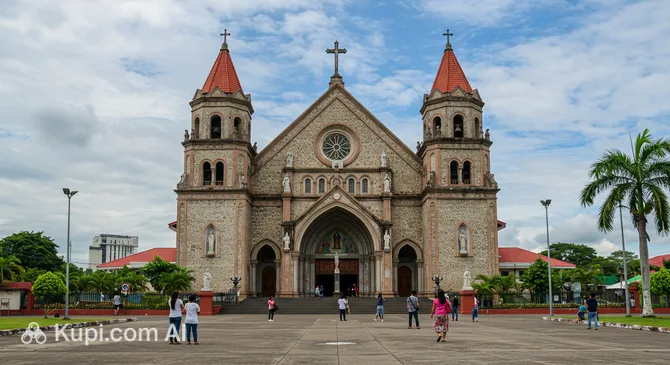
Taguig's attractions reflect its rich history and religious diversity. One of the most significant spiritual centers is the National Shrine of Our Lady of Guadalupe. This shrine attracts pilgrims and tourists with its majestic architecture and a special atmosphere of tranquility in the middle of a bustling metropolis.
National Shrine of Our Lady of Guadalupe. Illustration.
Source: Kupi.com AI
Traveler photos:
An interesting site to visit is the Blue Mosque. It serves not only as an important religious building for the city's Muslim community but also as a striking architectural accent emphasizing the multicultural nature of the capital region. Those interested in modern engineering and convenience should check out Runway Manila — a unique pedestrian bridge that connects the airport with the city infrastructure, providing a comfortable passage for travelers.
Runway Manila. Illustration.
Source: Kupi.com AI
Traveler photos:
In addition to architectural sites, Taguig is proud of its memorial parks and plazas dedicated to the history of the Philippines. Many of these sites have the status of national cultural heritage objects. A walk through the city allows you to see how modern public spaces are integrated into the historical landscape, turning the city into a true open-air museum.
Local Cuisine
Taguig's gastronomic scene is a vibrant reflection of the rich culinary palette of the entire capital region. Here you can try legendary Filipino dishes such as adobo (meat stewed in soy sauce with vinegar) or the sour soup sinigang. Street food is also widely represented in local markets and small stalls, where you will be offered various grilled meat and fish dishes typical of Luzon.
For those who prefer classic restaurants and international cuisine, world-class establishments operate in the city. For example, you can stop by Italianni's to enjoy refined dishes in a cozy setting. If you are looking for something more popular and dynamic, it is worth visiting the Uptown Parade complex, which features famous Asian gastronomic concepts and trendy cafes.
Uptown Parade. Illustration.
Source: Kupi.com AI
Traveler photos:
The food culture in Taguig is very diverse: locals equally value quick snacks at chain establishments and leisurely family dinners. Proximity to the lake ensures the presence of fresh seafood on the menu. Regardless of your preferences, the city's food scene will offer you both authentic Filipino flavors and the best examples of world cuisine.
Travel Tips
To ensure your introduction to Taguig is as comfortable as possible and brings only positive emotions, we have prepared some practical recommendations for you.
Clothing and Essentials: Choose light clothing made of natural fabrics, as the city is always hot and humid. Don't forget comfortable walking shoes and a power adapter (types A and B are used). When visiting religious sites, such as the Blue Mosque, observe the dress code: shoulders and knees should be covered.
Transport: Getting around the city is most convenient by taxi or via ride-hailing apps (like Grab). Public transport (jeepneys, buses) is cheap, but keep in mind that traffic jams during peak hours are common.
Finances: The official currency is the Philippine Peso (PHP). Large malls and hotels accept cards, but always have cash in small denominations for paying jeepney fares and market purchases.
Health and Safety: Drink only bottled water. There are many pharmacies and modern medical centers in the city. Follow general precautions: keep an eye on your belongings in crowded places and avoid poorly lit alleys late at night.
Communication: Most residents of Taguig are fluent in English, which significantly simplifies communication. A local SIM card for internet access can be purchased at the airport or any major shopping mall.
Local Etiquette: Filipinos are very friendly and hospitable. Greet people with a smile and be polite. Showing respect to elders is an important part of the local culture.
What to Avoid: Do not express sharp dissatisfaction or criticize local customs in public. It is also not recommended to display large amounts of money in unsecured public areas.
Extra Tip: Plan your visits to outdoor attractions for the morning or evening hours to avoid the midday heat and take the best photos.
We hope these tips help you enjoy your stay in Taguig and discover all the beauties of this amazing city!
Entertainment & Nightlife
The nightlife of Taguig is concentrated in its modern quarters, where the lights of bars, lounge zones, and concept venues light up after sunset. This area attracts both the local elite and international guests, offering entertainment for every taste. One of the iconic spots for fans of high-quality music and a high-energy atmosphere is the legendary Hard Rock Cafe, which regularly hosts live performances by local bands.
Hard Rock Cafe. Illustration.
Source: Kupi.com AI
Traveler photos:
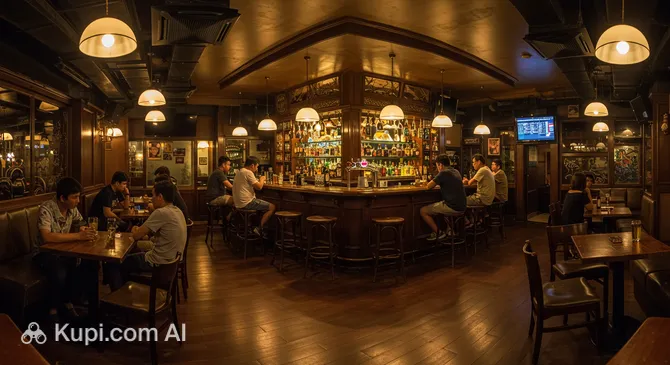
For those who prefer a more relaxed and sophisticated evening, the High Street Lounge is ideal. This venue is famous for its exquisite cocktails and elegant interior. If you're looking for an authentic European atmosphere, stop by Brotzeit — an excellent choice for connoisseurs of German cuisine and quality beverages in the heart of Asia.
Brotzeit. Illustration.
Source: Kupi.com AI
Traveler photos:
Safety during the night in the central districts of Taguig is maintained at a high level; however, it is recommended to use official taxis or ride-hailing services to move between venues. Daytime entertainment in the city includes visits to modern cinemas, amusement parks, and interactive spaces in shopping malls, making leisure here fulfilling at any time of day.
Parks & Museums
Cultural leisure in Taguig is closely intertwined with the country's history and modern urban development trends. The city is home to several memorial sites dedicated to figures from Philippine history. These places serve as open-air museums of memory; one of these sites is officially recognized as an important cultural monument of national significance and is a must-visit for those who want to understand the region's historical context.
Park zones in Taguig are scattered, which is typical for a densely built-up metropolitan area. Nevertheless, you can find cozy squares and waterfront zones along the shores of Laguna de Bay. Proximity to the largest inland body of water in the Philippines creates potential for recreation, allowing residents and tourists to take a break from city noise while enjoying the water's surface and fresh breeze.
For lovers of contemporary art, the city offers exhibition spaces and galleries, often located inside large public and shopping centers. Exhibitions by Filipino artists and photographers are regularly held here. The combination of historical memorials and modern art spaces makes Taguig an interesting place for those seeking meaningful and diverse leisure within the city limits.
Getting Around
Taguig's transport system is an integral part of the vast machinery of the National Capital Region. The main means of transport for most residents remains the famous jeepney — brightly painted route vehicles that have become a national symbol. They run on established routes, connecting Taguig with other districts of the agglomeration, and are the most budget-friendly way to get around.
For more comfortable trips, tourists usually choose taxis or use mobile apps to call private cars. This allows you to avoid the heat and get directly to your destination. Bus service is also well-developed in the city, serving the main highways. It is important to remember that during peak hours, the metropolis's roads are heavily congested, so travel time can increase significantly.
Jeepney fares are paid in cash to the driver, while contactless payment methods are increasingly used in buses and modern taxis. Railway lines pass through neighboring districts of the capital agglomeration, providing additional mobility. Travelers are recommended to plan their movements in advance to use their time as efficiently as possible in this dynamic metropolis.
Accommodation
The choice of accommodation in Taguig can satisfy the needs of both business travelers and tourists looking for a comfortable stay. The city's hotel stock is represented by a wide range of properties: from modern business hotels of international chains to cozy apartments oriented toward long-term stays. Since the city is an important economic hub, most hotels offer high-level service and modern infrastructure.
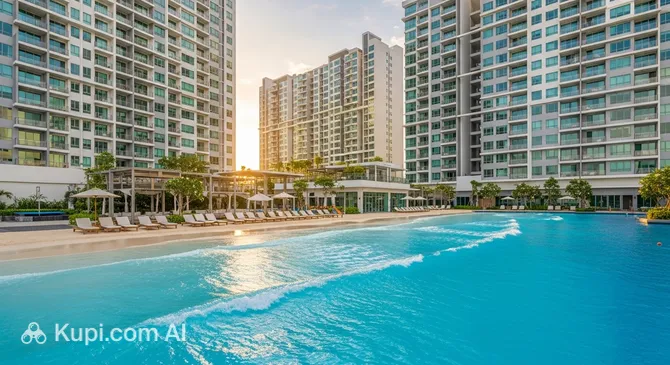
For those who want to enjoy a resort atmosphere without leaving the metropolis, an interesting option is Azure Paris Beach Club – Miami 1606. Such complexes offer guests access to artificial beaches and pools, which is a rarity for the densely built-up capital. This is an excellent choice for a family vacation or recharging after a busy day in the city.
Azure Paris Beach Club - Miami 1606. Illustration.
Source: Kupi.com AI
Traveler photos:
When planning a trip to Taguig, it is recommended to book accommodation in advance, especially during major business forums or national holidays. The majority of hotels are concentrated in developed areas with good transport accessibility, allowing easy access to shopping malls, offices, and key attractions across the entire metropolitan area.
Nearby Cities
Taguig serves as an excellent starting point for exploring the eastern part of the capital region and adjacent areas. Since the borders between cities within the agglomeration are often informal, travelers can easily make short trips to see different facets of metropolitan life. Proximity to Laguna de Bay adds a special flavor to the surroundings, combining urban landscapes with coastal zones.
One of the nearest destinations is Signal Village, located literally a couple of minutes away. It is also worth visiting districts such as Tuktukan or Maharlika Village. These places allow you to look behind the facades of modern business centers and see the daily life of the Philippine capital, get acquainted with local markets and the traditional lifestyle of city residents.
Exploring the immediate surroundings of Taguig will help you better feel the rhythm of this massive metropolis. Thanks to the developed road network and availability of public transport, such day trips will be a great addition to your journey, opening up new facets of the hospitable Philippines.
Shopping & Souvenirs
Shopping in Taguig is an exciting immersion into the world of modern shopping centers and colorful local markets. The city is part of the capital region's unified commercial space, offering a huge selection of goods: from international clothing brands to unique products by Filipino artisans. Most shopping zones are designed so that shopping can be combined with relaxation in cafes and entertainment centers.
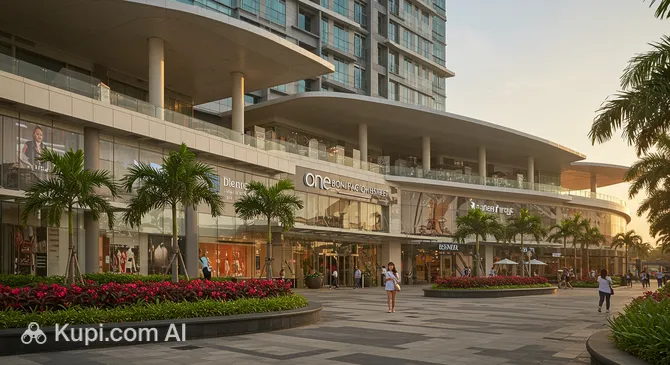
Among the most notable places is One Bonifacio High Street — a modern complex with open-air walking areas where shopping turns into a pleasant stroll. Another important point of attraction is Glorietta, which presents a colossal range of products for every taste and budget. These venues are considered among the best in the region for service quality and brand selection.
One Bonifacio High Street. Illustration.
Source: Kupi.com AI
Traveler photos:
Traditional Filipino textiles, natural pearl jewelry, and the famous local treats like dried mango are often brought back as souvenirs from Taguig. Most stores are open daily until late evening, and international bank cards are easily accepted in large centers. Visiting local markets will be a great addition to a mall crawl, allowing you to feel the authentic rhythm of big city life.