Support

Łazienki Palace

About

The Łazienki Palace, often called the Palace on the Water or the Palace on the Isle, is one of Warsaw's most picturesque residences and an outstanding example of architecture in Poland. Located in the famous Łazienki Park, it is a magnificent example of 18th-century Polish Classicism. This former residence of the last Polish king, Stanisław August Poniatowski, is now a popular tourist attraction.
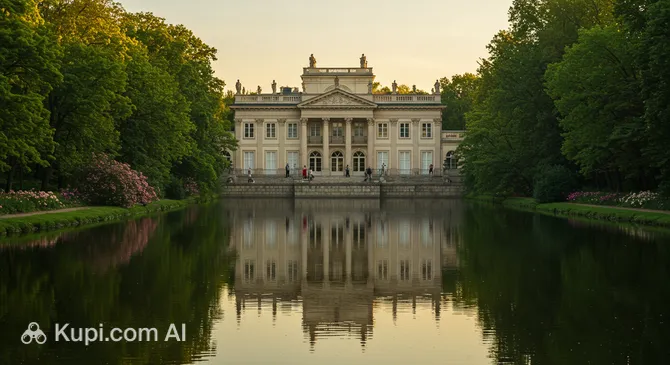
Łazienki Palace. Illustration.
Source: Kupi.com AI

Traveler photos:

The main feature of the palace is its location on an artificial island that divides the lake into two parts. The building is connected to the park by two elegant arcade bridges, creating the illusion that it is floating gracefully above the water. This intimate residence was originally built as a bathhouse pavilion, which gave the entire park complex its name ("łazienki" means "baths" in Polish).

The architectural appearance of the building is remarkably harmonious: an attic decorated with statues of mythological heroes rises above it, supported by columns. The palace is built around a former 17th-century bathhouse, with new halls and rooms added later. Inside, the luxurious interiors and a collection of paintings, including works by Rembrandt and Rubens, have been preserved. A visit to the Łazienki Palace is an opportunity not only to appreciate the beauty of classical architecture but also to enjoy the peaceful atmosphere of the royal park.

Contacts

For the most up-to-date information on opening hours, ticket prices, and current exhibitions, we recommend consulting official sources. The main contact details for the Łazienki Palace, including its address in Warsaw, are provided below for your convenience.

How to contactContact
AddressAgrykola 1, 00-460 Warszawa, Poland
Phone number+48 504 243 783
Websitewww.lazienki-krolewskie.pl

What to Do

A visit to the Łazienki Palace is an immersion into the atmosphere of 18th-century royal life. Exploring the rich interiors, designed in a mix of Baroque and Neoclassical styles, is the main activity for guests. On the ground floor, magnificent rooms await: the Bacchus Room, the former royal baths, an elegant ballroom, and a portrait gallery. Special attention should be paid to the Solomon Room, the rotunda with figures of Polish kings, and the dining room, famous for the "Thursday Dinners" hosted by King Stanisław August Poniatowski. There is also a picture gallery where masterpieces by Rubens and Rembrandt were once displayed.

Heading up to the first floor, you can see the more private part of the palace—the royal apartments. Here you will find another picture gallery, a study, bedrooms, and the monarch's wardrobe. As the palace is a branch of the National Museum in Poland, it regularly hosts temporary exhibitions and guided tours that offer a deeper understanding of the site's history. History and art lovers will appreciate the chance to study period household items and artworks in detail.

A visit would not be complete without a stroll through the picturesque Łazienki Park that surrounds the palace. It is a wonderful opportunity to enjoy nature and admire the architectural ensemble from different angles. In the park, you can take a slow walk along shaded alleys, feed the squirrels and peacocks that roam freely, or simply relax by the water while admiring the Palace on the Isle. During the summer season, free piano concerts are held at the Chopin monument, drawing large audiences.

Getting There

Getting to the Łazienki Palace, located in the heart of the park of the same name in Warsaw, is quite simple thanks to its excellent transport links. The most popular way is by public transport. Numerous bus routes, including Nos. 116, 166, and 180, stop right by the park at the Łazienki Królewskie stop. A bus ride from the Old Town or the city center takes about 15–20 minutes. You can also take tram No. 10 from the Central Station to the Plac Unii Lubelskiej stop, which is just a few minutes' walk from the park entrance.

For those who prefer more flexible options, taxis or ride-sharing apps are always available—the trip from the city center is fast and affordable. If you are staying nearby or simply enjoy walking, you can reach the park on foot. A walk from central Warsaw takes about 20–30 minutes and offers a great way to see more of the city. Additionally, you can take the metro to Politechnika station and walk to the park from there, which takes approximately 15 minutes.

Nearest city: Warsaw

History & Facts

The history of the Łazienki Palace begins in the 17th century, when a private Baroque-style bathhouse stood on this site instead of a royal residence. Originally built around 1683-1690 for the Polish magnate Stanisław Herakliusz Lubomirski, the pavilion was designed by the prominent architect of the time, Tylman van Gameren (also known as Tylman Gamerski), who created its initial look. This building, which gave the entire park its name ("łazienki" translates from Polish as "baths"), laid the foundation for the future architectural masterpiece of Warsaw.

Fundamental changes occurred in the second half of the 18th century when the palace became the property of the last king of Poland, Stanisław August Poniatowski. It was he who decided to transform the pavilion into his luxurious summer residence. Between 1772 and 1793, under the direction of architect Domenico Merlini, the palace underwent an extensive reconstruction. The building acquired elegant Early Neoclassical features, and its interiors were richly decorated and filled with priceless works of art, reflecting the monarch's enlightened taste.

The 20th century brought severe trials to the Łazienki Palace. During World War II, following the 1944 Warsaw Uprising, retreating German troops set the palace on fire. Unique interiors and part of the art collection, including paintings by Rembrandt and Rubens, were irrevocably lost in the blaze. Fortunately, plans to completely blow up the building were not carried out, allowing its structure to survive. Thanks to extensive and meticulous restoration work completed in 1964, the palace was fully restored and today once again appears before visitors in all its splendor.

Time Needed

When planning a visit to the Łazienki Palace, keep in mind that it is not just a single building, but an entire palace and park complex. For a quick tour of the Palace on the Isle itself, including its main halls and galleries, you will need about 1–1.5 hours. This is enough time to appreciate the luxurious interiors and get a general impression of this unique royal residence.

However, to truly soak up the atmosphere of this place, it is recommended to set aside at least 2–3 hours. During this time, you can not only leisurely walk through the palace halls but also take a pleasant stroll through the adjacent Łazienki Park. You can see the famous Chopin monument, the picturesque amphitheater on the water, and simply enjoy the peaceful nature while watching the peacocks and squirrels roaming freely.

For a deeper dive into the history and culture of the complex, you should plan for half a day (about 4-5 hours). This will allow you to visit other important sites within the park in addition to the Palace on the Isle, such as the Old Orangery with the Royal Theatre, the Myślewicki Palace, and the White House. Thus, the duration of your visit directly depends on your interests and the amount of time you have available.

Working Hours

The Łazienki Palace, like other museum sites within the park, is open to visitors year-round, though opening hours may vary depending on the season. Generally, the palace is closed on Mondays. From Tuesday to Sunday, the palace welcomes guests, though closing times may differ on different days. For example, from Tuesday to Thursday and on Sundays, the sites may be open until 4:00 PM or 6:00 PM, while on Fridays they may stay open until 5:00 PM or even 8:00 PM. It is important to note that Łazienki Park itself is open daily from early morning until late evening, and entry to the park is free.

A ticket is required to visit the palace interiors, but there is a nice bonus: entry to the Palace on the Isle and other pavilions is free every Friday. On these days, the flow of visitors may be higher, so it is worth arriving early. On regular days, advance booking is not mandatory but can be convenient, especially during the peak tourist season. To avoid any misunderstandings and plan your visit as best as possible, it is highly recommended to check the current opening hours and ticket prices on the official museum website lazienki-krolewskie.pl before your trip.

DayOpening hours
MondayClosed
Tuesday10:00 – 17:00
Wednesday10:00 – 17:00
Thursday10:00 – 18:00
Friday10:00 – 18:00
Saturday12:00 – 20:00
Sunday10:00 – 16:00

Nearby

Visiting the Łazienki Palace is just the starting point for exploring the rich cultural and historical heritage of Warsaw. The area surrounding the palace and park complex is filled with other interesting sites that will help you gain a deeper understanding and feel for the atmosphere of the Polish capital. A stroll through this district will allow you to see not only the royal residence but also other significant landmarks within walking distance.

Exploring nearby attractions will enrich your experience and make your trip more diverse. Many of them are located very close by, making it easy to create a packed full-day itinerary by combining museum visits, park walks, and discoveries of historic architecture.

NameDistance
Royal Łazienki Park0.2 km
Frédéric Chopin Monument0.5 km
Geological Museum1.7 km
Bibenda2.1 km
National Museum in Warsaw2.1 km
Stary Dom2.3 km
Pianka 24-Hour Restaurant2.7 km

Have you reached the end of the page?

So the route has been studied inside and out