Support

Mauzoleum Pomnika Walki i Męczeństwa

About

The Mausoleum of the Monument to Struggle and Martyrdom is a monumental structure located in the city of Lublin, serving as an eternal reminder of the tragic pages of history. Situated in Poland, this site is the central part of the Majdanek State Museum memorial complex.
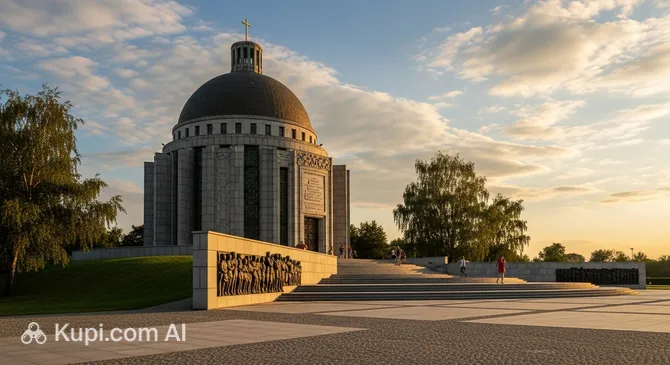
Mausoleum of the Martyrdom Memorial
Mausoleum of the Martyrdom Memorial. Иллюстрация. Источник: Kupi.com AI

The architectural ensemble, designed by Wiktor Tołkin in 1969, is striking with its austere aesthetic. Its focal point is a massive concrete dome, beneath which are gathered the remains of those who suffered here during the war years. This site is recognized as one of Europe's most significant historical landmarks.

Today, the memorial spans approximately 90 hectares and is included in the country's National Register of Museums. Visitors come here to pay their respects and witness a unique combination of memorial architecture and authentic camp structures that have survived to this day.

Contacts

To plan your visit and obtain the most up-to-date information, it is recommended to use the official contact details of the complex. This will help you clarify visit details in advance and navigate the museum's extensive grounds.

How to contactContact
Address20-325 Люблин, Польша
Phone+48 81 710 28 33
Websitewww.majdanek.eu

What to Do

Visitors can take a thoughtful walk through the vast grounds of the memorial museum, which covers about 270 hectares. The Mausoleum with its concrete dome is always a key point on the route, where you can pay tribute to the victims, as well as view the Monument to Struggle and Martyrdom that greets guests at the entrance.

During your visit, it is recommended to explore the preserved barracks and administrative buildings, which provide insight into the scale and architecture of the camp complex. Particular attention should be paid to the crematoria and the world's first monument to the victims of the Holocaust, unveiled in 1953. Flowers are often left here, or candles lit as a sign of mourning.

For a deeper dive into history, you can join one of the guided tours, where guides provide detailed information about the exhibits and memorial sites. The calm atmosphere of the complex encourages reflection and careful study of every detail of this historical panorama.

Getting There

Reaching this historic site is quite simple, as it is located just 3 kilometers from the city center. The main entrance to the memorial complex is at 20-325 Lublin, Poland, and can be reached via public transport—buses and trolleybuses run regularly to stops in the Majdanek area.

If you prefer more comfort, a taxi ride from the center of Lublin will take no more than 10–15 minutes. For those traveling by private car, parking is provided at the museum entrance. A walking route is also possible, allowing you to gradually immerse yourself in the suburban atmosphere before visiting the complex.

Ближайший город: Lublin

History & Facts

The construction of this grand monument was completed in 1969 based on the design of the talented architect Wiktor Tołkin. The Mausoleum, with its massive concrete dome, was specifically designed to house the ashes of victims found on the camp grounds, turning the architectural structure into a sacred place of memory.

The memorial museum itself began its work as early as November 1944, becoming the first institution of its kind in Europe to be opened directly on the site of a former concentration camp. The development of the Majdanek territory began in the autumn of 1941 and eventually expanded to 270 hectares under the direction of Hans Kammler.

Key historical milestones include the commissioning of the crematoria in 1942 and 1943, as well as the unveiling of the first-ever Holocaust memorial in 1953. Today, the complex carefully preserves 22 authentic barracks and administrative buildings that stand as silent witnesses to the past.

Time Needed

To thoughtfully explore the entire territory without rushing, including the Mausoleum and adjacent monuments, most visitors need between 2 to 4 hours. This is sufficient time to walk along the memorial path and study the main exhibitions.

For those planning to examine the historical documents in the barracks in detail and visit the more remote parts of the complex, half a day may be required. The scale of the site is significant, so it is worth planning your energy and time in advance.

Working Hours

The memorial complex welcomes visitors according to the following schedule: from Tuesday to Saturday, doors are open from 09:00 to 18:00. Please note that Mondays and Sundays are days off.

As opening hours may change depending on the season or holidays, it is recommended to check for current information on the museum's official website before your visit.

DayWorking hours
понедельникЗакрыто
вторник09:00–18:00
среда09:00–18:00
четверг09:00–18:00
пятница09:00–18:00
суббота09:00–18:00
воскресеньеЗакрыто

Nearby

Exploring the surrounding area after visiting the memorial can help shift your perspective and get to know the region's rich culture more deeply. Within a few kilometers of the complex, you will find both modern entertainment centers and the ancient architectural landmarks of Lublin.

NameDistance
State Museum at Majdanek1.2 km
Felicity2.1 km
Aqua Lublin2.9 km
Icemania2.9 km
Ludowy Park3.3 km
Perłowa Beer Hall3.7 km
St. John the Baptist Cathedral3.9 km

Reached the end of the page?

That means the route is fully explored