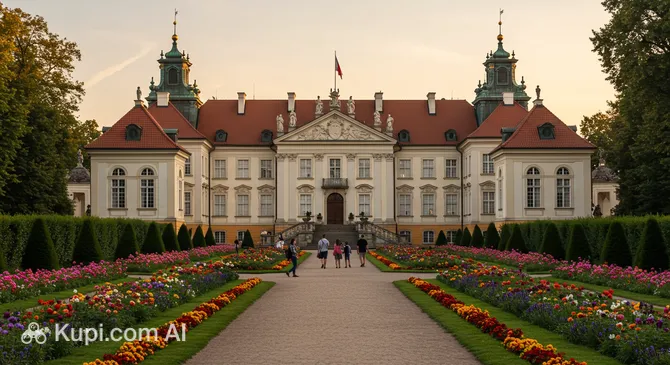
The Museum of King Jan III's Palace at Wilanów, often simply called Wilanów Palace, is a magnificent 17th-century royal residence located in the southeastern part of Warsaw. This palace and park ensemble is one of Poland's most valuable cultural monuments and is considered a masterpiece of Baroque architecture, serving as a point of national pride. Originally known as "Villa Nova," the palace was built as a suburban summer residence for King Jan III Sobieski.
Construction of the palace began in 1677 under the direction of court architect Augustyn Locci. Although the original design was more modest, the King's successes and growing influence contributed to its expansion. The architectural appearance of the building is unique, as it combines features of the European Baroque, an Italian villa, and a traditional Polish manor. Subsequent owners, including the noble Sieniawski, Lubomirski, and Potocki families, continued to build and change the interiors until the 19th century, which is why today one can see a blend of Baroque, Classicism, and Gothic styles.
Traveler photos:
In 1805, thanks to the efforts of Stanisław Kostka Potocki, one of the first art museums in Poland was opened in the palace. Today, Wilanów Palace is not only a historical monument but also a popular tourist destination, attracting visitors with its luxurious interiors, rich collection of artworks, and magnificent park. The palace complex includes gardens of various styles, from Baroque to English landscape park, making it an ideal place for walking and discovering history.