Support

The Museum of Pharmaceutical History

About

The Museum of the History of Pharmacy is one of the most unusual and atmospheric attractions that ancient Sibiu has to offer. Housed in a historic 16th-century Gothic building, the museum transports visitors back to a time when medicine bordered on alchemy and remedies were prepared by hand in mysterious laboratories. This very house was once home to the oldest pharmacy opened in a country like Romania, giving the site a special status.
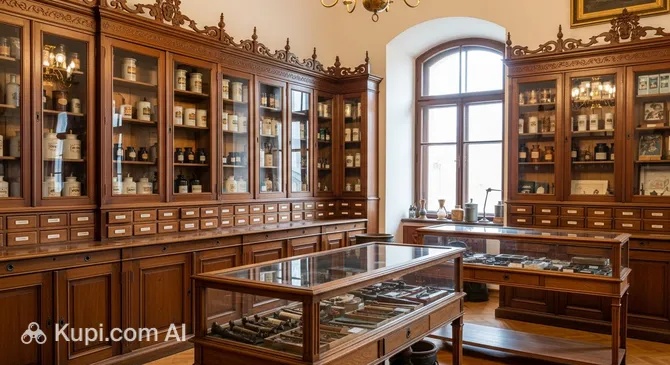
Pharmacy Museum
Pharmacy Museum. Иллюстрация. Источник: Kupi.com AI

Inside the museum, the authentic atmosphere of 18th-century pharmacies has been recreated. Visitors can see massive wooden counters, elegant shelves, and thousands of vintage exhibits: from apothecary jars with mysterious inscriptions to complex glass retorts. The museum is an integral part of the Brukenthal National Museum and is rightfully considered one of the richest collections of pharmaceutical artifacts in Eastern Europe.

Special attention is paid here not only to traditional treatment methods but also to the birth of homeopathy. A separate room is dedicated to the work of Samuel Hahnemann, making the museum a must-visit for anyone interested in science and the history of human knowledge about health. This is not just an exhibition of objects, but a true journey through centuries of medical discovery.

Contacts

If you are planning a visit to this unusual museum, you will find the up-to-date contact information for inquiries and details useful.

How to contactContact
AddressPiața Mică 26 Ground Floor, 550182 Sibiu, Румыния
Phone+40 269 218 191
Websitewww.brukenthalmuseum.ro

What to Do

A visit to the museum is, first and foremost, a visual delight. You can examine a unique collection of six thousand items, including elegant ceramic vessels, wooden herb boxes with yellowed labels, and massive iron presses. In the central hall, be sure to look for the chemist's laboratory: rare brass scales and glass retorts are on display here, allowing you to imagine exactly how pharmacists of past centuries created their mixtures.

Of particular interest is the back room dedicated to the founder of homeopathy, Samuel Hahnemann. Here you can see original tools and plans that may have been developed by the scientist specifically during his time living in Sibiu. This is a rare opportunity to touch the origins of a practice now known worldwide.

The museum offers a calm and educational experience that contrasts with the noise of modern streets. You can study 18th-century pharmaceutical practices in detail, comparing them with modern medicine. Photography enthusiasts should keep in mind that photography inside is usually subject to a fee (around $30), so it is best to clarify the conditions at the ticket office before starting your tour. This place is ideal for those seeking an intellectual experience who love observing fine details.

Getting There

The Museum of the History of Pharmacy is located at Piața Mică 26, on the eastern side of the Small Square. This is the oldest part of the city, so it is best to reach it on foot while enjoying the atmosphere of the medieval streets. If you are in the Large Square (Piața Mare) area, the walk will take only a couple of minutes.

For those arriving from outlying districts or Sibiu Airport (SBZ), a taxi is the best option—the trip to the edge of the pedestrian zone takes about 20–30 minutes. You can also use city buses heading to the center and then walk for about 10–15 minutes. From the main railway station, the walk is also short, taking about 15 minutes through the historic center.

Please note that parking in the city center is very limited, and many streets are pedestrian-only. If you are traveling by car, it is recommended to leave it in one of the paid parking lots outside the historical core and continue on foot.

Ближайший город: Sibiu

History & Facts

The building that houses the exhibition today is a valuable artifact in its own right. This Gothic house was built in 1569, and for over 150 years, the "La Ursul Negru" (The Black Bear) pharmacy operated within its walls. However, the pharmaceutical business in this location has even deeper roots: it is believed that the first pharmacy in what is now Romania opened in Sibiu as early as 1494.

In the Middle Ages, Sibiu was a true scientific center of Transylvania. The number of chemical laboratories here exceeded those of any other city in the region. This rich heritage made it possible to assemble an impressive collection of more than 6,000 exhibits reflecting the development of medicine from the 15th to the 19th century.

A special page in the museum's history is linked to the name of Samuel Hahnemann, the founder of homeopathy. Some theories suggest that he began developing his first ideas and methods during his stay in Sibiu. The museum preserves unique instruments and drawings related to his work, making this a significant site for researchers of alternative medicine from around the world.

The museum officially opened its doors to the public in 1972, becoming an important part of the Brukenthal National Museum. This association emphasizes Sibiu's status as one of the oldest and most significant museum centers in the country, preserving the traditions of European pharmacy.

Time Needed

To leisurely explore all the halls and study the antique instruments in detail, visitors usually need 1 to 1.5 hours. This is plenty of time to immerse yourself in the atmosphere of a medieval laboratory and read information about the most interesting exhibits.

If you have a deep interest in the history of medicine or homeopathy, you might spend a bit more time studying the collection of 6,000 artifacts. However, for a standard tourist visit, an hour will be quite sufficient, making it easy to combine a museum trip with other sights in the Small Square.

Working Hours

Museum opening hours may vary depending on the season, as it is part of the Brukenthal National Museum structure. To ensure a successful trip, it is recommended to check the current schedule on the museum's official website before your visit.

Typically, the museum is closed on Mondays and public holidays, which is standard practice for cultural institutions in the region. Plan your visit for the first half of the day to have enough time for a leisurely exploration of the collection.

Nearby

After visiting the pharmacy museum, be sure to take a stroll through the surrounding area. Its location in the historical heart of the city allows you to see many iconic sites without even leaving your route. A walk through the Small and Large Squares will help you feel the spirit of old Transylvania even more deeply.

NameDistance
Bridge of Lies0.1 km
Council Tower0.1 km
St. Andrew's Scottish Pub0.1 km
Great Square0.2 km
Brukenthal National Museum0.2 km
Sibiu Lutheran Cathedral0.2 km
Brukenthal National Museum0.2 km

Reached the end of the page?

That means the route is fully explored