Support

"Holy Trinity" Orthodox Cathedral

About

The majestic Holy Trinity Cathedral in Sibiu is the heart of Orthodox Transylvania and one of the most recognizable architectural symbols that Romania takes pride in. Built of brick in a Neo-Byzantine style with Baroque elements, the temple impresses with its scale, being the country's second-largest Orthodox cathedral.
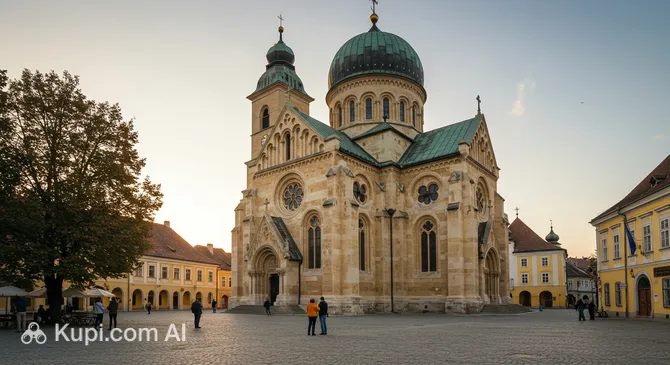
Holy Trinity Orthodox Cathedral
Holy Trinity Orthodox Cathedral. Иллюстрация. Источник: Kupi.com AI

The building's exterior was inspired by the legendary Hagia Sophia in Constantinople, giving it a special monumentality and grandeur. The cathedral's height reaches nearly 35 meters, and its domes and towers dominate the panorama of the city's historical center. It is not just a religious structure, but a true masterpiece of early 20th-century engineering and artistic thought.

Inside, a luxurious interior awaits visitors: rich paintings, skillful mosaics, and a magnificent iconostasis create an atmosphere of solemnity and peace. The cathedral serves as the active seat of the Archdiocese of Sibiu, attracting not only pilgrims but also art lovers who appreciate the Byzantine heritage in architecture.

Contacts

For your convenience, we have gathered the essential contact information to help you plan your visit to this spiritual center. Please note that the cathedral is an active church, so it is advisable to check the current schedule for festive services before your visit. Current information about the temple can be found on the city's official cultural heritage portal.

How to contactContact
AddressStrada Mitropoliei 33, Sibiu 550179, Romania
Phone+40 269 211 584
Websitepatrimoniu.sibiu.ro

What to Do

Once inside the cathedral, the first thing to notice is the unique frescoes and paintings that cover the vaults and walls. Observing the detailed biblical scenes and the intricate ornamentation of the iconostasis offers a complete immersion into the aesthetics of Transylvanian Orthodox art. The craftsmanship of the decorative elements is striking, even to those far from religion.

Architecture enthusiasts can look for the harmonious combination of Byzantine forms and Baroque details in the design of the facade and interior space. Photography is permitted here (provided silence is maintained and respect is shown to worshippers), so you can capture the interplay of light under the massive dome or the elegance of the wrought-iron elements.

If your visit coincides with a service, you can hear beautiful choral singing, which sounds particularly solemn within the cathedral walls thanks to the magnificent acoustics. At other times, the temple offers an atmosphere of tranquility, perfect for taking a short break from the city bustle and simply enjoying the silence.

Getting There

Finding this majestic cathedral is easy, as it is located in the very heart of the historical center. Walking is the best way to reach your destination while enjoying the ancient streets: from any point in the central part of the city, the walk will take no more than 5–10 minutes.

If you are arriving in the city by train or intercity bus, you can reach the center from the railway station or bus station by city bus or taxi. The trip from the station to the center takes only a few minutes, and Mitropoliei Street (Strada Mitropoliei) will serve as a landmark for the driver.

For those who prefer comfort, taxis in Sibiu operate around the clock, and you can always call a car via a mobile app or find one at designated stands. Most of the city's popular walking routes naturally lead tourists to the doors of this monumental building.

Ближайший город: Sibiu

History & Facts

The vision for constructing such a massive cathedral belonged to Metropolitan Andrei Șaguna, who began working on the project as early as the mid-19th century. His initiative received support at the highest level: in 1857, Austrian Emperor Franz Joseph I personally donated 1,000 gold florins toward the construction, while the Metropolitan himself contributed 2,000 florins. The spiritual zeal of the community allowed for the collection of the necessary funds to realize this ambitious idea.

Actual construction began only in 1902 on the site of a small Greek church from the late 18th century. To choose the best look for the future cathedral, a large-scale architectural competition was announced, with 31 projects participating. The winners were architects from Budapest—Virgil Nagy and Iosif Kamner—who managed to harmoniously combine Byzantine traditions with the European trends of the time.

The solemn consecration of the completed cathedral took place on April 30, 1906. Interestingly, four bells were originally installed in the bell towers; however, history left its mark: three of them were seized and melted down for military needs during the years of the First World War. It was not until 1926 that the cathedral regained its full voice when new bells, cast specifically for the temple, were installed.

Today, this cathedral is considered not only a religious center but also a symbol of the resilience of the Orthodox community of Romania in Transylvania. The building's architectural power and historical significance make it an object of close attention for historians and art critics from all over the world.

Time Needed

To leisurely explore the interior of the church, admire the paintings, and feel its monumentality, most tourists need between 30 and 60 minutes. This time is sufficient for a visual introduction to the main details of the architecture and interior decoration.

If you plan to attend a church service or study the iconostasis and frescoes in detail, you should set aside a bit more time for your visit. The cathedral is the country's second-largest Orthodox church, so there is truly much to see both inside and out.

Working Hours

The doors of the cathedral are open to parishioners and travelers daily, providing free access to the sacred relics and architectural beauties throughout the day. The temple's schedule remains unchanged from Monday to Sunday:

Monday — Sunday: 07:00 – 20:00.

Please note that during morning and evening liturgies, access for tourists to explore some parts of the temple may be temporarily restricted to avoid disturbing the performance of church sacraments.

7:00 – 20:00

Nearby

After visiting the cathedral, be sure to spend some time exploring its immediate surroundings, as Sibiu is literally steeped in history. A walk through the old town will allow you to see architectural masterpieces from different eras and immerse yourself in the atmosphere of medieval Europe.

NameDistance
ASTRA Museum of Traditional Folk Civilization0.2 km
Brukenthal National Museum0.3 km
Altemberger House History Museum0.3 km
Brukenthal National Museum0.3 km
Sibiu Public Bath0.3 km
Potters' Tower0.3 km
Great Square0.4 km

Reached the end of the page?

That means the route is fully explored