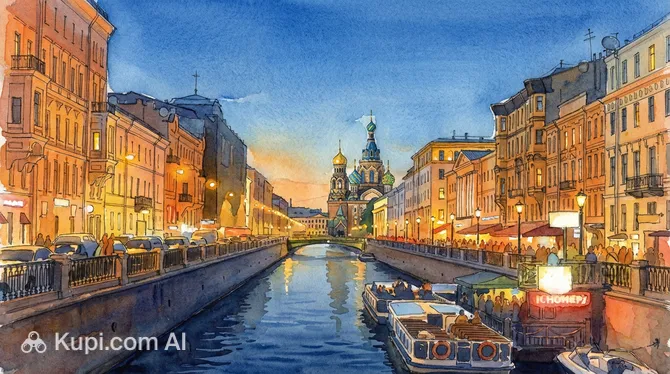
The Church of the Savior on Spilled Blood is one of the most vibrant and memorable architectural masterpieces in St. Petersburg and all of Russia. Its official name is the Cathedral of the Resurrection of Christ, but it is world-famous by its popular name. The church was built as a monument on the exact spot where Emperor Alexander II was mortally wounded on March 1, 1881, which explains its name. Inside the cathedral, a section of the cobblestone road where the Tsar's blood was spilled has even been preserved.
Traveller photos:
The church's appearance differs dramatically from the classical architecture of St. Petersburg. Inspired by the traditions of 17th-century Russian architecture, it resembles a fairytale palace, decorated with multicolored domes, tiles, and "kokoshnik" gables. The height of the central spire reaches 81 meters. The church's facades and interiors are covered with unique mosaics, the total area of which exceeds 7,000 square meters, making it one of the largest mosaic ensembles in Europe.
Today, the Church of the Savior on Spilled Blood functions as a state memorial museum, attracting tourists from all over the world. Its interior is no less striking than its exterior: the walls and vaults are completely covered with complex mosaic panels featuring biblical scenes, created based on sketches by prominent Russian artists, including Viktor Vasnetsov and Mikhail Nesterov. Visiting the church is an opportunity not only to touch an important page of history but also to enjoy the greatness of Russian art.