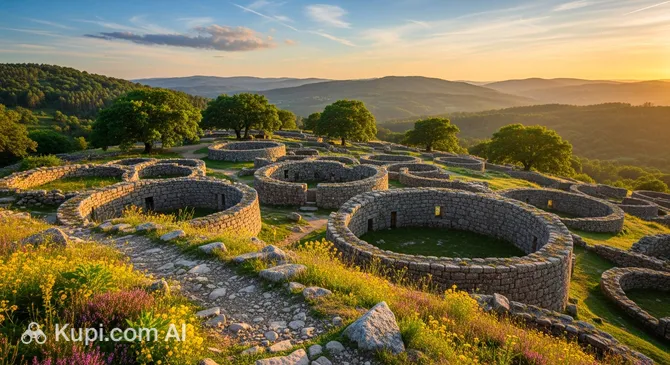
On a picturesque hill in the Santo Tomé district of Ourense lies a unique archaeological park — Castro de Santomé. This site is an open-air museum where time seems to have stood still, preserving traces of the ancient "castro culture." It is a true gift for those drawn to ancient Spain and its pre-Roman past.
Santomé Hillfort. Illustration.
Source: Kupi.com AI
Traveler photos:
The monument consists of the remains of a fortified settlement belonging to Gallaecian tribes. Here, you can see the foundations of traditional stone houses, defensive structures, and fragments of streets that once formed the backbone of Iron Age life. Castro de Santomé is part of a network of significant archaeological zones in Galicia and is managed by the Provincial Archaeological Museum.
What makes this place special is its accessibility and clarity. Unlike enclosed museum halls, history here is literally beneath your feet. While strolling among the ruins, visitors can see for themselves how settlements were organized thousands of years ago and appreciate the skill of ancient builders.
Contacts
To clarify details before your visit, you can use the official resources of the museum complex. Castro de Santomé is managed by regional cultural authorities that oversee the monument's preservation.
The main reason to visit Castro de Santomé is the opportunity to touch living history. You can take a stroll through ancient "streets," peer into the outlines of circular residential buildings, and examine the masonry of the defensive walls in detail. Specially laid paths and information boards will help you navigate the settlement's layout.
For photography enthusiasts, this place will be a real discovery. The contrast between the gray stone of ancient structures and the vibrant green of Galician nature creates stunning shots. Don't forget to climb to the higher points of the monument: from there, beautiful panoramic views of the surroundings and the region's river valleys unfold.
Visiting the castro is also an excellent excuse for a peaceful break. There is no city bustle here, allowing you to reflect on the change of eras in silence. It is an ideal spot for thoughtful contemplation, where you can imagine the daily life of ancient tribes while admiring authentic landscapes that have remained almost unchanged over the passing centuries.
Getting There
Reaching this archaeological monument from the center of Ourense is quite simple. If you prefer walking, the path from the city cathedral takes about 20–30 minutes. The route passes through city blocks, gradually transitioning into a greener area on the outskirts.
For those who value comfort, a taxi is always available — the trip from the center will take no more than 10 minutes. You can also use local public transport: city buses regularly run toward the Santo Tomé district, stopping near the entrance to the complex.
If you are traveling by car from Santiago de Compostela Airport or the train station, follow the A-52 highway. The entire journey takes approximately one hour. For navigation, it is convenient to use the coordinates 42.3478442, -7.829521, which will lead you directly to the start of the historical route.
Nearest city: Ourense
History & Facts
The history of this site is inextricably linked to the mysterious castro culture, which flourished during the pre-Roman period (approximately from the 8th century BC to the 1st century AD). The Gallaecian tribes inhabiting these lands built their settlements on heights, turning them into impregnable fortresses surrounded by powerful walls.
The architecture of Santomé is striking in its functionality: here you can see the foundations of the famous circular stone houses. This shape helped the buildings withstand strong winds and effectively retain heat. A communal square was usually located in the center of the settlement, where important community matters were decided.
During archaeological excavations, significant finds were made here that shed light on the daily life of ancient residents. Scientists discovered fragments of exquisite ceramics, iron tools, and even sculptures of warriors. Today, these artifacts are on display at the Provincial Archaeological Museum of Ourense, serving as a reminder of the region's rich historical heritage.
Time Needed
To leisurely explore the main ruins, study the information panels, and enjoy the ancient atmosphere, most visitors need between 1 and 2 hours. The territory is quite compact, but the abundance of small architectural details may encourage you to stay longer.
If you plan to not only walk through the castro itself but also visit the city's main archaeological museum, where the primary finds from this site are kept, we recommend setting aside 3–4 hours. This will provide the most complete understanding of the ancient Gallaecian culture.
Working Hours
According to information from open sources, Castro de Santomé is available for visiting daily and around the clock. This makes it an extremely convenient destination for tourists, allowing you to plan a visit for any time — whether it's early morning for quiet photos or the pre-sunset hours to watch the city panoramas.
Despite the open access, it is recommended to periodically check for current updates on the Provincial Archaeological Museum's website. During periods of new active excavations or conservation work, some areas may be temporarily restricted for visitors.
Open 24 hours
Nearby
Exploring the surroundings of Castro de Santomé will allow you to get better acquainted with the history and culture of Galicia. After visiting the ancient ruins, it is worth heading to the city center, where modern life coexists with grand medieval monuments and famous thermal springs.
Many interesting locations are located very close by. Here is a list of sites that can complement your travel itinerary: