Support

Museo del Agua

About

Strolling along the historic canal, it is impossible to miss the unusual building that now houses the Water Museum (Museo del Agua). This unique attraction in the city of Palencia occupies a former granary, serving as a magnificent example of how industrial architecture of the past finds new life in modern culture.
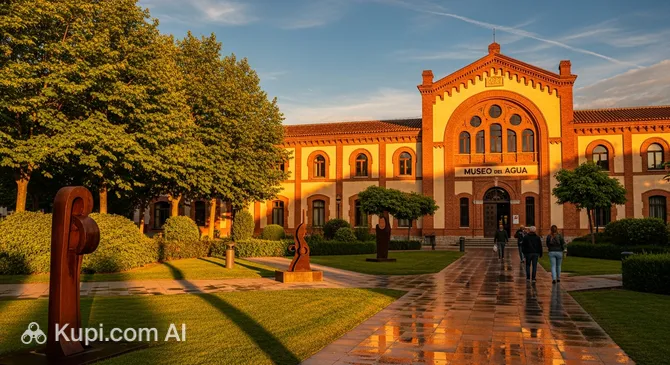
Water Museum
Water Museum. Иллюстрация. Источник: Kupi.com AI

In a country like Spain, the museum's exhibition holds special significance, as water resource management has always been critical to the region. Visitors can immerse themselves in the history of water supply through engaging installations, old blueprints, and mechanisms that once ensured the city's life and prosperity.

The museum is harmoniously integrated into the embankment landscape, highlighting the inseparable link between urban development and the element of water. This site will be equally interesting to fans of technical history and those who appreciate the aesthetics of industrial heritage and peaceful walks by the water.

Contacts

To clarify visiting details or to book a group tour, you can use the museum's contact information below:

How to contactContact
AddressP.º Dársena del Canal, s/n, 34005 Palencia, Испания
Phone+34 979 70 65 23

What to Do

Inside the museum, you will find interactive exhibits that clearly demonstrate the journey of water from natural sources to city taps. Here, you can study detailed models of aqueducts, vintage blueprints of locks, and mechanisms once used to manage the canal's flow. The interactive zones are particularly popular with children, as they allow them to literally "play" with models of water systems.

It is certainly worth taking the time to explore the building itself—its massive walls and wooden beams preserve the atmosphere of an old warehouse. Temporary exhibitions dedicated to ecology and environmental conservation are often held inside, making the visit not only educational but also relevant in the context of modern ecological challenges.

After leaving the building, be sure to take a walk along the Palencia Canal. This area is essentially an extension of the museum in the open air. Here, you can see working elements of hydraulic systems, watch the calm flow of water, and enjoy the silence away from busy tourist routes, creating ideal conditions for thoughtful relaxation.

Getting There

The Water Museum is located at P.º Dársena del Canal, s/n, right by the picturesque canal. If you are already walking in the city center, the walk from the cathedral will take about 15–20 minutes (approximately 1–1.5 km to the northeast). The route passes through charming streets, gradually leading to the city's main water artery.

For those who prefer to drive, follow the signs for Paseo de la Dársena del Canal. Parking spaces are available near the site. You can also take a taxi—the ride from the central part of the city is quick and inexpensive.

Travelers arriving from other regions can reach the city by train or bus. The local railway station has regular connections to Madrid, Valladolid, and Burgos. From the station, the museum can be reached by taxi in just 5–10 minutes or by local bus lines that pass near the canal.

Ближайший город: Palencia

History & Facts

The building that houses the exhibition today has deep historical roots. Originally, it served as a grain warehouse for the canal. The canal itself was an ambitious 18th-century engineering project, created during the era of enlightened absolutism to improve irrigation and the transportation of goods in the region. The construction of this water system was a major catalyst for the economic prosperity of the area.

The canal project included a complex system of dams, locks, and distribution mechanisms, many of which remained functional for centuries. The old warehouse building is an excellent example of the industrial architecture of that time. It stands as a silent witness to the transition from a traditional agrarian society to the beginning of the industrial age, when water resource management became the key to progress.

The modern museum was founded to preserve the memory of this unique heritage and highlight the contribution of past engineers to the city's development. The exhibits cover a vast period—from the first irrigation schemes of the 18th century to the latest modern environmental initiatives, showing how water shaped the face and destiny of this region.

Time Needed

To explore all the halls at a leisurely pace and delve into the details of the interactive stands, visitors usually need about 1–1.5 hours. This is enough time to appreciate the historical artifacts and learn about the engineering solutions of the past.

If you plan to complement your visit with a walk along the canal itself and an inspection of the external hydraulic structures, we recommend allowing about 2 hours. Such a relaxed stroll will allow you to fully experience the atmosphere of this open-air industrial monument.

Working Hours

When planning your visit, please note the opening hours, as the museum is not open every day. You can visit the exhibition on Friday and Saturday from 10:00 to 14:00 and from 16:00 to 19:00, and on Sunday only in the morning—from 10:00 to 14:00.

On weekdays (Monday to Thursday), the museum is usually closed to the public. It is recommended to check for current information on official city resources before your trip, as opening hours may change during holidays.

DayWorking hours
понедельникЗакрыто
вторникЗакрыто
средаЗакрыто
четвергЗакрыто
пятница10:00–14:00, 16:00–19:00
суббота10:00–14:00, 16:00–19:00
воскресенье10:00–14:00

Nearby

After immersing yourself in the history of water technology, take some time to explore the surrounding area. The museum's location makes it easy to combine your visit with other iconic landmarks, many of which are within walking distance.

NameDistance
Canal de Castilla Dock0 km
Puentecillas Bridge0.2 km
Puente Mayor0.2 km
El Sotillo de Los Canónigos0.3 km
Archaeological Museum of Palencia0.4 km
Church of San Miguel, Palencia0.4 km
Huertas del Obispo0.6 km

Reached the end of the page?

That means the route is fully explored