Support

Pollenca

About

Pollença is a true Mediterranean gem, nestled in the north of Mallorca at the foot of the majestic Serra de Tramuntana mountains. These mountains not only provide a breathtaking backdrop but also shield the town from cold winds, creating a uniquely mild microclimate. Pollença captivates visitors with its unique blend of an old town full of medieval charm and the vibrant Port de Pollença—a popular resort with stunning beaches on the coast of Spain.
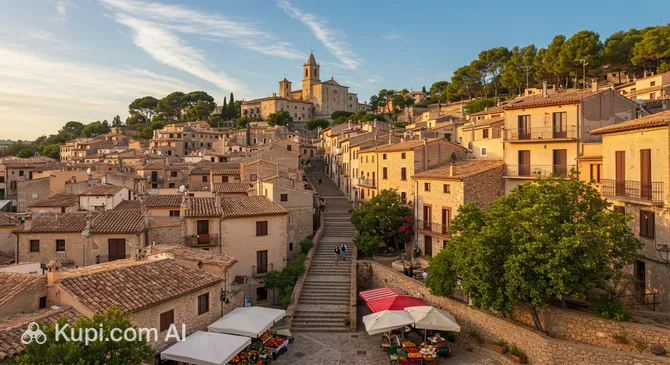
Pollenca. Illustration.
Source: Kupi.com AI

The municipality is home to approximately 17,000 residents, though this number increases significantly during the tourist season. Despite its popularity among travelers, Pollença has managed to preserve its authentic atmosphere and leisurely pace of life. The town serves as both the administrative and cultural heart of the region, regularly hosting various festivals, exhibitions, and sporting events that attract guests from all over the world.

Key features that make Pollença so appealing include its wonderful atmosphere woven from historical heritage, natural beauty, and coziness. Strolling through the narrow cobbled streets of the old town allows you to feel the breath of centuries past. A must-visit is Calvary (El Calvari)—a hill with a chapel reached by 365 steps, symbolizing the days of the year; from here, you can enjoy magnificent views of the town and its surroundings. Another iconic landmark is the Roman Bridge (Pont Romà), a reminder of the area's ancient history. Meanwhile, Port de Pollença beckons with its sandy beaches, crystal-clear Mediterranean waters, and picturesque pine-lined walks, perfect for a relaxed holiday.

Pollença is a place where everyone will find something to love: from the quiet contemplation of nature and historical monuments to active recreation and participation in cultural life. This charming corner of Mallorca is undoubtedly worth a visit to enjoy its unique character, the hospitality of the locals, and its unforgettable landscapes.

You can find more interesting facts on the history of Pollença page.
Weather Overview

The weather in Pollença is characterized by warm, predominantly dry summers and mild winters with low rainfall. The summer months, especially July and August, are the hottest, with average temperatures around 26.5°C and minimal precipitation. In winter, for example in January, the average temperature remains around 11.8°C, and the number of rainy days increases slightly, though rainfall remains moderate. Spring and autumn offer comfortable temperatures for walking and exploring the surroundings. Expect a warm summer with minimal rain and mild winters with occasional showers.

To learn more about weather conditions in different months, including average daily temperatures, precipitation levels, and the number of sunny days, check out the detailed forecast: Pollença Climate.

Average monthly temperature

Average monthly precipitation

Interesting Facts

Beyond its picturesque streets and famous landmarks, Pollença hides many fascinating stories and little-known details that make the town even more alluring for curious travelers.

Calvari Steps. Illustration.
Source: Kupi.com AI

Traveler photos:

  • Did you know that the history of Pollença dates back to the Roman Empire? The town was an important center on the island, and an echo of that era is the surviving Roman Bridge in Pollença, which once connected ancient routes.

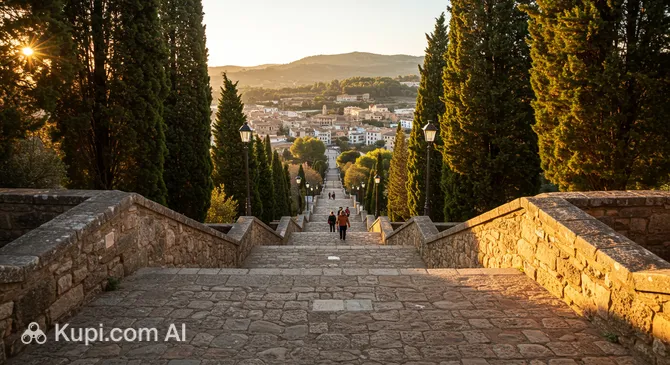
  • One of the town's most iconic features is the famous Calvary Steps. It consists of exactly 365 steps – one for each day of the year! Climbing them is considered a special ritual, and the reward is a breathtaking panoramic view from the hilltop.

  • Pollença is not just about ancient stones; it is also a vibrant cultural hub. Every year, the town hosts the prestigious International Music Festival, attracting classical music stars from all over the world. Additionally, colorful traditional festivals like Semana Santa and the Fiesta of Moors and Christians recreate historical events here.

  • This charming corner of Mallorca has served as a source of inspiration for many creative figures. For instance, the famous writer Ernest Hemingway visited Pollença and found peace and perhaps inspiration for his works here. The town and its surroundings have long attracted and continue to attract artists and writers.

How to Get There

There are several ways to reach the charming town of Pollença in northern Mallorca, but the most popular and convenient is by air. The town draws visitors with its picturesque nature, historic center, and proximity to the sea, so planning your route in advance will help make your journey as comfortable as possible.

The primary air gateway for those arriving in Mallorca, and consequently Pollença, is Palma de Mallorca Airport (PMI). It is located approximately 43.7 km south of Pollença. This is a very large international airport serving millions of passengers annually and receiving flights from most European capitals and major cities. The drive from the airport to Pollença by car or taxi usually takes about 1 to 1.5 hours. You can also travel from the airport to Palma and then take a bus to Pollença.

Another, albeit more complex, option is to fly into one of the major airports in mainland Spain, such as Barcelona-El Prat Airport (BCN). This massive international hub offers a huge number of flights from all over the world. From Barcelona (or other port cities like Valencia or Dénia), you can reach Mallorca by ferry or take a local flight to Palma. This route requires more time and additional transfers.

For your convenience, here is a summary of the airports that can be used for traveling to Pollença (please note that some are on the mainland or other islands and will require an additional crossing):

AirportPassenger trafficDistance
Palma de Mallorca Airport33.3 mln44 km
Menorca Airport4 mln103 km
Barcelona-El Prat Airport49.9 mln177 km
Ibiza Airport9.1 mln180 km
Reus Airport1.2 mln211 km

There is no direct rail connection to Pollença, as the town is on the island of Mallorca. However, if your trip through Spain includes train travel, you can reach major mainland cities that have ferry connections to Mallorca. The main city for this is Barcelona. The city's largest railway hub, Sants station, receives high-speed trains from all over Spain and abroad. From the station, it is easy to reach the Port of Barcelona, where ferries regularly depart for Palma. Barcelona also has the Estació de França station, which may be convenient depending on your route. After arriving at the Port of Palma, Pollença can be reached by taxi, rental car, or bus.

Below is information regarding railway stations on mainland Spain. To reach Pollença from these stations, a ferry crossing to Mallorca is required, followed by ground transport to Pollença:

StationPassenger trafficDistance
Estació de França2.3 mln181 km
Sants Railway Station46.5 mln183 km
Tarragona Camp Station2.5 mln203 km
Reus Railway Station373 000216 km
Girona Railway Station3.6 mln234 km

In addition to flights and combined trips (train + ferry), you can reach Mallorca by ferry directly from other mainland Spanish ports, such as Valencia and Dénia. Once on the island, buses run from Palma and other towns to Pollença, and taxi services or car rentals are always available for more freedom of movement around the island.

Main Attractions

Pollença, a charming town in Mallorca, attracts travelers with its rich history and picturesque corners. Here, everyone will find something to enjoy, from ancient monuments to atmospheric squares where life is in full swing.

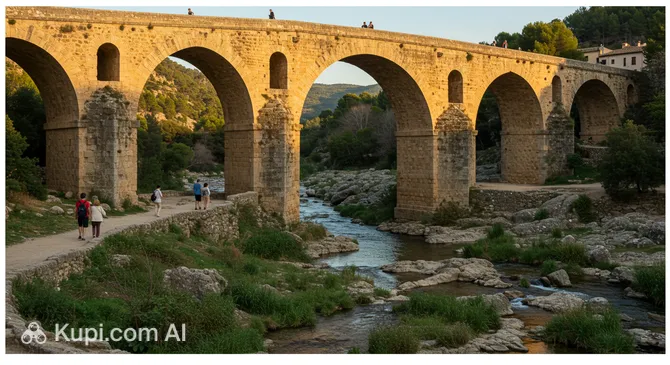
One of the iconic landmarks is the Roman Bridge in Pollença, also known as 'Pont Romà'. This stone bridge, spanning the Torrent de Sant Jordi stream, is considered a testament to the Roman presence in the region, although some researchers date it to a later period. A walk across the bridge allows you to touch history and enjoy the peaceful atmosphere of the location.

Roman Bridge of Pollença. Illustration.
Source: Kupi.com AI

Traveler photos:

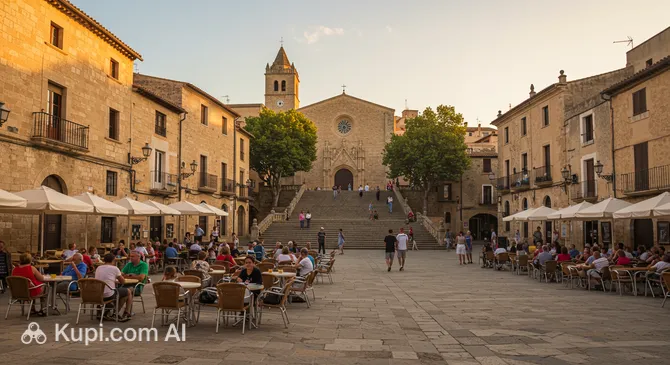
The heart of Pollença is undoubtedly the Plaça Major (the main square of Pollença). Surrounded by historic buildings, this spacious square serves as a meeting point, the site of the weekly Sunday market, and the venue for numerous festivals. Here, you can relax in one of the cafes, watching the slow flow of local life, or visit the parish church of Nostra Senyora dels Àngels, which towers over the square.

Plaça Major (Pollença Main Square). Illustration.
Source: Kupi.com AI

Traveler photos:

For those who enjoy a bit of physical activity and are looking for breathtaking views, a climb up the Calvary Steps is a mandatory part of the itinerary. This impressive staircase consists of 365 steps—one for each day of the year—and leads to a small chapel at the top of Calvary Hill. The path up, lined with cypress trees, is rewarded with panoramic views of the town and the surrounding countryside. This site becomes especially significant during Good Friday celebrations when a moving procession takes place here.

Calvari Steps. Illustration.
Source: Kupi.com AI

Traveler photos:

In addition to these key sites, Pollença offers other interesting spots, such as the Museum of Pollença, the Santo Domingo Cloister, and the picturesque streets of the old town, perfect for leisurely strolls.

Local Cuisine

The gastronomy of Pollença is a true immersion into the rich culinary traditions of Mallorca. The basis of local cuisine is the freshest seafood: be sure to try the squid, prawns, grilled fish, or traditional octopus dishes, expertly prepared in numerous coastal restaurants and tapas bars. One of the signature dishes you shouldn't miss is tumbet—a delicious vegetable bake with eggplant, potatoes, and tomatoes, generously seasoned with fragrant olive oil. Among the meat delicacies, sobrassada stands out—a spicy cured pork sausage with paprika—along with hearty meat and vegetable pies that reflect the full range of local flavors.

For dessert, the famous Mallorcan pastry ensaimada will surely delight you; it's an airy, spiral-shaped bun often served dusted with powdered sugar, or filled with chocolate or sweet cream. The meal is perfectly complemented by local wines, especially the refreshing white and rosé varieties that pair ideally with seafood. Don't forget to visit the farmers' markets, where you can buy fresh local cheese, homemade olives, and fragrant honey collected in the nearby mountains.

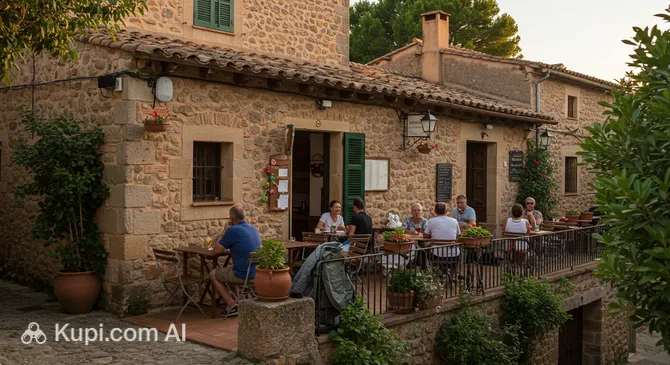
The food culture in Pollença encourages leisurely lunches and dinners in pleasant company. Locals and tourists alike favor cozy tapas bars where you can sample a variety of appetizers, family-run cafes with home-style cooking, and, of course, restaurants offering both traditional and modern interpretations of Mallorcan dishes. For example, La Fonda de l’Aigua Restaurant is one place where you can get acquainted with local culinary delights. Street food is also popular—fresh tapas, olives, cheeses, and seafood can be purchased at the markets. In every dish, you can feel the love for tradition and hospitality, and local chefs are often happy to share the secrets of ancient recipes passed down through generations.

La Fonda de l’Aigua Restaurant. Illustration.
Source: Kupi.com AI

Traveler photos:

Travel Tips

Planning a trip to charming Pollença? These practical tips will help you better prepare for your journey and get the most out of your stay in this picturesque corner of Mallorca.

  1. Clothing and Essentials: The climate in Pollença is Mediterranean. In summer, you will need light clothing, swimwear, a hat, sunglasses, and sunscreen. In spring and autumn, it's worth bringing items that can be layered, plus a light jacket or sweater for the evenings. In winter, the weather is mild, but a warm jacket won't hurt. Extremely important is comfortable footwear for walking on the cobbled streets of the old town and perhaps for the climb up Calvary Hill. Don't forget an adapter for electrical appliances (Spain uses Type F sockets). When visiting churches, such as the Church of Mare de Déu dels Àngels or the chapel on Calvary, choose clothing that covers your shoulders and knees.
  2. Local Transport: The historic center of Pollença is best explored on foot—its narrow streets are made for leisurely strolls. For trips to Port de Pollença, Alcúdia, or Palma, you can use the local buses (TIB network). Taxis are also available but can be more expensive. Car rental is a good option if you plan to actively explore the island of Mallorca, its beaches, and mountain regions. However, keep in mind that parking in the old town of Pollença can be difficult.
  3. Financial Matters: The official currency in Spain is the Euro (EUR, €). You can exchange money at banks or exchange offices, but ATMs (cajeros automáticos), which are widespread, often offer a more favorable rate. Credit and debit cards (Visa, Mastercard) are accepted in most hotels, restaurants, and shops. International cards usually work without issues. An approximate daily budget can be 50-100 euros per person, excluding accommodation. Tipping in restaurants is welcomed (usually 5-10% of the bill for good service), or you can simply round up the bill.
  4. Health and Safety: Pharmacies (farmacias) are easy to find by their green cross; some may have extended hours or be on duty (farmacia de guardia). EU citizens are advised to carry a European Health Insurance Card (EHIC). All tourists are strongly encouraged to take out travel medical insurance. Pollença is a very safe town. Observe usual precautions: keep an eye on your belongings in crowded places, especially at the market, and do not leave valuables unattended.
  5. Communication and Connectivity: The main languages are Spanish (Castilian) and Catalan (the local dialect is Mallorquí). In tourist areas, hotels, and restaurants, many people speak English. Knowing a few basic phrases in Spanish will be very helpful: "Hola" (Hello), "Adiós" (Goodbye), "Por favor" (Please), "Gracias" (Thank you), "Sí/No" (Yes/No), "No entiendo" (I don't understand), "¿Habla inglés?" (Do you speak English?). A local SIM card can be purchased at mobile phone shops. Wi-Fi is available in most hotels, cafes, and some public areas.
  6. Local Etiquette: When greeting someone, say "Hola." For a more formal introduction or when meeting people you don't know well, a handshake is standard. Locals are friendly and hospitable. Try not to speak too loudly in public places, especially in churches. Lunchtime (almuerzo) is usually quite late, from 14:00 to 16:00, and dinner (cena) starts from 21:00.
  7. What to Avoid: Avoid walking through the historic center of Pollença in beachwear (swimsuits, trunks)—this is considered a sign of disrespect. Also, try not to be excessively noisy during the siesta (roughly from 14:00 to 17:00) when many locals are resting, and don't be surprised if some small shops are closed during this time.
  8. Special Tip: Be sure to visit the Sunday market in the main square, Plaça Major—it's a great opportunity to soak up the local atmosphere and buy fresh produce, handicrafts, and souvenirs. For unforgettable views, climb the 365 steps of Calvary Hill—this is best done early in the morning or later in the evening to avoid the midday heat, especially in summer.

We hope these tips help you plan an unforgettable trip to Pollença. Enjoy every moment in this charming town in Spain!

Entertainment & Nightlife

Pollença, a charming town in Mallorca, offers its guests not only picturesque landscapes and historical sites but also a pleasant atmosphere for evening relaxation. The nightlife here is more suited to cozy gatherings and leisurely conversations than loud parties until dawn, making it ideal for those who value a relaxed holiday.

The center of evening activity is undoubtedly Plaça Major (the main square of Pollença) and its surrounding streets. As dusk falls, numerous bars and restaurants open their doors, where you can enjoy local cuisine and drinks. The atmosphere is usually very friendly and laid-back, attracting both locals and tourists. Most establishments stay open until midnight or slightly later, especially during the height of the season. There is usually no specific dress code, with casual attire being the norm, though a more elegant outfit may be appropriate for dinner at some restaurants.

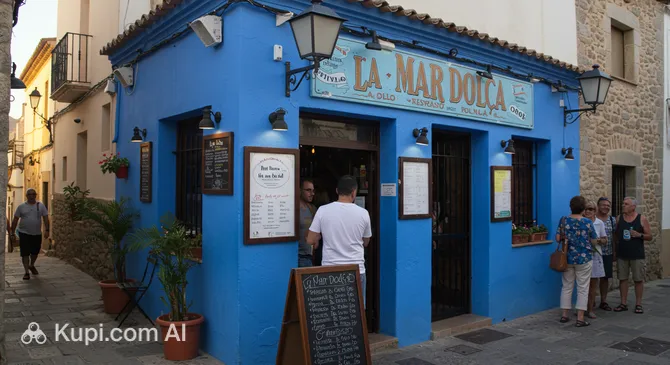
Among the places to enjoy a pleasant evening is La Mar Dolça bar, known for its cozy setting. For a dinner that transitions into a late evening, you might consider La Fonda de l’Aigua Restaurant, which serves local and Mediterranean dishes. Prices in Pollença's bars and restaurants can be described as average for Mallorca. The best time to visit the bars is after 9:00 PM, when the daytime heat subsides and the town takes on a new life.

La Mar Dolça. Illustration.
Source: Kupi.com AI

Traveler photos:

Regarding safety, Pollença is considered a safe town. Walking along the central streets in the evening and at night generally does not cause concern. However, as with anywhere, basic precautions should be taken. For nighttime travel, it is most convenient to use taxi services. These can be found at designated stands or called by phone via your hotel or restaurant.

During the day, Pollença also offers plenty of interesting activities. Guests can explore the historic center with its narrow streets, visit the famous Calvary Steps, or see the ancient Roman Bridge. The town also has local markets where you can buy fresh produce and souvenirs. While Pollença itself lacks large amusement parks or major theaters, its charm lies in its authenticity and the peaceful atmosphere that continues long after the sun goes down.

Parks & Museums

Pollença is not just about charming streets and ancient architecture; it also offers wonderful opportunities to discover nature and cultural heritage. The town and its surroundings provide both tranquil green spaces and interesting museums that preserve the history and art of the region.

While there are no large formal parks in the heart of Pollença, the town is a gateway to spectacular natural beauty. Nearby lies the Serra de Tramuntana, a UNESCO World Heritage site, ideal for hiking and enjoying panoramic views. The coast around Pollença is famous for its picturesque coves and beaches where you can relax and enjoy water sports. For a peaceful walk, you can choose the route along the Torrent de Sant Jordi stream, which flows near the town.

The town's main cultural institution is the Museum of Pollença (Museu de Pollença). Located in a former 17th-century Dominican cloister, it offers visitors a diverse collection: from prehistoric artifacts and Gothic altarpieces to contemporary art by local and international artists. The museum's exhibition provides deep insight into the regional history and artistic development. Additionally, you can find several small private art galleries in Pollença showcasing the works of modern masters.

Calvari Steps. Illustration.
Source: Kupi.com AI

Traveler photos:

Pollença is rich in historical and architectural landmarks. Be sure to climb the famous Calvary Steps—365 steps lined with cypress trees leading to a small chapel at the top of the hill. From there, a breathtaking view of the town and its surroundings unfolds. Another historical gem is the Roman Bridge, an ancient stone bridge that serves as a reminder of the town's centuries-old history. The heart of Pollença is undoubtedly Plaça Major—the lively main square where life bustles, especially during the Sunday market.

Roman Bridge of Pollença. Illustration.
Source: Kupi.com AI

Traveler photos:

Plaça Major (Pollença Main Square). Illustration.
Source: Kupi.com AI

Traveler photos:

For a truly authentic experience, wander through the quiet, narrow streets of the old town away from the main square; there you can discover hidden architectural details and local artisan workshops. For lovers of active recreation and beautiful views, a climb up the Puig de Maria hill is highly recommended, where you will find an old monastery and magnificent panoramas.

Getting Around

Getting around Pollença and its surroundings is quite convenient thanks to the public transport system, primarily consisting of buses. This is the main way to travel from the town's historic center to the popular coastal area of Port de Pollença, as well as to other nearby towns and picturesque bays. There are no metro or tram lines in Pollença.

The TIB (Transport de les Illes Balears) bus network connects Pollença with key points, including Port de Pollença, Cala Sant Vicenç, and even larger towns like Alcúdia. Bus schedules may change depending on the season, becoming more frequent during the summer months.

There are several ways to pay for bus fare in Mallorca, including routes serving Pollença. The most economical option is to use the TIB transport card. This rechargeable card offers significant savings; for example, a single trip with a TIB card might cost around €1-€2 depending on the fare zone, whereas paying in cash directly to the driver will be more expensive, roughly €2-€4 for the same trip. You can purchase and top up a TIB card at tobacco shops (estancos), some supermarkets, authorized TIB sales points, and online via the transport company's official website. Cash payment to the driver is also possible, but it is recommended to have small bills and coins for convenience.

Buses in the Pollença area usually start running early in the morning (around 6:00-7:00) and operate until late evening (22:00-23:00), especially during the tourist season. Service intervals vary: on popular routes, such as to Port de Pollença, buses may run every 30-60 minutes, while on less busy routes or during the off-season, intervals may be longer. Up-to-date information on routes, exact schedules, and fares can always be found at bus stops, in local tourist information centers, or on the official TIB website.

In addition to buses, you can always use taxi services in Pollença, with stands easily found in tourist zones and near key sites. For those who prefer maximum freedom of movement and plan to explore Mallorca independently, car rental is an excellent option. For leisurely local trips and short distances, particularly around Port de Pollença, renting bicycles and scooters is extremely popular.

While Pollença doesn't have unique transport types like funiculars or a historic metro, the bus rides themselves can be quite scenic on certain routes, offering beautiful views of the Mallorcan countryside and coastline. By traveling by bicycle, you can discover charming corners and hidden trails at your own comfortable pace.

Accommodation

In Pollença, travelers will find a variety of accommodation options to suit different tastes and budgets. Choices range from charming boutique hotels in historic buildings and traditional rural estates (fincas) to modern apartments and villas with private pools. More budget-friendly options, such as guesthouses offering a cozy atmosphere, are also available.

Many tourists prefer to stay in the historic center of Pollença to be within walking distance of the main attractions, such as Plaça Major or the famous Calvary Steps, as well as numerous cafes and restaurants. Accommodation options in more secluded areas on the outskirts of town are also popular, offering peace and beautiful views of the surrounding Tramuntana mountains.

As for the price range, Pollença offers housing for every wallet: from relatively inexpensive options to luxury villas and premium-class hotels. It is recommended to book accommodation in advance, especially if your trip coincides with the peak tourist season (the summer months), as the best deals are snapped up quickly. Booking is easily done through popular online platforms or directly on the websites of hotels and apartments.

Nearby Cities

For those looking to explore the surrounding area, Pollença serves as an excellent starting point for day trips to several interesting nearby locations. For example, Palma, the capital of Mallorca, attracts visitors with its majestic La Seu Cathedral, charming old town, and lively promenade, offering a deep dive into the island's history and culture. Another interesting option is Manacor, known for its artificial pearl industry and cozy historic center, where you can experience a more authentic Mallorcan atmosphere.

CityPopulationDistance
Alcudia20 71710 km
Inca34 09320 km
Binissalem9 02726 km
Soller13 49128 km
Santa Eugenia26 89732 km

These nearby destinations provide a glimpse into the diverse culture and landscapes of the region.

Shopping & Souvenirs

Shopping in Pollença is a pleasant immersion into the atmosphere of a traditional Mallorcan town, where small family-run shops, craft boutiques, and a weekly market prevail over large shopping centers. Here you will find unique products from local artisans, delicacies, and charming souvenirs that reflect the culture and spirit of the Balearic Islands.

The main commercial life of Pollença is concentrated in its historic center. Stroll through the narrow streets leading away from the main square, Plaça Major, such as Carrer de Colom or Carrer de Jesús. Here you will discover numerous boutiques offering clothing, footwear, jewelry, as well as art galleries and home goods stores.

There are no large shopping malls in Pollença in the conventional sense. The town maintains its traditional way of life, and shopping here is more about finding unique items in small independent shops. For a big-mall experience, it is worth heading to Palma de Mallorca.

A must-visit for lovers of shopping and local produce is the weekly market, which takes place every Sunday at Plaça Major. This is a bright and lively event where you can buy fresh fruit, vegetables, local cheeses, cured meats, olives, and honey, as well as handmade crafts, ceramics, textiles, leather goods, and souvenirs. The market's atmosphere allows you to experience the true taste of life in Mallorca.

When visiting Pollença, it is worth bringing back traditional Mallorcan goods. Look for leather items (shoes, bags), ceramics with characteristic patterns, "roba de llengües" textiles (ikat fabric), as well as local gastronomic specialties: olive oil, almonds, sobrassada (spicy sausage), ensaimada (sweet pastry), and Hierbas de Mallorca herbal liqueur. In art galleries, you can find works by local artists inspired by the island's beauty.

Shops in Pollença typically open in the morning around 9:00-10:00 and close for a lunch break (siesta) from approximately 13:30-14:00 until 16:30-17:00. They then reopen and stay open until 20:00-20:30, and may stay open longer during the summer season. Most shops are closed on Sundays, except for those geared towards tourists and, of course, the market itself. Both cash and bank cards (Visa, Mastercard) are accepted, but it is better to have some cash on hand for small shops and the market.

For tourists from countries outside the European Union, a Tax Free VAT refund system is available in Spain. If you make purchases over a certain amount in stores participating in this program (look for the corresponding logo), you can request a special Tax Free form. This will allow you to claim back part of the tax when leaving the EU. Be sure to clarify the details with the seller and keep all receipts.

Reached the end of the page?

That means the route is fully explored