Support

Basílica Nuestra Señora de la Encina

About

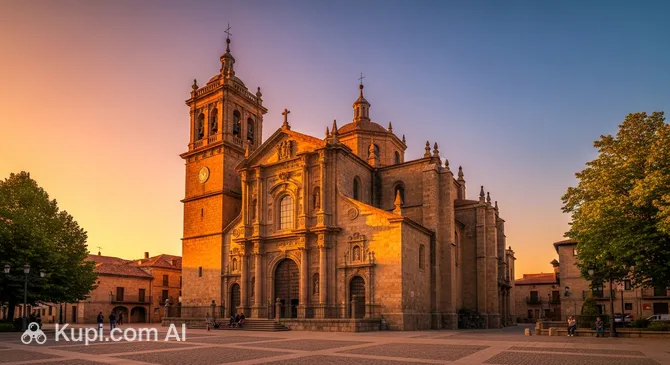
In the heart of the old town of Ponferrada stands the majestic Basilica of Our Lady of La Encina (Basílica Nuestra Señora de la Encina)—the main spiritual symbol and architectural gem of the El Bierzo region. This Renaissance temple, founded in the 16th century, is an essential stop for pilgrims following the famous Way of St. James in Spain.
\n\n
Basilica of Our Lady of La Encina
Basilica of Our Lady of La Encina. Иллюстрация. Источник: Kupi.com AI
\n\n

The temple is famous for its unique interior, centered around a magnificent 17th-century polychrome altarpiece created by masters of the Gregorio Fernández school. Above it stands the statue of the Virgin Mary, affectionately called "La Morenica" by locals due to the dark tone of the wood. According to legend, the relic was found by Templars in the trunk of an oak tree, which gave the basilica its name.

\n\n

The architectural appearance of the basilica combines Renaissance austerity with Baroque grace, and its slender bell tower dominates the cityscape. It is not just a historical monument but a living center of culture, where annual solemn festivals are held in honor of the city's patron saint, bringing together thousands of guests and residents.

Contacts

To confirm the current service schedule or organize group tours, you can use the temple's official contact details. The basilica is located in the heart of the historic center, so it is easy to find by looking for the tall bell tower. You can also obtain useful information about the site's operation at the city's municipal tourist office.

\n\n
How to contactContact
AddressPl. Virgen de la Encina, 24401 Ponferrada, León, Испания
Phone+34 987 41 19 78
Websitewww.basilicadelaencina.es

What to Do

The main reason to step inside is the chance to see the main retablo, a masterpiece of Baroque wood carving. Be sure to pay attention to the details of the polychrome sculptures and try to see the face of the Virgin of La Encina. The atmosphere inside the temple invites quiet contemplation, while the soft light filtering through the windows emphasizes the grandeur of the Latin cross-shaped vaults.

\n\n

If you are lucky enough to visit during the hours when the tower is open, be sure to climb to the top. From there, you will find one of the best panoramic views of the city's tiled roofs and the historic square. History buffs will find it interesting to locate the statue of Christ of the Fortress, which serves as a reminder of the times when Ponferrada was a stronghold for the Knights Templar.

\n\n

For those looking for a deeper immersion into local culture, it is recommended to plan a visit in September, when the city celebrates the Festival of the Virgin of La Encina. During these days, the square in front of the basilica is filled with music, flowers, and solemn processions. On ordinary days, it is an ideal place to simply sit on a bench in silence, watching the passing pilgrims with their famous staves and shells.

Getting There

The shrine is located in the central part of Ponferrada on Plaza de la Virgen de la Encina. If you are traveling through the region by train or intercity bus, the walk from the station (Estación de Ponferrada) takes about 15–20 minutes at a leisurely pace (a distance of approximately 1 kilometer). The route passes through picturesque old streets, providing an excellent start to your walk.

\n\n

For those arriving from other cities such as León or Madrid, it is most convenient to use ALSA buses or the RENFE train network. Within the city itself, it is best to move on foot, as the basilica is located in a pedestrian zone closed to active car traffic. If you decide to take a taxi, simply give the driver the name of the temple—it is one of the city's most famous landmarks.

\n\n

Pilgrims following the famous Way of St. James naturally pass through the square, as the route runs directly past the basilica. For motorists, there are public parking lots nearby; however, keep in mind that during peak tourist season, finding a free space in the center can be challenging.

Ближайший город: Ponferrada

History & Facts

The construction of the Basilica of Our Lady of La Encina began in 1573 under the direction of architect Juan Alvear. The project spanned several decades due to the region's economic difficulties, resulting in a building that combines features from different eras: from late Gothic and Renaissance to Baroque elements added in the 17th and 18th centuries. For example, the magnificent bell tower, which became a symbol of the city, was started in 1614, while a separate chapel for the Virgin appeared only during the Enlightenment.

\n\n

The temple's most captivating legend is associated with its name. It is said that the statue of the Virgin was brought from the Holy Land by Bishop Toribio of Astorga in the 5th century. To save the relic from the Moorish invasion, it was hidden inside a hollow holm oak (in Spanish—encina). Centuries later, Templars cutting wood to build their fortress discovered the statue in the tree trunk, illuminated by a miraculous light. Since then, Our Lady of La Encina has been considered the heavenly patroness of the entire El Bierzo region.

\n\n

The basilica is also closely intertwined with the history of the Knights Templar. The Christ of the Fortress (Cristo de la Fortaleza) is still kept inside—a 13th-century crucifix that, according to tradition, was once in the chapel of the Templar castle. This fact makes the temple an important site not only for believers but also for researchers of medieval knightly orders, whose legacy is felt at every turn in these parts.

Time Needed

For a standard tour of the basilica's interior, a study of the main altar, and a walk around the adjacent square, you will need about 45–60 minutes. This time is quite sufficient to experience the grandeur of the architecture and examine the details of the Renaissance decor without rushing.

\n\n

If you plan to attend mass, climb the tower (when access is open), or study the relics in the chapels in detail, you should budget at least 1.5–2 hours for the visit. Also, factor in time for a break at one of the cozy cafes on Plaza de la Encina, where you can enjoy the view of the temple over a cup of coffee.

Working Hours

The basilica's doors are open to visitors daily; however, the schedule is closely tied to the service and mass times. Typically, the temple is accessible during morning and evening hours, with a break in the middle of the day (siesta), which is typical for many religious institutions in Spain.

\n\n

Entry to the basilica for tourists is generally free, but it is recommended to show respect to worshipers and avoid active sightseeing during church services. For the most up-to-date information on visiting hours and festive events, it is best to check the temple's official website or confirm details at the information center on the square.

Nearby

The basilica's location in the city's historic core allows tourists to see many iconic sites without spending much time on travel. A walk through the surrounding area will reveal architectural treasures from different eras, from powerful fortress walls to elegant towers.

\n\n

Exploring the neighboring streets will help you better feel the atmosphere of the ancient city, where every stone breathes with the history of pilgrimage and knighthood. Below are the sites located within walking distance of the temple:

\n\n
NameDistance
Casa Aníbal Restaurant0.1 km
Radio Museum0.1 km
Ponferrada Castle0.2 km
Clock Tower0.2 km
La Mafia Sits at the Table0.9 km
Richmond Discoteca1 km
Las Muxas Brasería1 km

Reached the end of the page?

That means the route is fully explored