Support

Wembley Stadium

About

Wembley Stadium is more than just a sports arena; it is a true symbol of world sports, located in the northwestern part of London, the capital of the United Kingdom. Opened in 2007 on the site of its legendary predecessor, the modern complex is striking in scale. It can accommodate up to 90,000 spectators, making it the largest stadium in the country and the second largest in all of Europe.
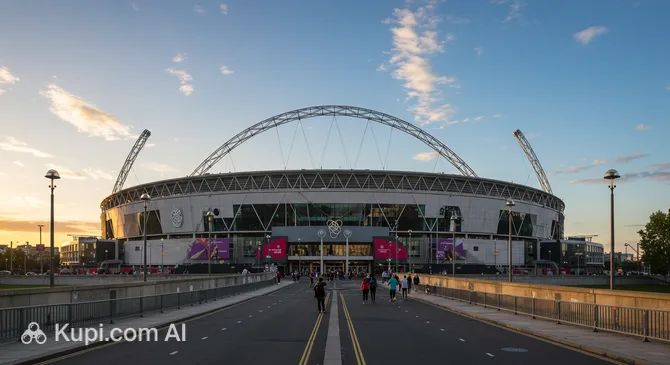
Wembley Stadium. Illustration.
Source: Kupi.com AI

Traveler photos:

The main architectural landmark and signature feature of the stadium is its famous 133-meter high arch, which spans 315 meters. This elegant structure not only gives Wembley a futuristic look but also serves an important engineering function: it supports the entire weight of the roof without additional pillars, making it the longest unsupported roof structure in the world.

Spectator comfort is considered down to the smallest detail. The stadium is designed as a "bowl," ensuring an excellent view of the pitch from almost any seat. Additionally, Wembley is equipped with a retractable roof, allowing events to be held in any weather, protecting visitors from rain and wind. Thanks to its versatility, the stadium hosts not only world-class football matches but also grand concerts and other significant events.

Contacts

To get the most up-to-date information regarding upcoming events, tickets, or visiting rules, it is recommended to contact the stadium administration directly or visit the official website. Below are the main contact details for reaching out.

How to contactContact
AddressWembley HA9 0WS, UK
Phone number+44 800 169 9933
Websitewww.wembleystadium.com

What to Do

Visiting Wembley is an opportunity to touch the world of major sports and music. The main reason thousands of people flock here is, of course, for world-class events. The stadium hosts the most important football matches, including FA Cup finals and national team games. Furthermore, the arena regularly transforms into a massive concert venue, hosting performances by legendary musicians and popular artists.

Even if no events are scheduled on the day of your visit, you have a unique chance to look behind the scenes of this grand structure. Special stadium tours are conducted for visitors, allowing them to see what is usually hidden from the eyes of fans. This is a wonderful opportunity to feel the atmosphere of Wembley from the inside and discover its secrets.

During the tour, you will follow in the footsteps of legendary athletes: visit the dressing rooms where teams prepare for decisive games, look into the press conference room, and walk through the famous tunnel leading directly to the edge of the pitch. You will also have access to the exclusive Royal Box, where trophies are presented to the winners. The tour offers a chance to see historic cups, take commemorative photos against the famous arch, and feel like a part of great sporting history.

Getting There

Wembley Stadium is located in the district of the same name in northwest London, and thanks to an excellently developed transport network, getting there is easy. The most convenient and popular way is to use the London Underground. The closest station to the stadium is `Wembley Park`, which can be reached via the Jubilee and Metropolitan lines. From the subway exit, a pleasant walk of about 10 minutes leads you directly to the famous arena.

As an alternative to the Tube, you can use suburban trains. There are two railway stations near the stadium: `Wembley Stadium`, which serves Chiltern Railways and is just a few steps from the entrance, and `Wembley Central`. The latter is a major transport hub where London Overground and Bakerloo line trains stop. Additionally, Wembley can be easily reached by one of the many city buses running along the capital's key routes.

If you plan to travel by car, please note that there are parking lots in the stadium area. However, on days of major events such as football matches or concerts, the number of available spaces is extremely limited, and traffic can be heavy. For this reason, organizers strongly recommend using public transport to avoid unnecessary hassle and ensure you arrive in time for the start of the event.

Nearest city: London

History & Facts

The history of Wembley is a history of two stadiums. The first, known as the Empire Stadium, was officially opened on April 28, 1923, by King George V. It was built specifically for the British Empire Exhibition and quickly became an iconic venue for English and international sports. Its pitch hosted unforgettable FA Cup finals, the 1948 Summer Olympics, the triumphant 1966 World Cup final for England, and the matches of Euro 1996. Besides sporting battles, the old Wembley hosted grand concerts, forever writing its name in music history.

By the beginning of the 21st century, the legendary arena no longer met modern requirements. In October 2000, the old stadium was closed and later demolished to make way for its successor. Thus began a new era: on the site of the historic "Twin Towers," which were a symbol of the old Wembley, construction began on a state-of-the-art complex. The new Wembley opened in 2007, giving the world one of its most impressive sporting arenas.

The design of the new stadium was developed by the world-renowned architectural firms Foster and Partners and Populous, with construction carried out by Brookfield Multiplex. This project became one of the most expensive in the history of sports facilities—its cost reached an impressive £798 million. The new Wembley is not just a tribute to its predecessor, but also an outstanding example of modern architecture and engineering, continuing the great traditions of this legendary site.

Time Needed

When planning a visit to Wembley Stadium to see it from the inside, you should set aside approximately 2–3 hours. This will be enough time to fully enjoy all the opportunities offered by a standard stadium tour without feeling rushed. This duration allows you to immerse yourself in the atmosphere of the legendary arena without the hassle.

The main part of the visit is a guided tour, which usually lasts about 75–90 minutes. During this time, you can see the most interesting areas usually hidden from the public: the player dressing rooms, the press conference room, walk through the famous tunnel to the pitch side, and even sit in the Royal Box. The remaining time can be spent exploring on your own, visiting the souvenir shop, or simply taking some memorable photos against the backdrop of the stadium's majestic arch.

It is important to note that if you plan to attend a match or a concert, the visit will take significantly longer—at least half a day. However, for a standard sightseeing excursion including the tour and exploring the grounds, two to three hours will be quite enough for an unforgettable experience.

Working Hours

Wembley Stadium operates on a flexible schedule that directly depends on the event calendar. For those who want to experience the arena from the inside, special tours are organized, usually available daily from 10:00 AM to 4:00 PM. However, it's important to remember that on match days, concert days, or during other major events, opening hours may change, and tour access may be limited or completely closed. Therefore, it is strongly recommended to check the current schedule on the stadium's official website before your visit.

To guarantee a spot on a tour, especially during the peak tourist season, it is best to book tickets online in advance. The stadium is open to visitors year-round, but the actual availability of tours is always tied to the event calendar. The most reliable way to plan your visit is to check the opening hours and ticket availability on the official Wembley portal well in advance to avoid any inconvenience.

Nearby

Visiting Wembley Stadium is a highlight in itself, but exploring its surroundings can make your trip even more fulfilling. The Wembley area and nearby parts of the city offer many interesting places, from parks and museums to shopping centers and unique entertainment venues.

Exploring nearby attractions will allow you to better plan your day, especially if you have free time before or after an event at the stadium. Nearby, you can find places for quiet relaxation as well as locations for active recreation, making this area attractive to a wide variety of travelers.

NameDistance
Brent Cross Trampoline Park3.9 km
Royal Air Force Museum London5.5 km
Kenwood House7.9 km
Royal Albert Hall9.3 km
Natural History Museum9.7 km
The Wallace Collection9.7 km
Victoria and Albert Museum9.9 km

Have you reached the end of the page?

So the route has been studied inside and out