Support

Karshi

About

Karshi is a captivating city where ancient heritage meets modern vitality, offering visitors a unique glimpse into the heart of Central Asia. As the administrative center of the Qashqadaryo Region in southern Uzbekistan, it serves as a significant economic and cultural hub. With a population of approximately 278,000 people, the city is known for its warm hospitality and its role as a key stop along historical trade routes.
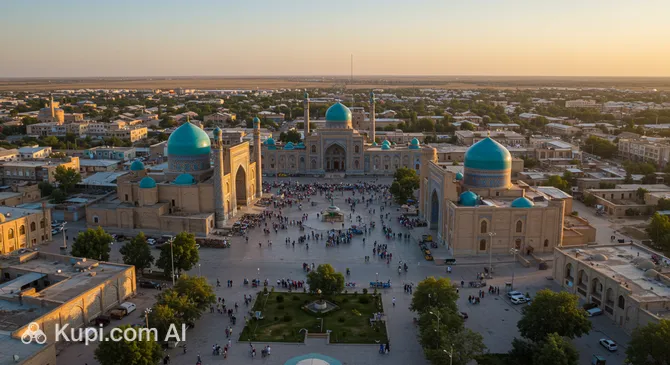
Karshi. Source: Kupi.Binoculars

Geographically, the city is situated in the fertile oasis of the Kashkadarya River, at the foot of the Kungrad-Tau mountains. The climate here is continental, characterized by hot summers and mild winters, which has influenced the local lifestyle for centuries. Karshi is celebrated as one of the oldest cities in the world, having marked its 2700th anniversary in 2006. Delving into the history of Karshi reveals a rich tapestry of events, from the era of the Silk Road to the reign of the Timurids.

Tourists are drawn to the city's remarkable architectural monuments. The Odina Madrasah is particularly notable as the first educational institution for women in the region, now functioning as a museum. Another iconic landmark is the historic Karshi Bridge, built in the 16th century, which remains a testament to medieval engineering. Visitors should also explore the majestic Kok-Gumbaz Mosque, renowned for its blue dome and intricate design.

Whether you are an architecture enthusiast or simply seeking to explore less-traveled paths, Karshi welcomes you with open arms. Its blend of historical depth and vibrant local culture makes it a rewarding destination for any traveler exploring the region.

Weather Overview

Travelers planning a visit should be prepared for distinct seasonal changes typical of a continental climate. The city generally experiences long, hot summers and relatively cool winters. During the peak of summer in July, average temperatures climb to 31.2°C, often peaking around 38.7°C, making it the hottest time of the year. In contrast, January is the coldest month, with average temperatures hovering around 4.3°C and lows occasionally dipping to -1.3°C.

Rainfall is modest and follows a clear pattern throughout the year. The weather in Karshi is driest during the summer months, particularly from July to September, when precipitation is virtually non-existent. The wettest period usually falls between January and March, seeing up to 8 wet days per month, although the total rainfall volume remains quite low. Generally, expect scorching dry heat in the summer and cooler, slightly damper conditions if visiting during the winter or early spring.

Interesting Facts

Beyond the main attractions, Karshi holds many fascinating secrets that offer a deeper understanding of this corner of Uzbekistan. While often viewed as a modern administrative center, the city is steeped in legends and historical distinctions that surprise many travelers.

  • A Unique Educational History: Karshi is home to the Odina Madrasah, which holds a rare place in Central Asian history. Constructed in the 16th century, it was the only higher educational institution specifically for women in the Khanate of Bukhara, distinguishing the city as a center for female education in the medieval period.

  • The Legend of the False Moon: The city, historically known as Nakhshab, is the setting for the famous legend of the "Moon of Nakhshab." Folklore tells of the 8th-century figure al-Muqanna, the "Veiled Prophet," who allegedly used magic (or mirrors) to make a luminous false moon rise from a local well night after night to awe his followers.

  • Royal Etymology: The name "Karshi" itself is not originally Uzbek but of Mongolian origin, meaning "palace" or "fortification." It was adopted in the 14th century after Khan Kebek of the Chagatai Khanate moved his residence here and built a large palace, shifting the regional center from the ancient site of Nakhshab.

  • Older Than Rome: While it may not always look it due to modern developments, Karshi is one of the oldest cities in the world. In 2006, the city celebrated its 2,700th anniversary under the auspices of UNESCO, confirming its status as an ancient settlement that has continuously existed for nearly three millennia.

How to Get There

Reaching this southern oasis is relatively straightforward, with options ranging from direct flights to scenic train journeys. For a comprehensive guide on planning your trip, you can read more about how to get to Karshi on our detailed page. The city is well-connected to the rest of the country, making it an accessible destination for travelers exploring the historic Silk Road routes.

The most convenient entry point is Karshi Airport (KSQ), located just 6.6 km from the city center. As a regional hub, it welcomes a steady stream of visitors, and a taxi ride to downtown typically takes about 30 minutes. Alternatively, international travelers often fly into Samarkand Airport (SKD) in Samarkand, which is approximately 139.2 km away. While further out, this airport handles significantly more traffic. The journey from Samarkand to Karshi by road takes roughly 3 hours and 50 minutes.

For clarity, here is a summary of the main airports:

Airport Name City Passenger Traffic Km from City
Samarkand AirportSamarkandLarge139.2
Bukhara AirportBukharaMedium150.9
TurkmenabadTurkmenabatMedium189.8
Karshi AirportKarshiMedium6.6
Navoi AirportNavoiSmall149.1

Rail travel is another excellent way to arrive, offering a comfortable view of the Uzbek landscape. The city is served by Karshi Railway Station, a major transport node located just 4.5 km from the center. With high annual passenger traffic, it is a bustling hub connecting the region to the capital and other major cities. Once you arrive at the station, a taxi or local bus can get you to the city center in approximately 25 minutes.

Below is a list of the nearest railway stations:

Station City Passenger Traffic Km to Center
Karshi Railway StationKarshiLarge4.5
Kattakurgan Passenger Railway StationKattakurganMedium117.7
Shakhrisabz Railway StationShakhrisabzSmall94.7
Dehkanabad StationDehkanabad80.4
Zirabulak StationOktosh117.8

Main Attractions

Karshi offers a fascinating array of historical and cultural sites that reflect its importance as an ancient Silk Road hub. The city’s landmarks are not only architectural marvels but also storytellers of a bygone era, ranging from unique educational institutions to engineering feats that sustained life in the desert oasis.

One of the most significant sites is the Odina Madrasah. Built in the 16th century on the foundations of a former Mongol palace, this structure is historically unique as the first and only higher educational institution for women in the Khanate of Bukhara. Today, it has been beautifully restored and transformed into a museum, offering visitors a chance to walk through its arched halls and learn about the region's rich history and the legacy of female education in Central Asia.

A true symbol of the city is the Karshi Bridge, also known as the Amir Timur Bridge. Constructed in 1583 during the reign of Abdullah Khan II, this impressive brick structure spans the Kashkadarya River with ten solid arches. Measuring over 120 meters in length, it was designed to support heavy trade caravans crossing the river. Walking across this medieval masterpiece gives tourists a tangible connection to the merchants and travelers who traversed these routes centuries ago.

The skyline of the old city is dominated by the Kok-Gumbaz Mosque, which translates to "Blue Dome." Erected in the late 16th century, it is the largest Friday mosque in the city and is renowned for its turquoise dome that sits atop a high drum. The mosque is celebrated for its excellent acoustics and serene inner courtyard, providing a peaceful atmosphere for visitors to admire the intricate tilework and traditional Islamic architecture.

Another intriguing structure is the Sardoba, a medieval water reservoir designed to collect and store precious rainwater in this arid region. Built from burnt brick, this semi-subterranean dome is a testament to the ingenuity of ancient hydraulic engineering. It allowed locals and passing caravans to access cool, clean water during the scorching summers, playing a vital role in the city's survival and prosperity.

For those interested in spiritual heritage, the Abu Ubaidah ibn al-Jarrah Memorial Complex is a revered pilgrimage site located just outside the city. Dedicated to one of the companions of the Prophet Muhammad, the complex features a mausoleum, a mosque, and a tranquil pool shaded by ancient plane trees. It is a place of great local significance, attracting pilgrims who come to pay their respects and enjoy the calming environment.

Local Cuisine

The culinary landscape of Karshi is a hearty celebration of the Qashqadaryo Region's rich agricultural and pastoral traditions. As a city surrounded by steppes and mountains, the local cuisine is heavily focused on high-quality meat, utilizing ancient cooking techniques that have been perfected over centuries. For tourists, dining here is not just a meal but an immersion into a culture that values hospitality and robust, natural flavors.

The absolute must-try dish in this region is Tandir Gosht (Tandoor Meat). Unlike the standard kebabs found elsewhere, this delicacy involves large cuts of seasoned lamb or beef that are lowered into a deep, clay oven (tandir) heated by wood fire. The meat is often cooked with branches of juniper (archa), which infuse it with a distinct, pine-like aroma. The result is incredibly tender meat with a crispy exterior and a smoky flavor profile that is unique to the Qashqadaryo region. It is often served simply with fresh onions and bread, allowing the quality of the meat to shine.

Beyond the famous tandoor meat, visitors should sample the local variation of Plov (Palov). While Plov is Uzbekistan's national dish, the version found in the south tends to be darker and richer, often prepared with a generous amount of oil, beef, yellow carrots, and local spices. Another popular comfort food is Shurpa, a clear but fatty mutton broth with large chunks of potatoes and carrots, perfect for dipping the local flatbread, known as Non.

When it comes to drinks, the culture is dominated by tea. Green tea (Ko'k choy) is the standard beverage served with every meal, usually enjoyed from traditional bowls called pialas. It aids digestion, especially after a heavy meat-based meal. In the scorching summer months, locals often turn to chilled yogurt-based drinks like Ayran or Chalop, which are refreshing and slightly salty. While Uzbekistan is a secular country and vodka or local cognac is available in restaurants, tea remains the primary social lubricant.

The best places to experience authentic Karshi cuisine are often the traditional Choykhonas (tea houses). These establishments usually feature tapchans—raised wooden platforms with low tables—where diners sit cross-legged on cushions. For a more bustling atmosphere, the local bazaars offer fresh fruits, nuts, and street food snacks like Samsa (pastries filled with meat and onions) baked right in front of you. Whether in a roadside eatery or a city restaurant, the portions are generous, reflecting the warm hospitality of the local people.

Travel Tips

Visiting Karshi is an exciting journey into the heart of the Qashqadaryo Region, but like any travel destination with deep-rooted traditions, a little preparation goes a long way. To help you navigate the local customs and logistics smoothly, here are some practical tips that will ensure your stay is comfortable and respectful of the local culture.

  1. Clothing and Gear: The climate here is strictly continental, so pack according to the season. In summer, lightweight, breathable cotton fabrics are essential to handle the intense heat, along with a wide-brimmed hat and sunglasses. If you are visiting in winter, bring warm layers and a sturdy jacket, as evenings can get quite chilly. When visiting religious sites like the Kok-Gumbaz Mosque, remember to dress modestly: cover your shoulders and knees, and women may find a lightweight scarf useful for covering their heads.

  2. Transportation: The most convenient way to get around Karshi is by taxi. Ride-hailing apps like Yandex Go are becoming more common in Uzbekistan, but if they aren't available, you can easily flag down a yellow taxi or a private car. Always agree on the fare before starting the ride if there is no meter. Public transport consists mainly of buses and marshrutkas (minibuses), which are very cheap but can be crowded and confusing for non-locals.

  3. Finances: The local currency is the Uzbek Som (UZS). While credit cards (Visa, Mastercard) are accepted in some larger hotels and supermarkets, Karshi is still very much a cash-based economy. You will definitely need cash for bazaars, small shops, and taxis. It is best to exchange money at banks or withdraw from ATMs in the city center; carry smaller denominations for easier transactions.

  4. Health and Safety: Karshi is generally a very safe city for tourists. However, it is advisable to drink only bottled or boiled water, as tap water may be harsh on your system. Pharmacies, marked as Dorixona, are widespread and easy to find, with some operating 24/7 near the city center. In summer, stay hydrated and use sunscreen to avoid heatstroke.

  5. Communication: The primary language is Uzbek. Russian is also widely understood and used for inter-ethnic communication. English is not commonly spoken outside of the tourism sector, so having a translation app or a phrasebook is highly recommended. Buying a local SIM card (Ucell, Beeline, or Mobiuz) is easy at official stores with your passport, ensuring you have reliable mobile internet.

  6. Local Etiquette: Uzbek hospitality is legendary. A common greeting is a slight bow with your right hand placed over your heart, often accompanied by the phrase "Assalomu alaykum." If you are invited to a local home, always take your shoes off at the door. When sitting on a tapchan (raised platform), avoid pointing the soles of your feet at other people or the food.

  7. What to Avoid: Avoid blowing your nose loudly in public, especially at the dinner table, as this is considered rude. Also, do not photograph government buildings, military installations, or security personnel without explicit permission, as this can lead to unnecessary questioning.

  8. Market Wisdom: When shopping at the local bazaar, bargaining is not just accepted; it is expected. Approach it with a smile and a friendly attitude. It’s a social interaction rather than a conflict, and you can often get a better price on spices, dried fruits, or souvenirs while having a pleasant chat with the vendor.

By keeping these simple guidelines in mind, you will be well-equipped to enjoy everything Karshi has to offer. The city's warmth lies not just in its sunny weather but in its people, so approach your travels with an open heart and a smile, and you are sure to be welcomed as a friend.

Entertainment & Nightlife

While Karshi is often celebrated for its ancient history, the city comes alive in a surprisingly vibrant way once the sun sets. The nightlife here offers a distinct blend of traditional Central Asian hospitality and modern entertainment. Unlike the non-stop bustle of the capital, evenings in Karshi are more relaxed but certainly not dull. The atmosphere is generally welcoming, with locals enjoying long dinners with family or gathering at trendy spots to unwind after a hot day.

For those seeking a lively night out with music and dancing, the city has a developing club scene that might surprise first-time visitors. Rubai Klub is one of the most popular nightlife destinations, known for its energetic atmosphere and mix of local and international pop music. It attracts a stylish young crowd, so dressing up a bit is recommended to fit in. Another notable venue is the Brilliant Club, which offers a modern setting with DJs, a dance floor, and a lounge area for those who prefer to enjoy a hookah and conversation. These venues typically stay open late, often until 2:00 AM or 3:00 AM on weekends.

If you prefer a more laid-back evening, the city’s dining culture is the heart of its nightlife. Many restaurants transform into social hubs at night, often featuring live music. Toj Mahal is a well-regarded establishment where you can enjoy hearty Uzbek meals in a grand setting that feels festive in the evening. For a summer night breeze, the "choykhonas" (tea houses) along the river or near the city center offer open-air seating (tapchans), where you can recline on cushions, sip green tea, and enjoy the cool night air until late.

For a peaceful evening walk, the Vatanparvarlar Park (Patriots' Park) is a favorite local spot. Beautifully illuminated at night, it features walking paths, a lake, and a relaxed ambiance perfect for digesting a heavy dinner. It is a safe and family-friendly area where you will see couples and families strolling until quite late.

Practical advice for enjoying Karshi at night includes carrying enough cash, as many smaller bars and taxis do not accept cards. The city is generally very safe for night walks, especially in well-lit central areas, but it is always easier to use a taxi to get between venues. Taxis are affordable and can be easily hailed or ordered via phone. Regarding dress code, while clubs encourage a stylish look, the general rule for the city is smart-casual and modest.

During the day, entertainment options lean towards the cultural and educational. Visitors can explore the Kashkadarya Regional Musical Drama Theater for local performances or revisit historical gems like the Odina Madrasah. However, it is the transition from the quiet heat of the afternoon to the cool, social buzz of the evening that truly defines the entertainment experience in Karshi.

Parks & Museums

While Karshi is famed for its ancient architecture and desert surroundings, the city also offers refreshing green spaces and insightful museums that allow visitors to pause and reflect. The local parks serve as vibrant social hubs where residents escape the heat, while the museums provide a curated look into the region's deep historical roots and cultural evolution.

One of the most prominent green spaces in the city is Vatanparvarlar Park (Patriots' Park). This expansive area is not just a place for leisure but a landscaped tribute to history, featuring the "Shon-Sharaf" (Glory) Museum within its grounds. The park is meticulously maintained, with wide walking paths, fountains, and replicas of historical monuments, including a scaled-down version of the Tilla-Kori Madrasah from Samarkand. It is a favorite spot for evening strolls, offering a mix of educational exhibits and serene nature, making it perfect for families and history enthusiasts alike.

For a more traditional recreational experience, the Alisher Navoi Park of Culture and Leisure stands as the city's central green lung. Named after the great poet, this park is a bustling center of activity, especially on weekends. It features shady alleys lined with mature trees that provide respite from the sun, as well as amusement rides for children and calm ponds. It is the best place to observe local life, where families gather for picnics and youth enjoy the fairground atmosphere.

Delving into the city's past, the Kashkadarya Regional Museum of Local Lore is an essential stop for any traveler. Often associated with the historic Odina Madrasah complex, the museum houses a rich collection of artifacts that trace the history of the Qashqadaryo region from the Stone Age to the present day. Visitors can admire ancient pottery, numismatic collections from the Silk Road era, and ethnographic displays showcasing traditional Uzbek clothing, jewelry, and carpets. The setting itself—within a restored medieval educational institution—adds a layer of atmospheric depth to the exhibits.

Another cultural highlight is the Museum of Glory located inside Vatanparvarlar Park. This modern facility focuses on the memory of the Second World War and the contributions of the Uzbek people. The museum's interior is adorned with murals and displays of military equipment, medals, and personal letters from soldiers. It offers a poignant look at the resilience of the local population and provides context to the monuments found in the surrounding park.

For a truly authentic experience, take a walk along the Kashkadarya River Embankment near the historic Karshi Bridge. Recent renovations have turned this area into a pleasant promenade. While not a museum in the traditional sense, the riverside offers a "living gallery" view of the city, where the ancient brick bridge contrasts with modern developments, offering one of the most photogenic perspectives in Uzbekistan for sunset watchers.

Getting Around

Navigating Karshi is relatively straightforward, although the city does not possess a complex subway or tram network. The public transport system primarily relies on a network of buses and fixed-route minibuses, locally known as marshrutkas. These vehicles cover the main avenues and effectively connect residential neighborhoods with key locations such as the city center, the bustling bazaars, and the railway station.

The most common mode of transport you will encounter is the "Damas" van—small white minivans that serve as marshrutkas. They are fast, frequent, and known for their flexibility, often stopping anywhere along their designated route to pick up or drop off passengers. Larger buses operate on major lines and offer a slightly more spacious ride. For a tourist, the buses are generally easier to navigate as they follow stricter stops, whereas the marshrutkas can be a bit more chaotic and crowded.

When it comes to payment, cash is currently the only reliable method. Unlike in the capital, electronic travel cards and mobile payment apps are not yet widely used for public transit in this city. You typically pay the driver or a conductor directly, usually upon exiting the vehicle. Fares are extremely affordable, costing just a nominal amount in the local currency. It is highly advisable to carry small denomination bills and coins, as drivers often struggle to provide change for large banknotes.

For many travelers, taxis serve as the primary alternative to public buses. They are inexpensive and plentiful throughout the city. Ride-hailing apps like Yandex Go operate in Karshi, making them an excellent tool for tourists who want to avoid language barriers and price negotiations. If you choose to flag down a taxi on the street, be prepared to agree on the fare before the journey begins, as meters are rarely used by private drivers. Shared taxis are also common for longer trips across town.

Public transport generally operates from early morning, around 6:00 AM, until late evening, typically winding down by 9:00 PM or 10:00 PM. After this time, finding a bus becomes difficult, and taxis become the only viable option. Since online maps may not always have the most up-to-date bus schedules for the city, the most practical advice is to ask your hotel staff or friendly locals for route numbers; they are usually eager to help point you in the right direction.

Accommodation

Accommodation in Karshi primarily caters to business travelers and those exploring the southern routes of the Silk Road. While the city does not feature the ultra-luxury international hotel chains found in the capital, it offers a solid selection of comfortable mid-range hotels and welcoming, budget-friendly guesthouses. The hospitality sector here is practical and developing, with many establishments providing essential modern amenities such as air conditioning and Wi-Fi, which are vital during the hot summer months.

For the most convenient experience, tourists are advised to stay in the city center. Choosing a hotel near the administrative district or Vatanparvarlar Park places you within walking distance of key sights like the Odina Madrasah, as well as a variety of local restaurants and shops. Alternatively, for travelers on a tight schedule or those using Karshi as a transit point, the area surrounding the Karshi Railway Station offers several reliable lodging options that ensure a quick and easy departure.

Booking accommodation here is generally affordable, with prices significantly lower than in major tourist hubs like Samarkand or Bukhara. While larger hotels can often be booked via international online platforms, many smaller, family-run establishments may require direct contact or can be booked upon arrival. It is worth noting that during local festivals or business conferences, rooms can fill up, so booking in advance is recommended if your dates are fixed.

A crucial tip for staying in Uzbekistan is to always collect your registration slip from the hotel reception upon check-in. You are legally required to keep these slips until you depart the country. Additionally, while some hotels accept credit cards, it is highly advisable to carry sufficient cash in Uzbek Som, as card terminals can be intermittent and smaller guesthouses may only accept cash payments.

Nearby Cities

For those looking to explore the surroundings, Karshi serves as an excellent base for day trips to several interesting nearby locations:

One of the most historically significant destinations is Shakhrisabz, located approximately 92 kilometers to the east. As the birthplace of Amir Timur, this ancient city offers a more intimate glimpse into the region's past compared to the larger tourist hubs. Visitors can marvel at the colossal ruins of the Ak-Saray Palace and wander through the quiet, tree-lined streets of the historic center, which is a UNESCO World Heritage site.

To the northeast lies the legendary city of Samarkand. While it is a major destination in its own right, the efficient transport connections, including high-speed trains, make it accessible for a dedicated excursion from Karshi. Travelers can easily visit iconic landmarks such as the Registan Square and the Gur-e-Amir Mausoleum, experiencing the grandeur of the Silk Road architecture within a few hours' travel.

For those interested in nature and science, Kitob offers a unique alternative. Situated near the foothills of the Zarafshan Range, it is known for its international latitude station and the nearby geological reserve, which provides fascinating insights into the ancient history of the Earth. It is a quieter spot, perfect for those looking to step off the beaten path.

City Population Distance (km)
Samarkand 546303 134
Shakhrisabz 100300 92
Kattakurgan 86745 122
Oktosh 41600 118
Kitob 40800 100

These nearby destinations offer a glimpse into the diverse culture and landscapes of the region.

Shopping & Souvenirs

Shopping in Karshi offers a delightful blend of authentic Central Asian tradition and modern convenience. While the city may not have the sprawling luxury boutiques of the capital, it provides a unique opportunity to explore local culture through its bustling bazaars and developing retail centers. The Qashqadaryo Region is historically famous for its craftsmanship, particularly its distinctive woven carpets and intricate embroidery, making it an excellent place to find genuine artisanal goods.

For those looking to experience the city's modern commercial pulse, Islam Karimov Street serves as a primary artery. This central thoroughfare is lined with a variety of shops selling clothing, electronics, and household goods. It is a great place to take a stroll, offering a mix of local brands and smaller boutiques where you can find everyday essentials and fashion items. The area is lively and accessible, bridging the gap between the old and new parts of the city.

Travelers seeking a contemporary shopping experience should visit the SXF Qarshi Mall. As one of the city's prominent modern shopping destinations, it houses a diverse range of stores, a food court, and entertainment facilities. It is a popular spot for locals to gather, offering a comfortable, air-conditioned environment to browse for international and local fashion brands. Another notable location is the Atlas shopping center, which provides a similar modern retail atmosphere with a supermarket and various lifestyle stores.

However, the true heart of shopping in Karshi lies in its markets. The Qarshi Dehqon Bozori (Central Bazaar) is an essential stop for any tourist. Here, the spirit of the Silk Road is still very much alive. Rows of vendors display mounds of aromatic spices, fresh seasonal fruits, and the region's famous sun-dried melons. It is also the best place to observe local life, where friendly bargaining is part of the daily rhythm. For a more historical vibe, the area around the old city and the Odina Madrasah often features stalls with traditional handicrafts.

When it comes to souvenirs, Karshi has several unique specialties. The region is renowned for its pileless carpets (known as gilam), which are durable and feature bold, geometric patterns distinct from other Uzbek styles. Another must-buy is Kashkadarya embroidery, particularly the iroki style, often found on colorful pouches and women's handbags. Foodies should definitely bring back a bag of local dried fruits or nuts, which are known for their intense flavor and high quality.

Most shops and malls in Karshi typically operate from 09:00 to 22:00, while the bazaars start much earlier, often buzzing with activity by 07:00 and winding down around sunset. Regarding payment, cash is essential, especially when visiting markets or smaller souvenir stalls. While modern malls and larger supermarkets accept credit cards, carrying a sufficient amount of Uzbek Som is highly recommended for a smooth shopping experience.

Reached the end of the page?

That means the route is fully explored