Support

Lang Pagoda

About

Lang Pagoda is one of Hanoi’s oldest and most revered Buddhist shrines, located approximately 6 kilometers west of the center of Vietnam's capital. This temple stands out among the city's many religious structures for its unique architecture, peaceful atmosphere, and rich history, attracting both pilgrims and curious tourists.
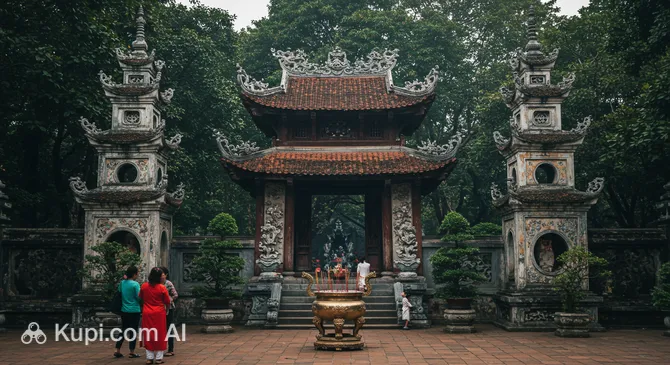
Lang Pagoda. Illustration.
Source: Kupi.com AI

Traveler photos:

The pagoda's history dates back to the 12th century, during the reign of King Ly Thanh Tong. It is believed to have been built in honor of the monk Tu Dao Hanh, who is revered as a saint, and has since been rebuilt and restored several times while maintaining its historical appearance and spiritual significance. The pagoda complex includes several buildings surrounded by greenery, creating a sense of peace and harmony.

Over the centuries, Lang Pagoda has remained an important spiritual and cultural center for the residents of Hanoi and visitors to the city. A visit here allows you to touch the ancient traditions of Vietnamese Buddhism, admire the intricate wood carvings and ancient statues, and enjoy the silence away from the city bustle. It is a must-visit place for those interested in the culture and history of Vietnam.

Contacts

For the most up-to-date information regarding Lang Pagoda's opening hours, potential tours, or contact methods, we recommend visiting the official Hanoi tourism portals or contacting local tourist information centers. Visiting details can often be clarified directly at the entrance of the temple complex, as information is subject to change.

How to contactContact
Address116 P. Chùa Láng, Láng Thượng, Đống Đa, Hà Nội, Vietnam

What to Do

A visit to Lang Pagoda offers an immersion into an atmosphere of tranquility and spirituality. Guests can enjoy walking through well-maintained gardens while admiring traditional Vietnamese architecture, which harmoniously combines elegant pavilions and gates. It is an ideal place for meditation or simply quiet contemplation, allowing you to take a break from the urban bustle of Hanoi and learn more about the deep Buddhist traditions of Vietnam.

Inside the temple complex, visitors can see ancient Buddha statues, which are an important part of the religious heritage. The traditional carved decorations, demonstrating the skill of Vietnamese craftsmen, attract particular attention. If you are lucky, you might witness religious ceremonies and festivals, which are especially colorful during Buddhist celebrations. Sometimes, there is an opportunity to get a glimpse of the daily life of local monks, adding a unique experience to your visit to this iconic landmark.

Getting There

Lang Pagoda is conveniently located about 6 kilometers west of central Hanoi, making it easily accessible by various modes of transport. When planning your trip, you can choose the method that best suits you to reach this iconic Vietnam landmark.

One of the easiest options is a taxi or motorcycle taxi (xe om), which can be easily found anywhere in the city. The trip from the center won't take long, depending on traffic. This is a comfortable way to travel, especially if you are with luggage or in a small group.

For a more budget-friendly journey, you can use public transport. City buses heading west run from central Hanoi to Lang Pagoda. Check route numbers at the nearest bus stop or using online maps. This is also a great opportunity to observe the daily life of the city's residents.

Many tourists who wish to combine a visit to Lang Pagoda with other interesting sites in the western part of Hanoi prefer to rent a bicycle or moped. This mode of transport offers more freedom and allows you to explore the surroundings at your own pace. The road to the pagoda is quite picturesque and passes through urban neighborhoods, offering a chance to get to know the capital better.

Nearest city: Hanoi

History & Facts

Lang Pagoda, one of Hanoi’s oldest shrines, has a rich history dating back to the 12th century. Its construction took place between 1138 and 1175, during the reign of King Ly Thanh Tong. This monarch belonged to the famous Ly dynasty, which left a significant mark on Vietnam's history and was known for its patronage of Buddhism.

The era of the Ly dynasty, during which the pagoda was built, was a time of true flourishing for Buddhism in Vietnam. It was a period of active temple and pagoda construction, especially after the major historical event of moving the capital to Thang Long, known today as Hanoi. Lang Pagoda became one of the bright symbols of this spiritual and cultural era, reflecting the deep religiosity and architectural achievements of the time.

Since its founding, Lang Pagoda has played a significant role not only as a religious site but also as an important cultural center. It brought the local population together, contributing to the preservation and development of the region's spiritual traditions. Throughout its centuries-old history, the temple has undergone several restorations; however, thanks to careful preservation, it has managed to retain its original architectural appearance and unique ancient atmosphere, which continue to attract visitors wishing to touch the history of Vietnam today.

Time Needed

To fully enjoy a visit to Lang Pagoda and see its main highlights, most visitors usually need 1 to 2 hours. This amount of time is generally sufficient to take a leisurely stroll through the temple complex grounds, look into the various pavilions, and feel the peaceful atmosphere of this ancient site.

Within this timeframe, you will be able to appreciate the pagoda's architecture, examine the details of the carvings and statues, and take commemorative photos. If you plan for a deeper immersion, such as for meditation or a detailed study of every corner, you might want to spend a bit more time here. However, for a general introduction and vivid impressions of Lang Pagoda in Hanoi, one to two hours will be quite enough.

Working Hours

The exact opening hours of Lang Pagoda may vary, and for the most up-to-date information, it is recommended to check the pagoda's official website (if any), Hanoi's tourism portals, or contact local tourist information centers before visiting. Generally, Buddhist temples in Vietnam are open to visitors daily, typically from early morning until evening, but specific times may change, especially during religious ceremonies or holidays.

As a rule, prior booking or registration is not required to visit such attractions unless you plan to participate in a special tour or event. Lang Pagoda, being an active temple, is likely open for visits year-round. Nevertheless, to avoid disappointment, it is always useful to clarify details immediately before your trip.

Nearby

Visiting Lang Pagoda is undoubtedly a memorable experience, but exploring its surroundings can significantly enrich your impressions of Hanoi. Often, other equally interesting spots are hidden near famous landmarks, allowing you to dive deeper into the city's atmosphere and discover something new.

By taking a little time to explore nearby sites, you can gain a more complete and multifaceted understanding of the capital of Vietnam. This is a wonderful opportunity to see more than what standard tourist routes offer and make your journey even more unforgettable.

NameDistance
Thu Le Park0.8 km
Vietnam Museum of Ethnology1.9 km
Hanoi Museum2.3 km
VNAHOMES Serviced Apartments3.1 km
VNAHOMES Aparthotel3.2 km
Temple of Literature3.5 km
Ho Chi Minh Mausoleum3.6 km

Have you reached the end of the page?

So the route has been studied inside and out