Support

One Pillar Pagoda

About

The One Pillar Pagoda (Vietnamese: Chùa Một Cột) is an iconic landmark and one of the most recognizable structures in Hanoi, the capital of Vietnam. This unique Buddhist temple attracts travelers with its unusual architecture and deep symbolism. Located in the heart of the city, the pagoda is not just a tourist site but an important place for believers.
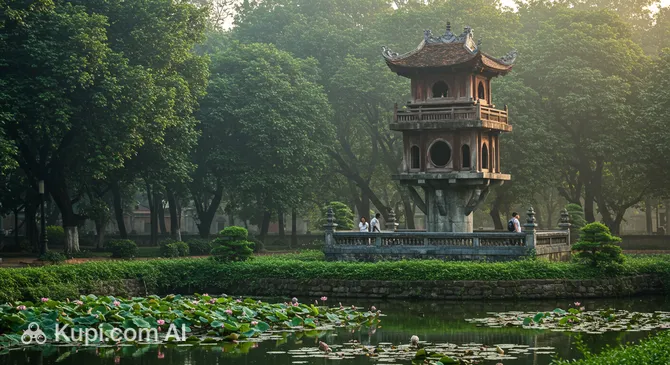
One Pillar Pagoda. Illustration.
Source: Kupi.com AI

Traveler photos:

The main feature of the One Pillar Pagoda, as the name suggests, is that its entire elegant structure rests on a single stone pillar rising from a small square pond. This design is intended to symbolize a lotus flower blooming above the water—in Buddhism, the lotus is a symbol of purity, enlightenment, and spiritual elevation. This architectural solution makes the pagoda truly unique and memorable.

Inside this small temple is a shrine dedicated to the Bodhisattva Avalokiteshvara (also known as Guanyin or Quan Am in the Vietnamese tradition)—the deity of compassion and mercy. Both locals and many tourists come here to pray and ask for well-being, wishing to touch the ancient culture and spirituality of Vietnam. A visit to the One Pillar Pagoda leaves a deep impression thanks to its peaceful atmosphere and unusual beauty.

Contacts

The One Pillar Pagoda is an iconic historical and religious site in Hanoi, so specific contact details such as a phone number or email may not be available. It is recommended to check official tourist websites for the city or Vietnam, as well as local information centers upon arrival, for information on opening hours and visiting conditions. Reaching the pagoda is usually straightforward since it is located in the city center and is a well-known point on tourist routes.

How to contactContact
AddressP. Chùa Một Cột, Đội Cấn, Ba Đình, Hà Nội 100000, Vietnam

What to Do

When visiting the One Pillar Pagoda, you will have a wonderful opportunity to examine its unique architecture in detail and, of course, take memorable photos of this amazing structure standing on a single pillar in the middle of a small pond. Be sure to climb the stairs leading to the pagoda's entrance. Although the entrance itself may be closed, you will be able to look through the open door from the top platform and see the sacred altar decorated with traditional Buddhist symbols.

The One Pillar Pagoda is not only an architectural masterpiece but also an important place for spiritual practices. Many visitors, both locals and tourists, come here to pray and ask the Bodhisattva for their wishes to be granted. There is a particularly famous legend that the pagoda helps those who dream of having children. In addition to the pagoda itself, you can walk around the complex's surrounding territory, see other monuments, and enjoy the peaceful atmosphere of this corner of Hanoi's historical center.

Getting There

Getting to the One Pillar Pagoda in Hanoi is quite simple, as it is located in the very heart of the city on the famous Ba Dinh Square. This iconic spot is in close proximity to other important landmarks, such as the Ho Chi Minh Mausoleum and the Ho Chi Minh Museum, making it an easily accessible point on your travel itinerary.

If you are already exploring Hanoi's historical center, you can reach the pagoda on foot. A stroll will allow you to better feel the city's atmosphere and enjoy its sights. For those who prefer a faster way to travel or are coming from more distant areas of Vietnam's capital, a taxi or motorbike taxi is an excellent option. The trip from the central districts will take only a few minutes.

Furthermore, the One Pillar Pagoda is well-integrated into Hanoi's public transport system. There are city bus stops nearby that follow major tourist routes. Many organized city tours also include a visit to this unique attraction, so you can choose this convenient way to experience it as well.

Nearest city: Hanoi

History & Facts

The history of the One Pillar Pagoda dates back to the 11th century and is linked to a beautiful legend. According to tradition, Emperor Ly Thai Tong, who ruled Vietnam at that time, had no heir for a long time. One day, he dreamed of the goddess Guanyin sitting on a lotus flower and holding a baby boy. Soon after this dream, the emperor's long-awaited son was born. As a sign of gratitude and in memory of the miraculous vision, in 1049, Ly Thai Tong ordered the construction of a temple shaped like a lotus flower rising from the water.

Originally, the One Pillar Pagoda was made entirely of wood and actually stood on a single massive teak pillar. Over its centuries-long history, the shrine has suffered destruction and underwent several reconstructions. One of the most significant moments in its history occurred in 1954, when the pagoda was destroyed. However, it was carefully restored in the 1950s under the guidance of architect Nguyen Ba Lang. During the reconstruction, a new support pillar was made of concrete for greater durability, but the pagoda's appearance was accurately recreated based on preserved historical drawings and descriptions.

With its unique architecture symbolizing the purity and nobility of the lotus flower, the One Pillar Pagoda attracts the attention of not only believers but also art lovers from around the world. It is not just a religious building, but a true symbol of Hanoi and all of Vietnam. In 2012, the pagoda's significance was officially recognized at a high level: it was entered into the Vietnamese and Asian records as a temple with unique architecture, further emphasizing its cultural and historical value.

Time Needed

For a typical visitor, seeing the One Pillar Pagoda itself takes very little time. Generally, 10–20 minutes will be enough to approach this unique structure, climb the small staircase leading to the shrine, examine its details, and take a few souvenir photos. This is sufficient time to appreciate the pagoda's unusual architecture, which symbolizes a lotus flower.

However, if you plan a more thorough introduction to this site, it is worth setting aside more time. For instance, if you want to take a leisurely stroll through the surrounding temple complex grounds or visit other nearby landmarks like the Ho Chi Minh Mausoleum or the Ho Chi Minh Museum, it is better to budget up to one hour or even more, depending on your interest in the adjacent sites.

Thus, the duration of your visit to the One Pillar Pagoda can vary from a short 15-minute look to a longer hour-long excursion including the surrounding area. It all depends on your plans and how deeply you want to immerse yourself in the atmosphere of this iconic Hanoi landmark.

Working Hours

The One Pillar Pagoda in Hanoi is typically open to visitors daily. According to available information, the opening hours are from 08:00 to 17:00. It is important to note that entry to the pagoda grounds is generally free. This allows for easy exploration of this unique landmark in Vietnam.

Advance ticket booking or special registration for individual visits is usually not required. However, if you plan a visit as part of a large group or during major national holidays, it is recommended to check the visiting conditions in advance. While the pagoda is accessible year-round, it is always useful to check the latest information on official Hanoi tourism portals or immediately before your trip, as opening hours may occasionally change.

7:00 – 18:00

Nearby

Visiting the One Pillar Pagoda is certainly a highlight, but to make your trip to Hanoi even more rewarding, it is worth paying attention to other interesting places located nearby. Exploring the surroundings will allow you to dive deeper into the culture and history of Vietnam's capital, discovering new facets of this amazing city.

Each additional attraction you visit will add unique touches to your overall impression. This could be a majestic historical complex, a fascinating museum, or simply a colorful street conveying the city's atmosphere. By expanding your route, you will get a more complete picture of Hanoi and take home even more unforgettable memories. Here are some of the attractions located near the One Pillar Pagoda:

NameDistance
Ho Chi Minh Mausoleum0.2 km
Imperial Citadel of Thang Long0.7 km
Vietnam National Fine Arts Museum0.7 km
Temple of Literature0.9 km
AIRA Night Club1 km
Acoustic Hotel & Spa Bar1.5 km
A Plus Hanoi1.7 km

Have you reached the end of the page?

So the route has been studied inside and out