Support

Mausoleum of Emperor Ferdinand II

About

The Mausoleum of Emperor Ferdinand II is a monumental architectural ensemble considered one of the most striking gems of Graz. Built in the first half of the 17th century, this complex serves as the family tomb of the Habsburg dynasty and impresses with its harmonious blend of Austrian Mannerism and early Baroque. It is not just a historical site, but a true symbol of its era, included in the UNESCO World Heritage list.
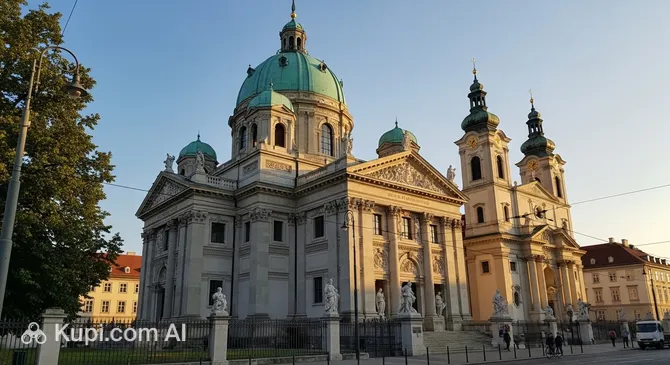
Mausoleum of Emperor Ferdinand II
Mausoleum of Emperor Ferdinand II. Иллюстрация. Источник: Kupi.com AI

The main feature of the structure is its unusual dome over the burial chapel—this was the first such construction in the style of Italian architecture to be erected outside of Italy itself. The complex includes the elegant Church of St. Catherine and the adjacent crypt. The narrow but richly decorated facade, adorned with statues of saints and angels, creates a majestic appearance that stands out against the ancient streets for which Austria is famous.

Inside, visitors will find magnificent frescoes by Johann Bernhard Fischer von Erlach and luxurious Baroque altars. Of particular historical value is the sarcophagus of Maria of Bavaria, crafted from rare red marble. The interior is divided into two levels, allowing guests to first enjoy the solemnity of the upper church before descending into the ascetic and ceremonial atmosphere of the imperial tomb.

Contacts

To confirm the current schedule of services or special visiting conditions, you can contact official representatives of the city's Catholic community. This majestic architectural monument is an active religious site, so it is advisable to check the basic contact information before your visit.

How to contactContact
AddressBurggasse 3, 8010 Graz, Австрия
Phone+43 316 8041890
Websitewww.domgraz.at

What to Do

When visiting the mausoleum, your first priority should be its exterior facade. By examining the multi-level sculptural compositions and symmetrical columns, you can see how smoothly Italian traditions intertwine with Austrian austerity. Be sure to look up to the top to see the statue of St. Catherine surrounded by angels.

Inside the complex, make sure to visit the crypt. Here, a special atmosphere of silence and respect prevails, and the magnificent red marble sarcophagus draws every eye. In the upper church, the Baroque altars and detailed frescoes depicting the life of the Habsburgs and biblical stories are of great interest. This is a wonderful place for those who appreciate authentic art and want to capture beautiful shots of architectural details.

For a complete experience, it is recommended to combine your visit with a walk through the neighboring Graz Cathedral. This will allow you to see the entire historical ensemble as a whole and better understand the scale of Ferdinand II's imperial ambitions. The mausoleum is ideal for a peaceful cultural getaway and will be an important highlight on your route through the Old Town.

Getting There

The mausoleum is located at Burggasse 3, in the very heart of the historic Old Town. The adjacent monumental Graz Cathedral serves as the main landmark for tourists. From the central square, Hauptplatz, the complex is just a few minutes' leisurely walk away.

If you are using public transport, it is most convenient to take tram lines 1 or 7 to the Hauptplatz stop, from where the mausoleum is approximately 300 meters away. Bus line 30 also stops nearby (Tummelplatz stop), making the site easily accessible from any part of the city. From the main railway station, the tram journey takes no more than 10 minutes.

For those traveling by car, please note that parking in central Graz is very limited. It is recommended to leave your vehicle in one of the paid underground parking garages (for example, near Hauptplatz or Jakominiplatz) and continue on foot to enjoy the atmosphere of the pedestrian zones.

Ближайший город: Graz

History & Facts

The history of this grand structure began in 1614, when the future Holy Roman Emperor Ferdinand II decided to build a worthy burial place for himself and his family. The architect was the Italian Giovanni Pietro de Pomis, who infused the project with the spirit of Southern Mannerism. By 1633, the exterior of the building was completed, but the master passed away before he could finish the interior decoration.

Work was suspended for several decades and only resumed at the end of the 17th century by decree of the founder's grandson, Emperor Leopold I. The famous Johann Bernhard Fischer von Erlach took over the interior design, adding Baroque grandeur and elegance to the space. It is due to this long construction period that the complex became a unique example of the transition from the late Renaissance to early Baroque.

Today, the mausoleum is recognized as a UNESCO World Heritage site as part of the city's historic center. Not only does Ferdinand II himself rest here, but also his mother, Maria of Bavaria, whose red marble tomb is considered one of the most valuable elements of the crypt. Interestingly, the complex was built on the site of an ancient 13th-century religious building, emphasizing the continuity of the region's spiritual traditions.

Time Needed

A thoughtful visit to the mausoleum usually takes about 45 to 60 minutes. This is enough time to examine the richly decorated facade with its sculptures, visit the Church of St. Catherine inside, and descend into the quiet crypt where members of the imperial family are buried.

If you plan to combine your visit with a tour of the neighboring Graz Cathedral and a stroll through the adjacent courtyards, you should allow about an hour and a half in your schedule. The mausoleum is a place for contemplation, so there is no need to rush; take your time to fully appreciate the craftsmanship of the old masters and the unique frescoes.

Working Hours

The mausoleum's opening hours usually coincide with the visiting hours of the Graz Cathedral. The complex doors are open to visitors from Monday to Saturday from 9:00 AM to 5:00 PM, and on Sundays, visits are possible in the afternoon—from 1:00 PM to 5:00 PM.

Please note that during church services or special events, access to some parts of the complex may be restricted. It is recommended to check the official website for current information before planning your visit, especially during public holidays.

Nearby

A stroll around the mausoleum will allow you to dive deeper into the atmosphere of old Austria and see the city's key symbols. Most of the iconic landmarks are within walking distance, making an exploration of the center very convenient for tourists.

NameDistance
Graz Cathedral0 km
Double Spiral Staircase0.1 km
Graz Glockenspiel0.1 km
University of Graz (Old Campus)0.1 km
Graz Castle0.1 km
Main Square of Graz0.3 km
Graz Opera House0.3 km

Reached the end of the page?

That means the route is fully explored