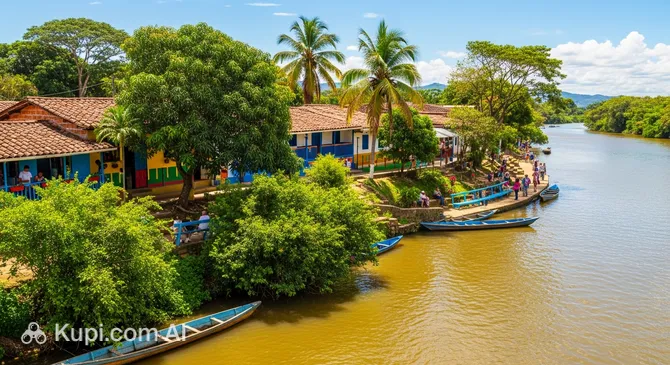
El Bagre is a vibrant municipality located in the Bajo Cauca subregion of the Antioquia Department. Known for its energetic atmosphere and river-centric lifestyle, this town offers a unique glimpse into a part of Colombia that is defined by its natural resources and warm culture. The city sits at the confluence of the Nechí and Tigüí rivers, a geographical feature that has shaped its development and daily life for centuries.
The climate in El Bagre is typically tropical, characterized by hot and humid weather year-round, which fosters a lush, green environment surrounding the urban area. With a population of approximately 52,000 inhabitants, it serves as a bustling hub for the surrounding rural areas. The rhythms of the city are often dictated by the flow of the rivers, which are vital for transportation, fishing, and the local economy.
The history of El Bagre is deeply intertwined with gold mining, a heritage that dates back to the Spanish colonial era and continues to influence the region today. In fact, the town was once known as "The Valley of Silver" before adopting its current name, which honors the abundance of catfish (bagre) found in its waters. This blend of mining tradition and river culture creates a distinct local identity that is celebrated in festivals such as the Festival of Gold and Culture.
For visitors, the town offers authentic local experiences rather than traditional mass tourism. The waterfront along the Nechí River is a focal point where one can observe the daily bustle of boats and fishermen. Nature enthusiasts can venture slightly outside the town to discover hidden gems like the Salto El Perico, a stunning waterfall surrounded by vegetation, or visit the Church of Our Lady of Mount Carmel (Iglesia Nuestra Señora del Carmen) to admire the local religious architecture.
If you are looking to explore a destination off the beaten path that showcases the industrious spirit and tropical beauty of Antioquia, El Bagre welcomes you with open arms. It is an excellent stop for travelers interested in understanding the diverse cultural and economic landscapes of the region.