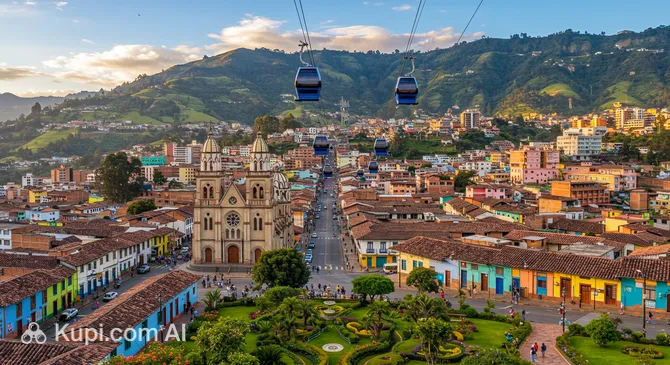
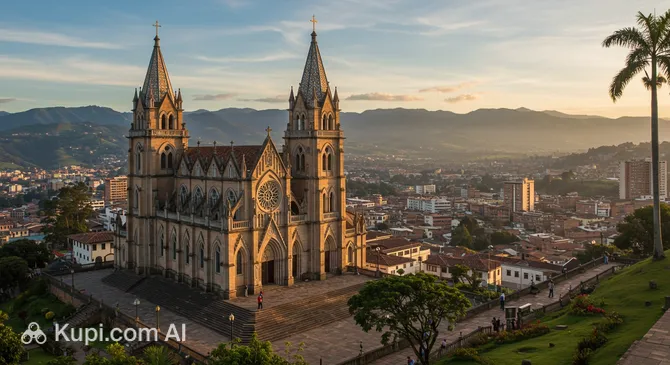
Welcome to Manizales, a captivating city perched high in the Andes Mountains of Colombia. Known affectionately as the "City of Open Doors" due to the warmth and hospitality of its people, this vibrant capital of the Caldas department offers a unique blend of stunning landscapes and rich cultural heritage.
The city is famous for its steep streets and dramatic topography, which provide breathtaking views of the surrounding valleys and the majestic Nevado del Ruiz volcano. With a population of approximately 434,000 inhabitants, it serves as a bustling hub within the renowned Coffee Cultural Landscape. Due to its high altitude, the climate is generally cool and spring-like, offering a refreshing escape from the tropical heat found elsewhere in the region.
Exploring the history of Manizales reveals a resilient community that flourished despite the challenging mountainous terrain. The city has grown into a major educational center, often referred to as the "University City," and is celebrated for its spirited annual events, such as the famous Manizales Fair.
Manizales. Illustration.
Source: Kupi.com AI
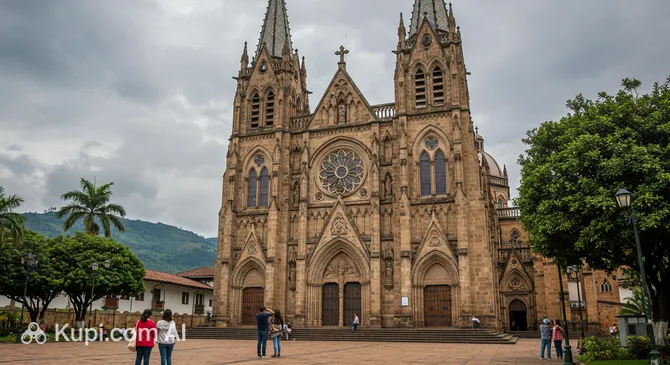
A visit here is incomplete without admiring the Cathedral Basilica of Our Lady of the Rosary, which dominates the Plaza de Bolívar with its towering spire and is one of the tallest cathedrals in the country. Nature enthusiasts can venture to the nearby Los Nevados National Natural Park for hiking and wildlife watching in a unique páramo ecosystem.
Whether you are seeking adventure, architectural marvels, or simply the perfect cup of coffee, Manizales invites you to discover its charm. Its combination of urban energy and natural beauty makes it a must-visit destination for any traveler exploring the region.
Weather Overview
Due to its high altitude in the Andes, the weather in Manizales remains remarkably consistent and mild year-round, often described as having an "eternal spring" climate. Travelers can expect average temperatures to hover steadily around 17°C to 18°C regardless of the season, with daily highs typically reaching 22°C and nights cooling down to approximately 12°C or 13°C.
While the temperatures are pleasant, the city is known for its high humidity and frequent rainfall. You should expect wet conditions throughout the year, as the number of wet days ranges from 26 to 31 days per month. Although the intensity of the rain varies—with January and February seeing lower accumulation around 16mm compared to wetter months like May with 36mm—showers and mist are common, so carrying a waterproof jacket is highly recommended.
Average monthly temperature
Average monthly precipitation
Interesting Facts
Beyond the main attractions, Manizales holds many fascinating secrets that reveal its resilient spirit and poetic soul. Here are some intriguing details about this high-altitude city that often surprise visitors.
The majestic Cathedral Basilica of Our Lady of the Rosary, Manizales features a dizzying attraction known as the "Polish Corridor" (Corredor Polaco), a narrow observation deck located near the top of the central spire that offers unparalleled panoramic views of the city.
Famous Nobel Prize laureate Pablo Neruda bestowed upon the city the evocative nickname "The Sunset Factory" (La Fábrica de Atardeceres), a tribute to the dramatic and colorful sunsets created by the city's unique position in the mountains.
In the early 20th century, Manizales boasted the longest aerial cableway in the world, the Manizales-Mariquita Cableway, which was an engineering marvel used to transport coffee beans over the rugged Andes to the Magdalena River.
Despite its location in the Colombian coffee region, the city has a surprisingly strong obsession with Tango culture, hosting international festivals and maintaining traditional milongas that rival those found in Argentina.
Cathedral Basilica of Our Lady of the Rosary, Manizales. Illustration.
Source: Kupi.com AI
Traveler photos:
How to Get There
Reaching the heart of the Coffee Region is an adventure in itself, with several options depending on your starting point. While the city is tucked away in the Andes, it is well-connected by air and road. For a comprehensive guide on all transport modes, you can read more about how to get to Manizales to plan your journey effectively.
The most direct way to arrive is via La Nubia Airport (MZL), located conveniently within Manizales itself, just about 5.6 km from the city center. It is a regional airport handling domestic flights, primarily from Bogotá. The taxi ride to the downtown area typically takes around 30 minutes. However, travelers should be aware that operations here can be limited by weather conditions due to the mountainous terrain.
A very popular and often more reliable alternative is Matecana International Airport (PEI) in the neighboring city of Pereira. Situated approximately 38.2 km away, this airport handles significantly more traffic and offers better weather stability. From Pereira, you can take a bus or taxi to Manizales, a journey that usually takes about 1 hour and 20 minutes through scenic coffee landscapes.
For international travelers arriving from further afield, Jose Maria Cordova International Airport (MDE) in Medellín is a major hub. Although it is located about 122 km from Manizales, it offers extensive international connections. The transfer from Medellín by road is longer, taking approximately 3.5 to 4 hours, but it connects you to one of the country's largest entry points.
For clarity, here is a summary of the main airports serving the region:
Since there are no passenger railway services connecting to Manizales, the primary alternative to flying is the extensive bus network. The city has a centralized bus terminal, Terminal de Transportes de Manizales, which receives frequent services from major cities like Bogotá, Medellín, and Cali. The roads winding through the Andes offer spectacular views, making the bus ride a visually rewarding experience for those who have the time.
Main Attractions
Manizales offers a variety of fascinating sites that blend urban culture with the breathtaking nature of the Andes. Beyond its famous cathedral, the city is home to ecological parks, historic plazas, and cultural landmarks that tell the story of this unique mountain capital.
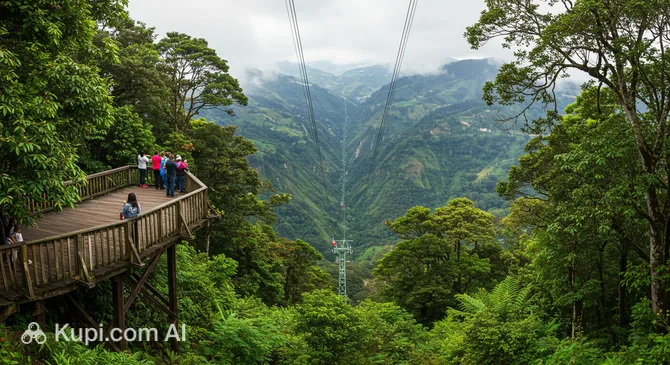
For those looking to immerse themselves in the region's lush biodiversity without leaving the city limits, Los Yarumos Ecopark is a perfect destination. This expansive nature reserve offers a refreshing escape with its cloud forest trails, waterfalls, and panoramic views of Manizales. Visitors can enjoy interactive science exhibits, canopy tours, and guided walks that highlight the local flora and fauna, making it an ideal spot for families and nature enthusiasts alike.
Los Yarumos Ecopark. Illustration.
Source: Kupi.com AI
Traveler photos:
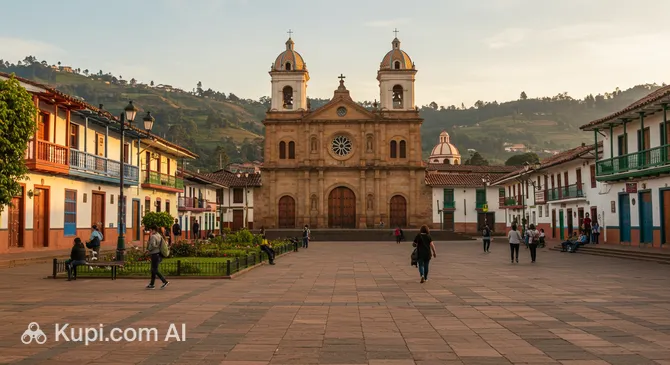
The beating heart of the city is undoubtedly Bolivar Square (Plaza de Bolívar). This central plaza is not just a meeting point but an open-air gallery of history and architecture. Dominating the square is the striking "Bolívar Cóndor" sculpture, a masterful work by Rodrigo Arenas Betancourt that depicts the liberator Simon Bolívar with the body of a condor. It is a great place to sit, enjoy a local coffee, and admire the surrounding colonial and republican-style buildings.
Bolivar Square. Illustration.
Source: Kupi.com AI
Traveler photos:
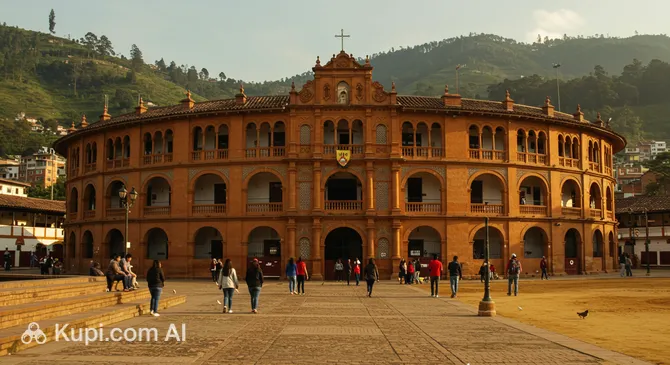
Another architectural landmark is the Manizales Bullring (Plaza de Toros de Manizales). Regardless of the season, this imposing structure is impressive to behold and stands as a testament to the city's deep-rooted cultural traditions, particularly during the annual Manizales Fair. Its design draws inspiration from Spanish traditions, and it serves as a major venue for various cultural events and concerts throughout the year.
Manizales Bullring. Illustration.
Source: Kupi.com AI
Traveler photos:
To understand the city's origins, a visit to Founders Park (Parque Los Fundadores) is essential. Located in a tranquil area, this park pays tribute to the resilient settlers who established the city in the rugged mountains. It features a significant monument dedicated to the 12 founding families and offers a peaceful green space with well-kept gardens and fountains, perfect for a leisurely afternoon stroll.
Local Cuisine
The gastronomy of Manizales is deeply rooted in the traditions of the "Paisa" culture, characterized by hearty, generous portions designed to fuel a day of work in the mountains. The undisputed king of the table is the Bandeja Paisa, a massive platter that typically includes beans, white rice, ground meat, chicharrón (pork belly), chorizo, a fried egg, ripe plantain, avocado, and an arepa. It is a flavorful feast that every visitor should attempt to finish at least once.
Another staple comfort food is Sancocho, a thick soup usually made with chicken, beef, or pork ribs, simmered with potatoes, yuca, plantains, and corn. For a lighter snack, the local arepas are essential; in this region, they are often made from white corn and served with local cheese or butter. The city's high altitude and cool climate make these warm, filling dishes particularly satisfying.
As the capital of a major coffee-producing department, Manizales offers some of the best coffee in the world. Locals take pride in their mild, aromatic brew, which can be enjoyed in countless cafes across the city. For something traditional and non-alcoholic, try Mazamorra, a drink made from boiled maize served with milk and a chunk of panela (unrefined cane sugar) or bocadillo (guava paste). On the spirited side, the region produces the famous Ron Viejo de Caldas (rum) and Aguardiente Cristal, an anise-flavored liquor that is a fixture at social gatherings.
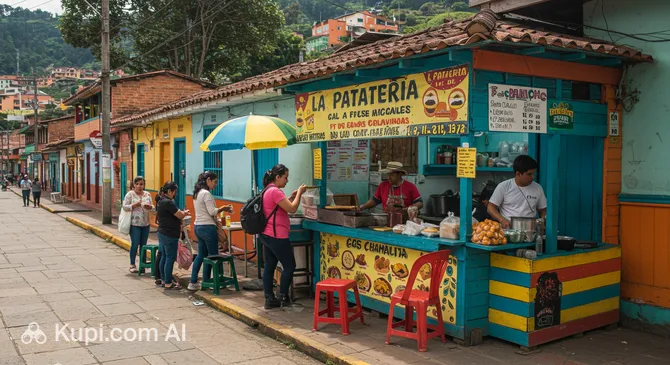
The city's dining scene is vibrant and varied. The area known as "El Cable" is a hub for restaurants and nightlife, offering everything from international cuisine to local favorites. A popular spot in the city is La Patateria, a unique restaurant that celebrates the potato in all its forms, offering creative and delicious dishes that highlight this Andean staple.
La Patateria. Illustration.
Source: Kupi.com AI
Traveler photos:
For a taste of local street food with a view, head to the Chipre neighborhood. Here, you can enjoy Obleas—large, thin wafers spread with caramel (arequipe), cheese, jam, and other toppings—while watching the sunset. If you are looking to experience the city's nightlife and enjoy a drink in a classic atmosphere, Juan Sebastian Bar is a legendary establishment known for its bohemian vibe and excellent music.
Travel Tips
To help you make the most of your visit to the "City of Open Doors," we have compiled a list of essential practical tips. Manizales is a unique destination with its own specific climate, topography, and cultural nuances, so keeping these suggestions in mind will ensure a smoother and more enjoyable experience.
Dress for the "Eternal Spring" and Rain. The weather in Manizales is cool and unpredictable. Pack layers, as mornings can be chilly, middays warm, and evenings cold. Most importantly, bring a waterproof jacket or a sturdy umbrella, as rain showers are frequent throughout the year. Comfortable, non-slip walking shoes are mandatory; the city's streets are incredibly steep, and heels or sandals are impractical for exploring.
Navigating the Steep Terrain. Walking is a great way to see the center, but the hills can be exhausting. Take advantage of the Cable Aéreo (Aerial Tramway), which is part of the public transport system and offers spectacular views while saving your legs. Taxis are plentiful, affordable, and strictly metered; they are often the best option for getting between the downtown area and the entertainment district of El Cable.
Managing Your Finances. The local currency is the Colombian Peso (COP). While credit cards are widely accepted in hotels, larger restaurants, and malls (especially in the El Cable area), cash is king for small shops, street food, and public transport. ATMs are easy to find, but it is wise to carry small bills for taxi fares and tips. Tipping around 10% is customary in restaurants if it's not already included in the bill.
Health and Altitude. Manizales sits at approximately 2,160 meters (7,087 feet) above sea level. You might feel a bit breathless initially, so take it easy for the first day and stay hydrated. Notably, the tap water in Manizales is generally considered safe to drink and of high quality, though those with very sensitive stomachs might still prefer bottled water. Pharmacies (droguerías) are common and can provide advice for minor ailments.
Language and Connectivity. Spanish is the official language, and English is not widely spoken outside of major hotels and tour agencies. Learning a few basic phrases like "Buenos días" (Good morning) and "Gracias" (Thank you) will go a long way. For mobile data, you can easily buy a prepaid SIM card from providers like Claro, Tigo, or Movistar at local shops or the airport with your passport.
Local Etiquette and Warmth. The people of Manizales are known for their politeness and hospitality. It is polite to greet shopkeepers and drivers when you enter. A common local quirk is the use of the word "Regáleme" (literally "gift me") when ordering or buying something (e.g., "Regáleme un café"), which simply means "Please sell me a coffee" and is not a request for free items.
Safety and Awareness. Manizales is considered one of the safer cities in Colombia, but standard precautions apply. Avoid the local concept of "Dar papaya" (giving papaya), which means don't make yourself an easy target by flashing expensive phones, cameras, or jewelry in public. Stick to well-lit, busy areas like Chipre and El Cable at night, and order taxis via apps or hotel reception rather than hailing them on lonely streets.
The Sunset Ritual. Don't miss the local tradition of watching the sunset from the Chipre neighborhood. It is the perfect way to end the day, offering panoramic views of the Andes. While there, try the famous obleas (large wafers with caramel) from the street vendors—it's a quintessential Manizales experience.
By following these tips, you will be well-prepared to navigate the hills and culture of this charming Andean city. Embrace the cool mountain air, enjoy the world-class coffee, and let the warmth of the locals make your trip truly unforgettable.
Entertainment & Nightlife
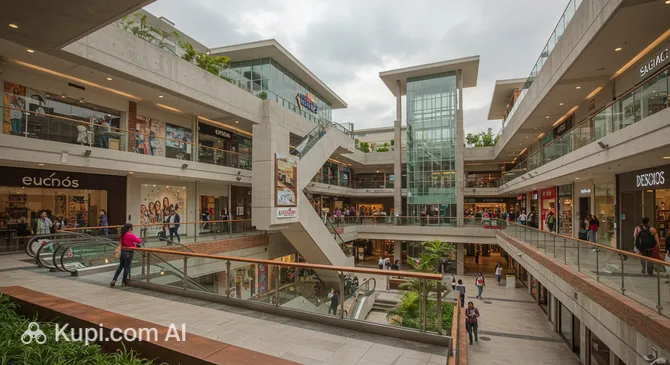
Manizales offers a vibrant mix of modern entertainment and leisure activities that cater to all tastes, extending well beyond its famous coffee culture. The city's commercial pulse can be felt in its modern shopping precincts, which serve as popular gathering spots. Mall Plaza Manizales is a favorite destination, offering a comprehensive retail experience with international brands, a movie theater, and a terrace that boasts stunning views of the city's sunsets. Nearby, the Fundadores Shopping Center stands as another architectural highlight, frequently hosting cultural exhibitions and providing a central hub for shopping and dining.
Mall Plaza Manizales. Illustration.
Source: Kupi.com AI
Traveler photos:
For those seeking excitement after dark, the city boasts a lively nightlife scene, particularly in the "El Cable" zone. This area is the social heart of Manizales, filled with bars, pubs, and clubs that come alive on weekends. A standout venue is the 2150 Club, known for its energetic atmosphere where visitors can enjoy a night of dancing to a variety of Latin and crossover rhythms, truly immersing themselves in the local party spirit.
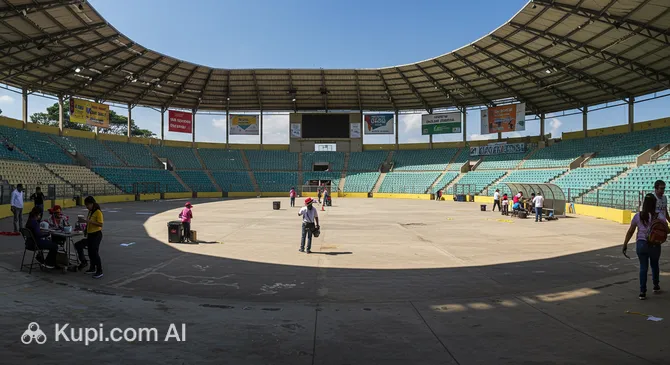
Sports enthusiasts should not miss the chance to visit the Palogrande Stadium. As the home ground of the Once Caldas football team—former Copa Libertadores champions—this arena is a source of immense local pride. Attending a match here offers a thrilling glimpse into the passionate football culture of Colombia, set against the dramatic backdrop of the city's mountainous landscape.
Palogrande Stadium. Illustration.
Source: Kupi.com AI
Traveler photos:
If you prefer a quieter form of recreation, the Arenillo Alcázares Ecopark is an excellent choice. Located within the city limits, it offers a peaceful retreat with trails specifically designed for birdwatching, allowing you to connect with the region's rich biodiversity without traveling far. For family-friendly fun, Agua Park provides aquatic activities and recreational spaces that are perfect for enjoying a relaxing afternoon in the Andes.
Parks & Museums
Manizales is widely recognized not only for its coffee culture but also for its commitment to preserving nature and promoting the arts. The city's unique topography allows for an abundance of ecological reserves within the urban area, while its status as a university hub has fostered a vibrant scene of museums and cultural centers that celebrate the region's history and creativity.
For a deep dive into the region's natural beauty, Recinto del Pensamiento is an unmissable destination. This expansive nature reserve and convention center offers a peaceful retreat with its mesmerizing butterfly observatory, a forest of orchids, and a chairlift that provides scenic views of the surrounding coffee landscape. It is an ideal spot for birdwatching, allowing visitors to observe hummingbirds and other native species in their natural habitat.
Another favorite among locals is Bosque Popular El Prado, a massive public park that serves as the city's green lung. Covering a vast area, it features sports fields, an Olympic-sized swimming pool, and extensive walking trails. It is the perfect place for a family picnic or a morning jog, offering a lively atmosphere where residents gather to enjoy the outdoors and the cool mountain air.
In terms of cultural heritage, the Gold Museum of Caldas (Museo del Oro de Caldas) is a cultural jewel. It houses a significant collection of pre-Columbian artifacts, focusing primarily on the Quimbaya civilization. Through its intricate gold and ceramic pieces, the museum tells the story of the indigenous peoples who inhabited this territory long before the arrival of the Spanish, offering fascinating insights into their craftsmanship and worldview.
For art lovers, the Museum of Art of Caldas located within the Bellas Artes building showcases a rotating collection of modern and contemporary works. It highlights the talent of regional and national artists, serving as a dynamic space for visual arts exhibitions that reflect the evolving cultural identity of the Coffee Region.
The city's religious architecture also offers significant cultural value. The Christ the King Church is a notable landmark, admired for its distinctive architectural style and the peaceful atmosphere of its interior. It stands as a testament to the religious devotion that has shaped the city's community over the decades.
Christ the King Church. Illustration.
Source: Kupi.com AI
Traveler photos:
Additionally, the Our Lady of the Rosary Church offers another glimpse into the city's ecclesiastical heritage. While often overshadowed by the main cathedral, this church holds its own charm and historical significance, providing a quiet space for reflection and admiration of religious art.
For a truly authentic experience, keep an eye out for the small, specialized university museums, such as the Samoga Museum of Science and Play. These lesser-known venues are often interactive and offer a unique perspective on how the "City of Open Doors" integrates education and culture into daily life.
Getting Around
Navigating Manizales is a unique experience shaped largely by its dramatic mountainous topography. Unlike flat cities that rely heavily on subways or extensive rail networks, this Andean capital has adapted to its steep terrain with a combination of road-based transport and an innovative aerial system. The public transport network is efficient, affordable, and offers some of the most scenic daily commutes you will find anywhere in the world.
The crown jewel of the city's transport system is the Cable Aéreo (Aerial Tramway). Far more than just a tourist attraction, this cable car system serves as an essential "metro in the sky," connecting the downtown area with the Transport Terminal and the neighboring municipality of Villamaría. It is the fastest way to traverse the city's hills, bypassing traffic while offering spectacular panoramic views of the urban landscape and the surrounding mountains. The cabins are modern, safe, and run continuously throughout the day.
For ground transport, the city relies on a comprehensive network of buses and busetas (minibuses). These vehicles reach virtually every corner of the city, including neighborhoods perched on steep slopes where larger vehicles cannot go. Routes are not always numbered clearly; instead, destinations are typically displayed on colorful placards in the front windshield. "El Cable," "Centro," and "Terminal" are common key destinations to look for. While there is no central tram or trolleybus system, these buses provide frequent and reliable service.
The payment system in Manizales is straightforward but varies by mode of transport. For buses and busetas, payment is almost exclusively in cash (Colombian Pesos). You pay the driver directly upon entering; exact change or small bills are highly appreciated. Fares are standardized and very affordable, typically costing around 2,800 COP per ride. For the Cable Aéreo, you will need to purchase a rechargeable smart card called the "Tarjeta Unipersonal" at the station ticket windows. The card itself costs a small fee, and you can load it with credit for multiple trips. A single journey on the cable car costs approximately the same as a bus fare.
Taxis are another extremely popular and safe alternative, easily recognizable by their yellow color. Unlike in some other cities, taxis here almost always use taximeters, ensuring fair pricing without the need to haggle. Given the steep streets, taking a taxi is often the most comfortable option for reaching specific hotels or restaurants, especially if you are carrying luggage. Ride-sharing apps are also operational in the city, though traditional taxis are so plentiful and cost-effective that they remain the primary choice for private transport.
For the adventurous, the city offers a public bicycle sharing system known as Manizales en Bici. This service allows users to borrow bikes for free for short periods after registering online or at specific stations. However, tourists should be aware that cycling here requires a high level of fitness due to the high altitude and the challenging, hilly terrain. It is a fantastic way to see the flatter parts of the city, such as the Avenida Santander, but may be difficult for cross-town journeys.
Public transport generally operates from around 5:00 AM to 10:00 PM, though frequencies drop significantly after 9:00 PM. When using buses, you can usually hail them from designated stops or, in some residential areas, simply by waving your hand. To get off, press the button near the rear door or alert the driver. Whether you are soaring above the rooftops in a cable car or winding through the streets in a buseta, getting around Manizales is an integral part of the local adventure.
Accommodation
Finding the perfect place to stay in Manizales is relatively easy, as the city offers a welcoming variety of accommodation options to suit every travel style and budget. The selection ranges from economical backpacker hostels and cozy guesthouses to modern business hotels and charming boutique stays. For a truly unique experience, travelers can also find eco-lodges and "glamping" sites on the outskirts, often nestled within coffee plantations or near the region's famous thermal hot springs.
When choosing a location, most tourists prefer one of two main areas. The El Cable district is widely considered the best area for visitors; it is the modern heart of the city, safe, and walkable, packed with upscale restaurants, cafes, and nightlife options. Staying here keeps you close to the social action and the university vibe. Alternatively, the Historic Center (Centro) is ideal for those who want to be immersed in the city's heritage, close to the Plaza de Bolívar and the Cathedral. While lively during the day with commerce, it tends to be quieter at night compared to the bustling Zona Rosa of El Cable.
A crucial tip for planning your stay involves the city's annual calendar. If you intend to visit during the famous Manizales Fair (Feria de Manizales), which typically takes place in early January, it is mandatory to book your accommodation months in advance. During this week, the city fills to capacity with visitors from around the world, and prices can rise significantly. For the rest of the year, availability is generally good, but booking a few weeks ahead is still recommended to secure the best views of the mountains.
In terms of cost, Manizales is generally quite affordable compared to other major Colombian tourist destinations like Cartagena or Medellín. You can find excellent value for money, with mid-range hotels offering high-quality amenities at reasonable rates. Most accommodations can be easily booked via major online travel platforms, though some smaller, family-run guesthouses or rural haciendas may appreciate direct contact via their websites or messaging apps.
Nearby Cities
For those looking to explore the surroundings, Manizales serves as an excellent base for day trips to several interesting nearby locations:
City
Population
Distance
Villamaria
60 729
2 km
Neira
31 399
12 km
Chinchina
47 929
14 km
Palestina
13 560
14 km
Aranzazu
9 854
23 km
One of the most popular destinations for a relaxing day trip is Santa Rosa de Cabal. Located just a short drive away, this charming town is world-renowned for its stunning thermal hot springs, which cascade down the mountainside into natural pools. It is also famous for its gastronomy, particularly the "Chorizo Santarrosano," a delicious local sausage that is considered one of the best in the country.
For a change of pace and a more urban experience, travelers often visit Pereira, the capital of the neighboring Risaralda department. Known as the "Pearl of the Otún," it sits at a lower altitude than Manizales, offering a warmer climate. Visitors can explore its vibrant shopping districts, enjoy the nightlife, or visit the impressive Ukumarí Biopark, which is one of the largest and most advanced zoos in Latin America.
Closer to home, Villamaria is practically a neighbor to Manizales, separated only by a short distance. It is affectionately known as "The Village of Flowers" (La Villa de las Flores) due to its colorful horticultural traditions. This town serves as a key gateway for those heading deeper into the Los Nevados National Natural Park and offers spectacular views of the snowy peaks on clear days.
These nearby destinations offer a glimpse into the diverse culture and landscapes of the region.
Shopping & Souvenirs
Shopping in Manizales offers a delightful mix of modern convenience and traditional charm, reflecting the city's role as a major commercial hub within the Coffee Cultural Landscape. Visitors can find everything from high-end international brands in contemporary shopping centers to unique artisanal handicrafts in bustling local streets. Whether you are looking for the perfect bag of coffee beans or a fashionable outfit, the city provides a relaxed and friendly retail experience.
The city's commercial life is centered around two distinct areas. In the historic downtown (Centro), Carrera 23 serves as the main artery. This vibrant street, much of which is pedestrian-friendly, is lined with a diverse array of shops selling shoes, clothing, and electronics, all set against a backdrop of republican-style architecture. In contrast, the El Cable district offers a more upscale atmosphere. Here, boutique stores and trendy shops cater to a university crowd and tourists, often nestled between lively cafes and restaurants.
For those who prefer a comprehensive indoor shopping experience, Manizales boasts several impressive malls. The Fundadores Shopping Center is a key landmark located near the downtown area. It features a wide range of national and international retail chains, a food court, and entertainment options, making it a convenient stop for travelers exploring the city center.
Fundadores Shopping Center. Illustration.
Source: Kupi.com AI
Traveler photos:
Another major destination is Mall Plaza Manizales, situated in the La Carola neighborhood. This modern complex is one of the largest in the city and is known for its extensive selection of stores, a cinema, and a spacious terrace that offers panoramic views of the surrounding mountains—perfect for a shopping break with a view.
To experience the authentic local flavor, a visit to the Galería de Manizales (Marketplace) is an adventure for the senses. Located near the city center, this sprawling market is where locals buy fresh produce, meats, and traditional goods. It is chaotic, colorful, and the best place to find exotic fruits or try authentic local snacks at a very low cost.
When it comes to souvenirs, coffee is naturally the most popular choice. You can purchase high-quality, export-grade beans directly from local cafes or specialty shops. Beyond coffee, look for the traditional Sombrero Aguadeño, a hand-woven hat from the nearby town of Aguadas, which is a symbol of the region. Handicrafts made from guadua (a type of bamboo) and wool ruanas (ponchos) are also excellent gifts that represent the Andean culture.
Most shops in Manizales open around 9:00 AM or 10:00 AM and close between 7:00 PM and 8:00 PM. Shopping malls typically stay open later, often until 9:00 PM, especially on weekends. While major stores, malls, and supermarkets widely accept credit and debit cards, it is essential to carry cash (Colombian Pesos) when visiting the Galería, street vendors, or smaller independent shops.
International tourists should be aware of the VAT (IVA) refund system. If you purchase certain physical goods such as clothing, footwear, or crafts, you may be eligible for a sales tax refund upon leaving Colombia. To qualify, you usually need to shop at participating stores that issue specific electronic invoices for tourists, so be sure to ask the merchant if they offer this service before making a significant purchase.