Support

Temple of the Sun of Amenhotep III

About

Although you won't find a separate building named "Sun Temple of Amenhotep III" in the famous Karnak, the legacy of this powerful pharaoh is felt throughout the grand temple complex. During the reign of Amenhotep III (c. 1405–1367 BC), Egypt reached the peak of its power, and the Karnak Complex became the largest religious center in the country. This pharaoh initiated the construction of many monumental structures, pylons, and courtyards dedicated to the main gods—Amun-Ra, Mut, and Montu.
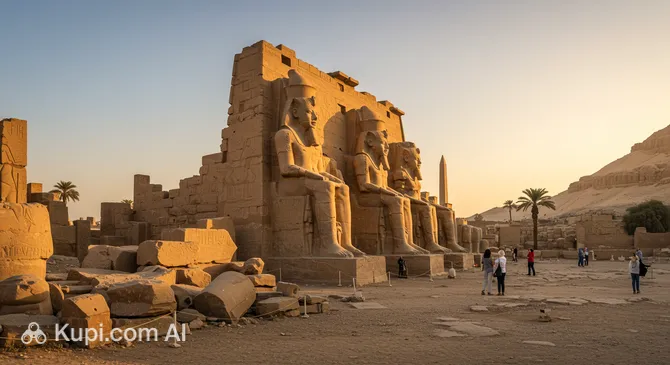
Temple of the Sun of Amenhotep III. Illustration.
Source: Kupi.com AI

Traveller photos:

Travelers seeking traces of Amenhotep III can explore numerous buildings he constructed or reconstructed. His contribution turned the Karnak Complex into a true architectural marvel, striking in its scale and elegance. Walking through its halls and courtyards is an opportunity to touch the history of Ancient Egypt's golden age and appreciate the scope of construction at that time.

Interestingly, the idea of a temple dedicated to the solar disk was realized by the pharaoh's son, Akhenaten. He built a temple to the god Aten in Karnak, which, however, was completely destroyed after his death. Thus, visiting Karnak allows you not only to see the grandeur of Amenhotep III's buildings but also to understand the complex religious history that unfolded on this sacred land.

Contacts

The Sun Temple of Amenhotep III does not have a direct phone number or official website for visitors. To find out the current information on opening hours, ticket prices, and visiting rules, it is recommended to contact local tourist centers in Karnak or representatives of accredited travel companies in Egypt.

How to contactContact
AddressPJC5+GJG, Al Bairat, Luxor, Luxor Governorate 1341703, Egypt

What to Do

Visiting the Sun Temple of Amenhotep III is an immersion into the grand temple complex of Karnak. Here you can explore monumental colonnades, spacious courtyards, and hypostyle halls, many of which were built or reconstructed during the time of this powerful pharaoh. Walk along the famous Avenue of Sphinxes, which once connected the temples of Amun-Ra and Mut, and imagine how solemn processions took place here thousands of years ago. Exploring the ruins of ancient sanctuaries dedicated to various gods allows you to feel the scale and greatness of ancient Egyptian civilization.

To better understand the rich history of this place, it is worth joining a guided tour. Professional storytellers will help decipher the hieroglyphs on the walls and explain the significance of each structure. An evening visit is particularly impressive when a Sound and Light show is held on the complex grounds. The illumination of ancient columns and pylons, combined with stories of the legends and history of Ancient Egypt, creates a truly unforgettable atmosphere.

For photography enthusiasts, Karnak is a real find. The ancient ruins provide countless unique angles for impressive shots. Particularly picturesque views open up at sunrise or sunset, when the soft light paints the stones in warm tones, beautifully highlighting the reliefs on the walls. It is the perfect time to capture the grandeur of one of the world's most significant temple complexes.

Getting There

The Sun Temple of Amenhotep III is part of the famous Karnak Temple Complex, which is located within the modern city of Luxor. Reaching it from central Luxor is quite easy. The most convenient and fastest way is by taxi, which takes about 10–15 minutes. Additionally, you can reach the temple by public transport, which runs regularly along this route.

For travelers arriving from other cities in Egypt, the best option is to take a train or intercity bus to Luxor. Upon arrival in the city, you can use a local taxi or other transport to get directly to the temple complex in Karnak. Organized tours are also worth considering—many hotels and travel companies offer tours with transfers included, significantly simplifying the logistics.

Walking enthusiasts can choose a scenic route along the Nile embankment. This walk is not only healthy but also allows you to enjoy beautiful views of the river and the city, gradually immersing yourself in the unique atmosphere of this historic site.

Nearest city: Karnak

History & Facts

The history of the grand complex in Karnak spans many centuries, but one of the most vibrant periods of its development is associated with the reign of Pharaoh Amenhotep III. It was during the New Kingdom era, under his leadership, that Karnak became the largest religious center of Ancient Egypt. Amenhotep III not only built a new majestic pylon on the main axis of the ensemble but also rebuilt the temples of the gods Montu and Mut, giving them a monumentality and grandeur that still captures the imagination today.

After Amenhotep III, his son Akhenaten (originally Amenhotep IV), known for his religious reforms, ascended the throne. He built his own temple in Karnak dedicated to the god Aten. This structure's size even exceeded the main temple of Amun-Ra. However, after Akhenaten's death, his cult was forgotten, and the grand temple of Aten was completely dismantled. Its stone blocks, however, did not go to waste—they were used as building material for other structures in the complex, becoming an ancient form of recycling.

Construction in Karnak continued under subsequent rulers. Pharaohs of the 19th Dynasty, such as Seti I and his son Ramesses II, contributed to the completion of one of the complex's most impressive structures—the Great Hypostyle Hall. With its forest of 134 giant columns, this hall remains one of the main jewels of Karnak today, vividly demonstrating the power and architectural genius of the ancient Egyptians who created this wonder of the world over centuries.

Time Needed

To get a general overview of the Sun Temple of Amenhotep III and its surrounding area within the Karnak Complex, you should set aside at least 2–3 hours. This time will be enough to see the main structures, soak in the atmosphere of this grand place, and take memorable photos without rushing.

If you plan a deeper immersion into the history and architecture of Ancient Egypt, it's better to allow 3–4 hours. During this time, you can study all the temples and halls of the complex in detail, visit the open-air museum, and take a leisurely stroll along the famous Avenue of Sphinxes. Additionally, keep in mind that Sound and Light shows are held here in the evenings, lasting about an hour and offering a separate, impressive spectacle.

Working Hours

The Sun Temple of Amenhotep III is part of the grand Karnak Temple Complex, and its opening hours coincide with the general schedule. The complex is open to visitors year-round, although visiting times depend on the season. Typically, in the winter period, it is open from 6:00 AM to 5:30 PM, and in the summer from 6:00 AM to 6:00 PM. In the evening after sunset, an impressive Sound and Light show is held on the complex grounds, usually starting at 7:00 PM or 8:00 PM depending on the time of year.

While pre-booking for a daytime visit is usually not required, purchasing tickets in advance can save you time, especially during the peak tourist season. It is highly recommended to check the most up-to-date schedule, especially for the evening show, on the official website or with local guides immediately before your trip, as opening hours may change.

6:00 – 17:00

Nearby

Visiting the Sun Temple of Amenhotep III is just one part of an exciting journey into the history of Ancient Egypt. The surroundings of Karnak are filled with monuments that complement and enrich the experience of this majestic site. Exploring the nearby temples and necropolises allows for a deeper understanding of the scale and significance of this ancient religious center.

Each of these places tells its own unique story, revealing new facets of Egyptian beliefs, rituals, and daily life. By taking the time to explore the surroundings, you can form a more complete picture of the historical landscape that has attracted pilgrims and researchers for centuries. Below is a list of some interesting sites located nearby.

NameDistance
Dra' Abu el-Naga' Necropolis2.3 km
Precinct of Amun-Re4.9 km

Reached the bottom of the page?

Looks like you know this route inside out