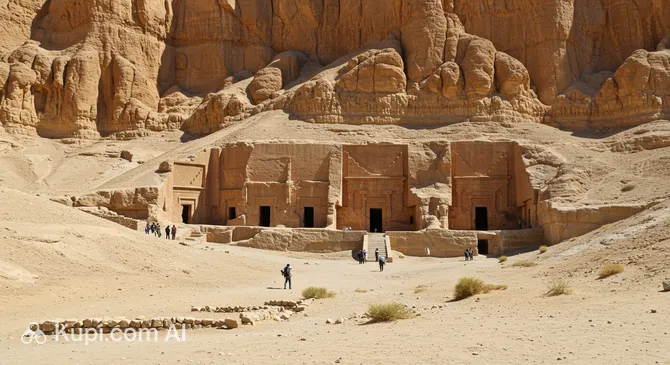
The history of the Valley of the Kings is inextricably linked to the New Kingdom pharaohs' desire to protect their tombs from grave robbers, who had plundered the majestic pyramids for centuries. This isolated and rocky gorge near ancient Thebes (modern-day Luxor) was chosen for a reason. Its inaccessibility was intended to ensure the peace of deceased rulers. For nearly five centuries, from the 16th to the 11th century BC, more than 60 tombs were created here, each cut deep into the rock. These burial sites ranged from simple chambers to complex multi-level complexes with corridors and halls decorated with vibrant paintings and reliefs.
Each tomb in the Valley of the Kings was a unique masterpiece of art and engineering. The walls were covered with texts from the "Book of the Dead" and other sacred scriptures designed to help the pharaoh overcome all trials on the way to the afterlife. Interestingly, the layout of the tombs changed over time: while the 18th Dynasty tombs had a corridor that turned at a right angle, the later 19th and 20th Dynasty tombs were built along a straight axis. Despite all precautions, most of the tombs were looted in antiquity.
A new wave of world fame came to the Valley of the Kings at the end of the 18th century when it became an object of intense interest for European explorers and archaeologists. These searches culminated in one of the greatest archaeological discoveries of the 20th century: in 1922, British Egyptologist Howard Carter discovered the virtually intact tomb of the young Pharaoh Tutankhamun (KV62). This find was a true sensation, as thousands of priceless artifacts remained inside, including the famous golden burial mask. The discovery of Tutankhamun's tomb forever changed the understanding of Ancient Egypt's wealth and burial rituals and continues to attract researchers and tourists from all over the world to this day.
Even today, Valley of the Kings continues to hold its secrets. Archaeological work is ongoing, and from time to time, scientists manage to make new discoveries. Modern technologies, such as ground-penetrating radar scanning, allow for the exploration of the bedrock in search of hidden voids and undiscovered chambers. These studies maintain a constant interest in the necropolis, reminding us that the land of ancient Thebes may still hide new, amazing pages of history.