Luxor Temple is one of the most impressive and well-preserved monuments of ancient Egyptian architecture, located on the east bank of the Nile in the heart of the modern city of Luxor. This majestic complex, part of the ancient capital of Egypt, Thebes, is rightfully called an open-air museum. Its monumentality and elegance attract travelers from all over the world eager to touch thousands of years of history.
Traveller photos:
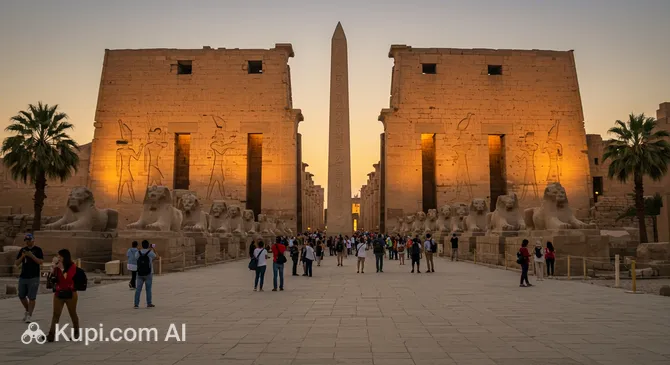
Built during the New Kingdom era, around the 14th century BC, the temple was dedicated to the Theban Triad of gods—Amun-Ra, his consort Mut, and their son Khonsu. Construction began under Pharaoh Amenhotep III and was later expanded by Ramesses II, who added the famous pylon, courtyard, and colossal statues. The temple served not just as a place of worship, but as the center for the main religious festival—Opet, symbolizing the rebirth of the pharaoh's divine power.
The architectural ensemble is striking in its scale and richness of decoration. The entire complex is built of Nubian sandstone, which gives it a warm golden hue. Visitors are greeted by giant statues and a majestic pylon decorated with reliefs, followed by courtyards and halls with numerous columns resembling papyrus thickets. A walk through the temple is a real journey through time, allowing you to feel the greatness and power of an ancient civilization.
Today, Luxor Temple, along with Karnak Temple and the Theban Necropolis, is a UNESCO World Heritage site. It is not just ruins but a living testament to the rich culture and religious traditions of Ancient Egypt, which continues to evoke admiration and awe in everyone who visits.