Support

Mortuary Temple of Hatshepsut

About

The Mortuary Temple of Queen Hatshepsut, located in the Deir el-Bahari complex near Luxor, is one of the most impressive architectural gems of Egypt. This funerary complex, built for the only female pharaoh in the 15th century BC, is striking in its harmony and monumentality. It was dedicated to both the queen herself and the supreme god Amun, and bore the ancient name Djeser-Djeseru, meaning "Holy of Holies."

The temple's uniqueness lies in its multi-level structure, which was innovative for its time. It consists of three spacious terraces that rise up the cliffside and are connected by gentle ramps. Each terrace is decorated with elegant colonnades and majestic statues, creating an unforgettable sight against the backdrop of the Theban Hills. This structure is a vivid example of how ancient architects masterfully integrated their creations into the natural landscape.
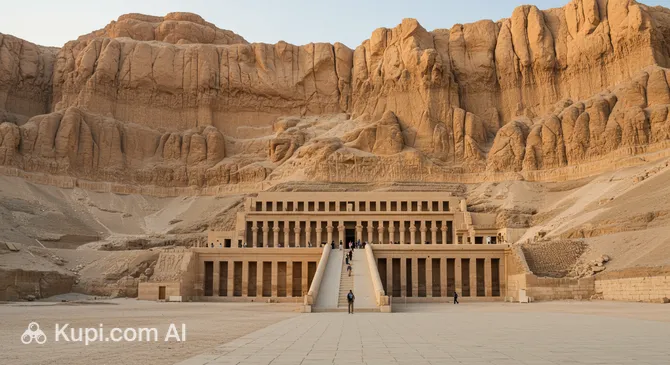
Mortuary Temple of Hatshepsut. Illustration.
Source: Kupi.com AI

Traveller photos:

Visiting the Temple of Hatshepsut is an opportunity to touch the greatness of Ancient Egypt and appreciate the highest level of engineering and artistic skill of its builders. Bas-reliefs on the temple walls tell stories from the queen's life, including her divine birth and the famous trade expedition to the Land of Punt. These are not just ancient ruins, but a captivating stone chronicle that makes a visit here truly informative and memorable.

Contacts

As a major state-managed archaeological site, the temple does not have a direct information hotline. For the most accurate and up-to-date information, including opening hours and ticket prices, it is recommended to check the official resources of the Ministry of Tourism and Antiquities of Egypt. The complex's address is provided below.

Getting to the Temple of Hatshepsut from Luxor is quite simple. The complex is located on the West Bank of the Nile, about a 30-minute drive from the city center. The most popular way is to hire a taxi for several hours (often done in combination with a visit to the Valley of the Kings) or join an organized tour.

How to contactContact
AddressLuxor, Al Qarna, Luxor Governorate 1340420, Egypt
Websiteegymonuments.gov.eg

What to Do

Visiting the Mortuary Temple of Hatshepsut is a true immersion in history, where every element of architecture and decor tells a story. The main activity for tourists is exploring the complex's three-level terraces, connected by majestic ramps. While walking along them, you can see elegant colonnades, numerous statues of the queen and gods up close, and enjoy magnificent panoramic views of the Nile Valley and the Theban Hills.

Special attention should be paid to the unique reliefs and bas-reliefs decorating the temple walls. They are a stone chronicle recounting key events of Hatshepsut's reign: her divine birth, coronation, and the famous trade expedition to the Land of Punt. You can also see numerous scenes dedicated to the god Amun. By studying these images, you will not only be able to appreciate the skill of ancient artists but also gain a better understanding of Egyptian culture and beliefs.

In addition to seeing the architectural and artistic details, a visit to the temple provides an opportunity to feel its special atmosphere. The gradual ascent up the ramps from the base to the sanctuary symbolizes the path to the divine world, allowing you to sense the vision of the ancient architects. This place is a unique example of the fusion of architecture and nature, where man-made greatness is harmoniously woven into the surrounding rocky landscape. A visit to the temple is not just an excursion, but a chance to touch eternity and feel the spirit of ancient religious rituals.

Getting There

The Mortuary Temple of Hatshepsut is located on the west bank of the Nile in the Deir el-Bahari area, in close proximity to Luxor. To get here from the city center, it is most convenient to take a taxi or join a group tour by bus. Such a trip will take approximately 20–30 minutes.

For travelers who prefer sightseeing on foot, there is an interesting option. For example, you can hike from the nearby Valley of the Kings, which allows you to combine visits to several iconic sites and enjoy views of the ancient necropolis.

If you are traveling around Egypt and arriving from other cities, such as Hurghada, renting a car or taking a regular bus to Luxor is a convenient solution. This option provides freedom of movement and allows for a flexible daily plan, including visits not only to the Temple of Hatshepsut but also to the many other monuments around Luxor.

Nearest city: Luxor

History & Facts

The Mortuary Temple of Hatshepsut is not just an architectural masterpiece, but also a monument to one of the most remarkable women in Egypt's history. Its construction began on the orders of Queen Hatshepsut, who ruled the country for about 21 years during the 18th Dynasty. Ascending the throne as regent for her young stepson, Thutmose III, she soon concentrated all power in her hands and was crowned as a full pharaoh. The temple's construction lasted for 9 years, roughly from 1482 to 1473 BC, and became one of the most ambitious projects of her reign.

The mastermind behind this grand project was Senmut (or Senenmut)—a talented architect and one of the most influential officials at Hatshepsut's court. He held many high positions and was a mentor to her daughter. Senmut used the nearby mortuary temple of Pharaoh Mentuhotep II as an architectural model for his creation but significantly surpassed it in scale and elegance. The Temple of Hatshepsut showcased innovative solutions, harmoniously integrating multi-level terraces into the rocky landscape, which marked an important stage in the development of ancient Egyptian architecture.

After Hatshepsut's death, her stepson Thutmose III, having become the sole ruler, attempted to erase the memory of her reign. Many images and statues of the queen in the temple were destroyed or replaced. However, despite all efforts, the grandeur of the temple and the story of its creator have survived to this day. Recent research suggests that some of the destruction may not have been an act of revenge, but a ritual "deactivation" of statues after a ruler's death—a common practice in Ancient Egypt. Today, this unique monument near Luxor is striking evidence of the era of the great female pharaoh's reign.

Time Needed

To fully enjoy the grandeur of the Mortuary Temple of Hatshepsut, it is recommended to allocate 1.5 to 2 hours for your visit. This time is usually enough to walk through all three terraces without rushing, carefully examine the famous bas-reliefs telling the story of the queen's life, and take impressive photos against the backdrop of the cliffs and the Nile Valley.

Of course, if your time is very limited, you can get a general overview of the architecture in 1 hour. However, for a deeper immersion into the history and art of Ancient Egypt, it is worth sticking to the recommended time. In two hours, you will have time not only to see the main elements of the temple but also to feel its special atmosphere, delve into the details of the unique wall paintings, and appreciate the brilliant vision of the architect who integrated the monumental structure into the natural landscape.

When planning your visit, also keep in mind that the temple is part of a huge necropolis on the west bank of Luxor. It is optimal to allocate the specified time to the Temple of Hatshepsut so that you can then slowly continue exploring other treasures, such as the Valley of the Kings. Well-thought-out timing will allow you to get the most out of your trip and avoid rushing.

Working Hours

You can visit the Mortuary Temple of Hatshepsut any day of the week. The complex is open to tourists year-round, typically from 6:00 AM to 5:00 PM or 6:00 PM. It is recommended to check the opening hours immediately before your visit, as they may change slightly depending on the season and Egypt's public holidays. To avoid the midday heat and large crowds, it is best to plan your visit for the early morning.

Special advance booking for individual visits is usually not required—tickets can be purchased at the ticket office on-site. However, if you are traveling as part of a tour group or want to book a guided tour, tickets are often included in the service package. For convenience, some online services also offer the option to purchase entrance tickets in advance. This can be useful during the peak tourist season to avoid potential queues.

6:00 – 17:00

Nearby

Visiting the Mortuary Temple of Hatshepsut is just one part of a fascinating journey through the West Bank of Luxor. This area, known as the "City of the Dead," is a vast open-air archaeological museum where treasures of ancient Egyptian civilization await at every step. Exploring the temple's surroundings will allow you to dive deeper into history and get a fuller picture of the grandeur of ancient Thebes.

Many iconic monuments are located in close proximity to the Temple of Hatshepsut, making them very easy to visit. You can easily combine several visits in one day, turning your excursion into a rich adventure through the world of pharaohs, tombs, and magnificent mortuary complexes. Below is a list of nearby attractions with their distances.

NameDistance
Deir el-Bahari0.2 km
Valley of the Kings0.5 km
Tombs of the Nobles0.9 km
Ramesseum1.2 km
Deir el-Medina1.2 km
Luxor Hot Air Balloon Ride1.5 km

Reached the bottom of the page?

Looks like you know this route inside out