Support

Musée Granet

About

Arriving at the quiet Place Saint-Jean-de-Malte in the city of Aix-en-Provence, you will encounter one of the main cultural treasures of the southern part of France. The Musée Granet is a magnificent collection of fine arts, archaeology, and decorative craftsmanship, housed within the walls of a majestic 17th-century former monastery priory.
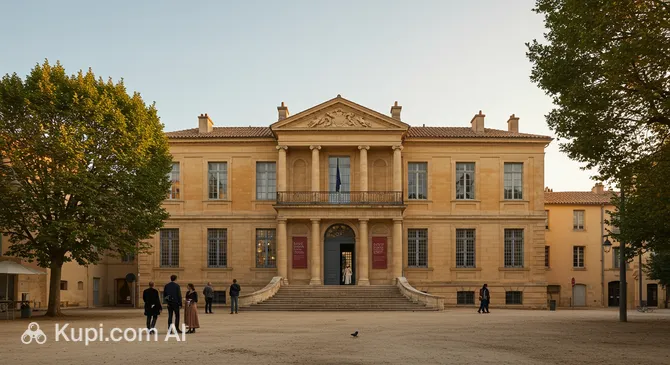
Granet Museum
Granet Museum. Иллюстрация. Источник: Kupi.com AI

Founded in the early 19th century, the museum holds more than 12,000 works in its collection. Its holdings span a vast period of human history: from artifacts of ancient Ligurian warriors to 20th-century avant-garde canvases. This place is recognized as one of the most interesting art museums in the country due to its eclecticism and the high quality of its exhibits.

The museum's particular pride is the work of the great Paul Cézanne, as well as masterpieces by Rembrandt and Ingres. Here you can see not only classical European painting but also unique Egyptian antiquities, making a visit to the museum a truly exciting journey through eras and styles.

Contacts

To clarify visit details or for information on current exhibitions, you can use the official communication channels. The museum actively maintains contact with visitors through its web resource.

How to contactContact
AddressPl. Saint-Jean de Malte, 13100 Aix-en-Provence, France
Phone+33 4 42 52 88 32
Websitewww.museegranet-aixenprovence.fr

What to Do

In the halls of the Musée Granet, a fascinating encounter with art history awaits you. Begin your tour on the lower floors, which feature rare archaeological finds from the Celto-Ligurian period and an impressive Egyptian collection. Fans of the classics will appreciate the 19th-century sculptures and the extensive gallery of European painting, which includes works by Italian and Scandinavian masters.

Be sure to dedicate time to the room dedicated to Paul Cézanne. Seeing nine original works by the master in his hometown is a special experience for every art lover. Additionally, the museum houses the collection of Jean and Suzanne Planque, where you can find works ranging from Cézanne to Giacometti, demonstrating the evolution of art in the 20th century.

Don't forget to take note of the architecture of the Palais de Malte itself. As you walk through the halls, you will notice 17th-century decorative elements that serve as a reminder that the Prior's house was once located here. If you are lucky enough to catch one of the temporary exhibitions, you will be able to see rare exhibits from private collections or the world's largest museums.

Getting There

The Musée Granet is located in the heart of the historic Mazarin district at Place Saint-Jean-de-Malte. It is very easy to reach on foot from the city center. For example, a walk from the famous Cours Mirabeau boulevard will take no more than 10–15 minutes, allowing you to enjoy the architecture of old Aix-en-Provence along the way.

If you are using public transport, look for bus stops in the city center located near the Town Hall or the Cours Mirabeau. For those arriving from Marseille by train, the destination will be the Aix-en-Provence TGV station. From there, you can reach the city center and the museum by a special shuttle or taxi in about 20–30 minutes.

Travelers by car should keep in mind that parking in the historic center can be difficult. It is recommended to leave your car at one of the large parking lots, such as Parking Rotonde or Mignet, and walk the remaining distance. This will save you the trouble of searching for a spot in the narrow, ancient streets.

Ближайший город: Aix-en-Provence

History & Facts

The history of this cultural center began in 1828, when it was decided to organize a museum within the walls of the former priory of the Church of Saint-Jean-de-Malte. The official public opening took place in 1838, and the foundation of the first exhibition consisted of unique archaeological finds by Fauris de Saint-Vincens, collected as far back as the late 18th century.

A major turning point for the museum occurred in 1849. The talented artist François Marius Granet, a native of the city, bequeathed his impressive collection of paintings and drawings to his hometown. It was in his honor that the institution received its current official name in 1949. Over time, the collections continued to grow thanks to generous gifts from collectors such as Jean-Baptiste de Bourguignon de Fabregoules and Philippe Meyer.

The museum building itself is a chronicle of expansion: in the 19th and 20th centuries, new wings were added, including the famous "Granet Wing." Following a major renovation in 2006, the museum acquired its modern appearance and improved conditions for preserving its treasures. Today, it is not just a gallery, but a symbol of generational continuity and the love of Provence residents for art.

Time Needed

To see the museum's main treasures without rushing, including the archaeological department and the galleries featuring works by French masters, you will typically need about 2–3 hours. This is enough time to appreciate both the Egyptian collection and the famous Impressionist paintings.

If a major temporary exhibition is being held during your visit, we recommend setting aside an additional hour in your travel plan. The Musée Granet is famous for its large-scale projects, which often require thoughtful study and can take up a significant part of your day.

Working Hours

When planning your visit to the Musée Granet, please note its operating schedule. The museum opens its doors to visitors from Tuesday to Sunday. The visiting hours on these days are convenient for those who prefer the afternoon:

  • Tuesday – Sunday: 12:00 PM – 6:00 PM
  • Monday: Closed

Please note that the ticket offices may close slightly earlier than the end of the working day, so it is worth arriving with some time to spare.

DayWorking hours
ПонедельникЗакрыто
Вторник12:00 – 18:00
Среда12:00 – 18:00
Четверг12:00 – 18:00
Пятница12:00 – 18:00
Суббота12:00 – 18:00
Воскресенье12:00 – 18:00

Nearby

Exploring the surroundings of the Musée Granet allows guests of the city to fully immerse themselves in the aristocratic atmosphere of old Provence. The Mazarin district, where the museum is located, is literally dotted with architectural monuments and cozy corners that deserve attention.

After visiting the exhibitions, be sure to stroll to the central squares and boulevards to see historical monuments and ancient towers that have preserved the spirit of past centuries. Below are the nearest interesting sites:

NameDistance
Granet Museum – Jean Planque Collection0.2 km
Place des Quatre-Dauphins0.2 km
Hôtel de Caumont0.3 km
Place d'Albertas0.4 km
Le Ramus0.6 km
Tita0.6 km
Fontaine de la Rotonde0.6 km

Reached the end of the page?

That means the route is fully explored