Support

Carrières Bacquin Park

About

Imagine an amazing place where the rugged aesthetics of old quarries meet the gentleness of blooming gardens. Carrières Bacquin Park is a picturesque 5-hectare green zone located in the western part of Dijon. Once a bustling limestone quarry, today France is proud of this example of transforming an industrial landscape into a cozy space for relaxation.
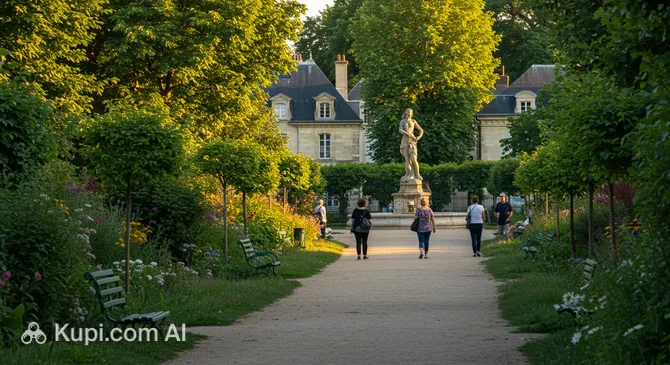
Carrières Bacquin Park
Carrières Bacquin Park. Иллюстрация. Источник: Kupi.com AI

The main feature of the park lies in its unusual relief. The deep basins of the former quarries create unique micro-zones protected from the wind, where winding paths are laid out. Here you can see the famous "Dijon stone", from which many of the city's historic buildings were built, in its original form—in the rock cuts framing the walking routes.

Today, it is not just a square, but a multi-functional space with an artificial waterfall, an open-air theater, and areas for active leisure. The park attracts visitors with its atmosphere of solitude and diverse flora, becoming an ideal place for those who want to swap the noise of city streets for the tranquility of nature.

Contacts

To contact the park administration or inquire about visiting details, you can use the official city telephone number. The site is managed by municipal services that ensure its maintenance and cleanliness.

For your convenience in planning your route, contact details are provided below:

How to contactContact
Address19 Bd de l'Ouest, 21000 Dijon, France
Phone+33 3 80 74 51 54

What to Do

There is something for everyone in this park. Lovers of quiet walks should head along the winding paths to find the majestic Himalayan cedar and admire the nectar-producing plants that attract many bees and butterflies. Be sure to linger by the cascade: the steady sound of falling water creates the perfect backdrop for meditation or reading a book in the shade of the trees.

All conditions have been created here for family vacations. Children will be delighted with the modern playgrounds and the special splash pad (pataugeoire), which provides relief from the heat during the summer months. Fans of active leisure can have a competition on the mini-golf course or observe bird life—the League for the Protection of Birds has installed many nesting boxes here.

If you are lucky, you might catch an event at the open-air theater or see the harvest ripening in the community fruit orchard (verger). The park is an excellent spot for photoshoots, as the play of light on the walls of the former quarry and the bright flower beds create beautiful backdrops at any time of year.

Getting There

Reaching this green oasis is easy, as it is located in the western part of the city in the cozy Montchapet district. If you prefer walking, the journey from the historic city center takes about 20–30 minutes, allowing you to admire quiet residential streets along the way.

Public transport is an excellent alternative. You can use the bus lines that stop at Boulevard de l'Ouest or take the tram. From the main Dijon-Ville railway station, a taxi or a Vélodi bike system ride will take only 5–10 minutes.

For those traveling by car, parking is available on adjacent streets, such as Rue Marmuzot. However, please note that during peak hours, the number of free spaces may be limited, so public transport remains the most convenient option.

Ближайший город: Dijon

History & Facts

The history of this site dates back to the 14th century, when the active extraction of the famous limestone — pierre de Dijon — began here. This stone, formed millions of years ago from marine deposits, has a unique palette ranging from cold blue to warm red and yellow. Masterpieces such as the Palace of the Dukes of Burgundy and the Church of Notre-Dame were built from this material.

In the 19th century, the quarry belonged to an industrialist named Bacquin, whose name the park still bears today. Stone extraction continued until the early 1930s, after which the industrial site was abandoned. The quarry remained empty for several decades until city authorities decided to transform it into a public space.

The park took on its modern appearance in 1976, thanks to the work of landscape engineer André Holodinski. He successfully integrated walking areas into the complex relief of the former excavations, creating a unique example of industrial zone rehabilitation. Today, the park is an important monument to the region's geological and architectural heritage.

Time Needed

To leisurely walk through the entire territory, explore the most remote corners of the quarry, and enjoy the view of the waterfall, you will need about 1 to 2 hours. This is quite enough for an introductory walk and a short rest on one of the benches.

If you plan to have a picnic, let the children play on the specially equipped playgrounds, or play a round of mini-golf, you should count on half a day. The park encourages a long and leisurely stay, especially in sunny weather.

Working Hours

The park is open to visitors daily, allowing residents and guests of the city to enjoy nature any day of the week. The schedule is consistent: the gates open at 8:00 AM and close at 6:00 PM.

It is worth noting that depending on the season and daylight hours, the closing time may vary slightly, so for evening walks, it is better to plan around sunset. Entrance to the park is free.

8:00 – 18:00

Nearby

Thanks to the park's convenient location, visitors can easily combine an outdoor walk with a visit to other iconic city landmarks. The old quarters, where history comes to life in every stone of the buildings, begin just nearby.

Exploring the surroundings will allow you to better feel the atmosphere of the Burgundy capital, transitioning from the silence of natural areas to bustling squares and architectural monuments.

NameDistance
Well of Moses0.5 km
Le Jura Bar0.9 km
Dijon Beach0.9 km
Natural History Museum of Dijon0.9 km
Arquebuse Botanical Garden0.9 km
Darcy Garden1 km
Place Darcy1.1 km

Reached the end of the page?

That means the route is fully explored