Support

Well of Moses

About

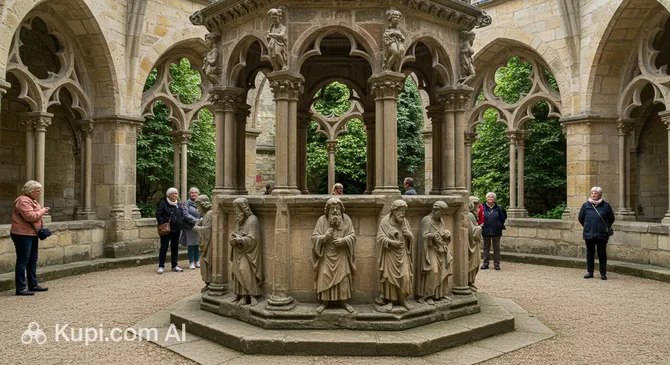
In the heart of Burgundy, where the powerful Chartreuse de Champmol once flourished, lies a true masterpiece of the late Middle Ages — the Well of Moses. This unique monument, created at the turn of the 14th and 15th centuries, is not just a fountain but a complex theological and artistic composition that became the pinnacle of the Flemish sculptor Claus Sluter’s work.
Well of Moses
Well of Moses. Иллюстрация. Источник: Kupi.com AI

The monument, located in the city of Dijon, is striking in its monumentality: it is a hexagonal pillar about seven meters high, erected over a deep spring. France is rightfully proud of this site, as it is recognized as one of the most significant examples of Burgundian sculpture, preserving the spirit of the Valois Dukes' era.

The main decoration of the column consists of six majestic statues of Old Testament prophets: Moses, David, Jeremiah, Zechariah, Daniel, and Isaiah. Each figure is executed with incredible realism for that time — from the finest folds of heavy robes to the deep, almost lifelike emotions on their faces, making the "Well of Moses" a must-visit for all connoisseurs of fine art.

Contacts

For more information regarding visits or to book group tours, you can use the following contact details:

To organize specialized excursions, it is recommended to contact the Dijon Métropole tourism office in advance.

How to contactContact
Address1 Bd Chanoine Kir, 21000 Dijon, Франция
Phone+33 3 80 42 48 48
Websitewww.ch-lachartreuse-dijon-cotedor.fr

What to Do

When visiting this site, your main goal will be a detailed study of the sculptural ensemble. Each figure of a prophet is unique: pay attention to the stern gaze of Moses, the thoughtfulness of Jeremiah, or the majestic posture of King David. Sluter's mastery allowed him to convey even the texture of the skin and the nuances of facial expressions, making the inspection of the monument a fascinating process.

Be sure to take a stroll through the grounds of La Chartreuse park. This place, where monastic life once buzzed, is today filled with silence and peace, allowing for a contemplative mood. Photography is encouraged here — the soft light entering the pavilion emphasizes the volume and plasticity of the stone statues.

For those who want to dive deeper into the context, it is recommended to join a themed tour. Knowledgeable guides will talk about the symbolism of every detail, how the monument looked in its original form with a crucifix on top, and the role the Chartreuse de Champmol played in the political and spiritual life of Europe at that time.

Getting There

The monument is located at: 1 Boulevard Chanoine Kir. It is easy to find — it is situated within the park of the La Chartreuse specialized medical center, within walking distance of the city's key transport hubs.

If you are arriving by train, head towards the Dijon SNCF railway station. From there, the Well of Moses can be reached on foot in just 10–15 minutes. The path passes by the offices of the Le Bien Public newspaper, which can serve as an additional landmark.

For those who prefer comfort, you can always take a taxi from the city center. If you are traveling by your own or a rented car, there are parking spaces available near the site, making the visit very convenient for motorists.

Ближайший город: Dijon

History & Facts

The creation of this masterpiece is inextricably linked with the name of Philip the Bold, Duke of Burgundy, who founded the Chartreuse de Champmol in 1385 as the dynastic burial place of the Valois dynasty. The monument itself was worked on between 1396 and 1405 by the outstanding Flemish sculptor Claus Sluter along with his nephew. Interestingly, the statues were originally colorful — the unique polychrome painting was carried out in 1402 by the famous artist Jean Malouel.

Originally, the composition was significantly larger and represented a tall Calvary — a scene of the crucifixion of Christ towering over the prophets. Unfortunately, the upper part of the monument was destroyed in the 18th century, and only the massive hexagonal pedestal with the figures of the prophets has survived to this day. To protect the fragile stone from the weather, a wooden canopy was built over it as early as the 15th century, and a stone pavilion was later erected.

During the French Revolution, when the Chartreuse de Champmol was almost completely destroyed, the Well of Moses miraculously survived. In 1840, it was officially included in the very first list of historical monuments of France, and in the mid-19th century, it underwent a thorough restoration. Today, this site is recognized as one of the greatest achievements of European sculpture of the late Middle Ages.

Time Needed

For a thoughtful viewing of the sculptural group and an examination of the smallest details of the medieval masters' work, 30–45 minutes is sufficient for most tourists. This time is enough to walk around the monument from all sides and take high-quality photographs.

If you decide to book a guided tour to learn more about the architecture of the former Chartreuse de Champmol and the history of the Dukes of Burgundy, plan to spend about 1.5–2 hours here. The peaceful atmosphere of the surrounding park is perfect for a leisurely exploration of the heritage of the past.

Working Hours

You can visit the "Well of Moses" daily; the complex is open to guests from 9:30 AM to 5:30 PM, seven days a week. This makes it easy to fit a visit to the attraction into any Dijon itinerary.

Please note that the schedule may change on public holidays, so it is recommended to check the official website before your trip. If you are planning a visit with a guide, you should book a time through the tourism office in advance.

09:30–17:30

Nearby

A walk around the surroundings of the Chartreuse de Champmol allows for a deeper dive into the rich history of the capital of Burgundy. After viewing Claus Sluter's masterpiece, it is worth heading towards the historic center, where the region's main architectural treasures are concentrated.

NameDistance
Carrières Bacquin Park0.5 km
Arquebuse Botanical Garden0.8 km
Dijon Beach0.9 km
Natural History Museum of Dijon0.9 km
Le Jura Bar1.1 km
Darcy Garden1.2 km
Dijon Cathedral1.3 km

Reached the end of the page?

That means the route is fully explored